



Want to Subscribe?
Read Corporate India and add to your Business Intelligence

 Unlock Unlimited Access

Published: December 15, 2025
Updated: December 15, 2025
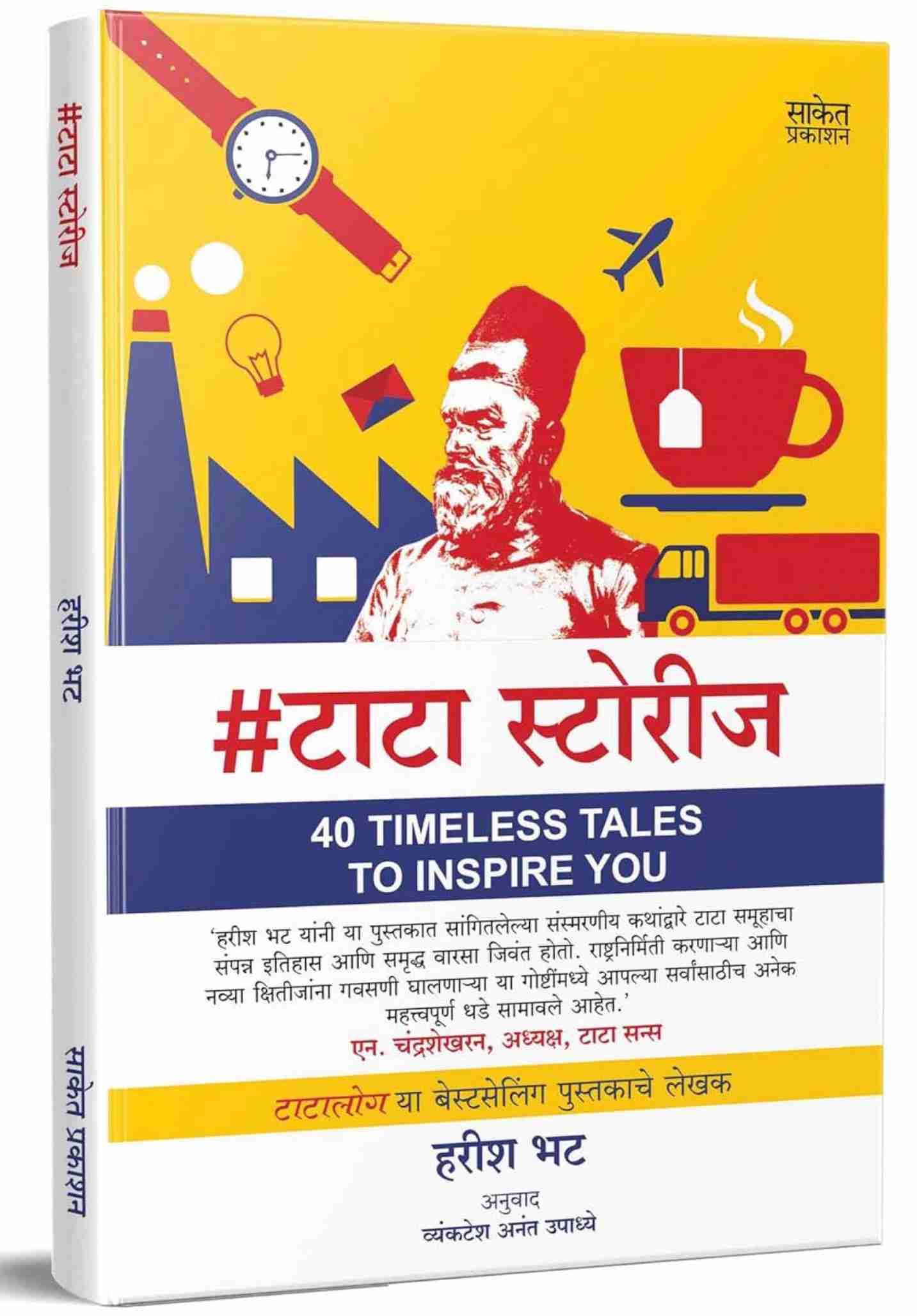
Why do we people, as a rule, love to read/hear/watch thrilling and motivational stories? And that too, real ones. While there could be many reasons for the same, the most important one is their inspirational nature. Both youngsters and grown-ups alike derive a lot of benefit from going through/ watching them. This is precisely why some of the Tata tales mentioned in the book under review are resonating well with readers. Taken collectively, these 40 stories delve deep into one’s thoughts/ feelings and this is one factor for their relevance even today, though some 150 years have passed since the founding of the Tata group. Besides, many of them are not so well-known anecdotes.
Written by Harish Bhat, who has held senior positions at Tata Sons and other leading firms in the group, like Tata Global Beverages, he has provided, through carefully crafted anecdotal stories, the evolution of Tata’s value system over several years. Incidentally, these value systems hold good even today in their business dealings and are, in fact, much respected/adhered to by other business houses. Delving deep into the Tata Central Archives for much of the treasure trove of information, the author has provided readers with valuable and absorbing reading material.
Owing to space restraints, only a handful of major stories narrated by Harish Bhat are being taken up here. He begins with how the legendary industrialist and visionary, Jamsetji Tata, set up in 1911 the Indian Institute of Science in Bangalore. It all started with his chance meeting with Indian spiritual leader Swami Vivekananda while travelling on a steamer, the SS Empress, from Bombay to the US in 1893! While Swamiji talked to Jamsetji about his plans to ‘organize monks for industrial purposes’ as part of the country’s advancement, the industrialist stressed how the former could help him in his plans of industrialization by bringing out a pamphlet to arouse a scientific spirit among Indians. The brief meeting on the steamer was followed by a lengthy letter by Jamsetji to the Swamiji seeking a positive/constructive response by the latter in the matter. With Jamsetji committing an endowment of Rs 30 lakh, a fabulous sum at that time (1898), things began moving in the right direction as the Swamiji exhorted his countrymen to do their best to achieve the targeted figure of Rs 74 lakh for setting up a first-of-its kind scientific research body in India through an open letter to all citizens. This is a unique example of a spiritual leader lending his unstinted support to a worthy and ambitious project of an industrialist! However, by a quirk of fate, both men could not witness the grand opening event in 1911 as they had passed away a few years earlier. Even today, the institute is fondly called Tata Institute by many.
An equally interesting story by the author is on how many of the Tata commercial trucks which crisscross the country carrying, among other things, essential items like food grains/fertilizers and industrial goods, have the words ‘OK TATA, OK SUMO’ inscribed at the rear. Readers will be surprised to know that these words are not written at the behest of the company but by the truck drivers themselves! By doing so, the drivers are expressing their gratitude to the top leadership of Tata Motors, or TELCO as it was earlier known. The word ‘SUMO’ stands for Sumant Moolgaokar, who headed TELCO for a long time as its Managing Director! JRD Tata, who was chairman of Tata group, had coined the word ‘SUMO’ to denote the MD’s name as a tribute to the latter’s insistence on excellence in everything, big and small, that he oversaw in the company! Furthermore, JRD ensured that the first crossover vehicles produced by Tata Motors were named ‘Sumo’! It may be mentioned here that JRD too had the same qualities of striving for the very best in every field and was never satisfied with anything less than perfect or excellent! This quality is prevalent even today and all Tata products are noted for their excellence and superb quality.
Yet another and, perhaps, more interesting story is that of the building of the iconic Taj Mahal Hotel by Jamsetji Tata in 1898. While the general story around building of the hotel is well-known — the then European-managed Watson Hotel in Apollo Bunder, a stone’s throw from the Taj, refusing him accommodation — the author has offered a more plausible reason – ‘Jamsetji’s love for Bombay’ (now Mumbai) as it did not have any hotel of the same standard as those in the UK or Europe. According to Lovat G Frazer, the then editor of ‘The Times of India’, Jamsetji, it seems, had lamented the fact that Bombay did not have any first-class hotel and was keen on setting up one so that it would improve the city’s image. He owned some 2 acres of land very near the place and decided one morning to build a brand new hotel meeting internatonal standards at the place.
The most important thing to note here is that a prosperous industrialist, having already successfully set up textile mills, the country’s first integrated steel plant and India’s first hydro-electric plant, was ready to venture into a totally unknown business like the hotel industry. In fact, his sister and close friends discouraged him from entering this field. But Jamsetji saw it as a challenge and built the Taj Mahal Hotel. It opened its doors in 1903, a year before his passing away and several years before Bombay’s landmark, Gateway of India, came up in 1911. And imagine, the room rent for a day’s stay was ‘a moderate sum’ of just Rs 6! This was proof, if need be, of Jamsetji’s ‘unparalleled love’ for Bombay!
Another story is of how the Prime Minister’s Relief Fund came to be set up, as it showed JRDs genuine concern for refugees and homeless people. Just a few hours before Independence in 1947, JRD Tata sent a telegram to Nehru, stressing the urgent need for setting up a special relief fund to render all help to the needy. How he could visualize such an eventuality after Partition is something difficult to understand as, the busy industrialist that he was, JRD would have had hardly any time to think of such issues. Soon after Independence, there was an exodus of refugees pouring into the country from the border areas, horrific communal riots and extensive loss of life and property. JRD was seized of the urgent need for huge humanitarian assistance, both in cash and kind, for the affected people.
He knew that the government alone would not be able to tackle the issue and wanted citizens to get involved by contributing liberally. JRD also wrote to and met the Prime Minister in this regard, as nearly 20 million people had been affected, and wanted a national relief fund to be set up to provide immediate relief to families struck by natural disasters like floods, drought, accidents, etc. A Board of Trustees with the PM at the helm and a representative from the Tata Trusts came into being, and the Prime Minister’s Relief Fund was founded in 1948. A noble idea born in the mind of JRD was taken up in right earnest by the PM at the former’s persistent pleas.
Before concluding, a few words are worth recording about the author’s personal experiences with the top executives in the Tata group as well, for he has imbibed many of their sterling qualities. The last chapter, ‘A Legend with a Heart of Gold’, is devoted exclusively to this, and only one quality is recorded here for the sake of brevity. Once, while Harish Bhat was in Bangalore with Tata Tea, Darbari Seth, a senior executive heading Tata Chemicals, offered to take him as his Special Executive Assistant in Bombay. Without any hesitation, he accepted the offer and moved to Bombay.
The author’s experiences during this period made a long-lasting impression on him, as Darbari Seth was around 73 years old while he was just 33. On one occasion, both had returned from a tour of South Africa in the wee hours at 2 am, and got to bed by 2.30 or so. While Bhat slept off owing to travel fatigue, Seth worked for some more time and prepared a note of 10 points for urgent discussion the next morning. He called up Bhat the next morning at 6 am and urged him to be in the office at 8, saying there were important matters to be attended to. Such was Darbari Seth’s total commitment to work/duty, though he was advanced in age. Unmindful of his health, he devoted all his energies to the job at hand. The author was so impressed by this quality of Seth that he himself became a workaholic.
This narration can best be ended by quoting what the late Piyush Pandey, the don of advertising in India, wrote on the book: “No theory on leadership can teach you better than real stories of leadership. Tata Stories by Harish Bhat is proof.” The stories in the book are truly inspiring. And many of the qualities of the top leaders of the Tata group, like sincerity, integrity, total commitment for work, and insistence on perfection in everything, are — needless to say — important management principles which business students should learn very early in their career. - V Raghuraman
September 30, 2026 - Combined Issue

Industry Review


VOL XVII - 13
September 16-30, 2026
Want to Subscribe?
Read Corporate India and add to your Business Intelligence
Unlock Unlimited Access
Lighter Vein

1 Year *
Subscription
Rs 1800 /-
3 Year *
Subscription
Rs 5000 /-
5 Year *
Subscription
Rs 8000 /-
5
International
Subscription
$ 99.99
Read Corporate India and add to your Business Intelligence
Popular Stories

A modern-day enigma and a ramification of humanity's never-ending advancements, e-waste refers to the scum con- cealed by the outward glow of ever-advancing technology.
Archives


Office Address
Unit No. 405, 4th floor, Madhu Industrial Park, Avadh Narayan Tiwari Marg, Mogra Village Road, Andheri (East), Mumbai – 400069.
Call/Whatsapp
If you are interested in advertising with Corporate India, please don't hesitate to contact us. Our team is here to assist you with the process and answer any questions you may have. We look forward to the opportunity to work with you and help your business reach its full potential.
Fill out the form below to subscribe to our newsletter and never miss an update