



Want to Subscribe?
Read Corporate India and add to your Business Intelligence

 Unlock Unlimited Access

Published: December 15, 2025
Updated: December 15, 2025
EVEN as the Damoclean sword of punitive US tariffs hangs over Indian exports and has sent the Indian rupee tumbling below the 90/$ mark, Mexico has followed suit with its own sky-high tariffs on Indian goods, and the latest buzz in trade, industry and market circles is: Will the Indian currency slide further to hit the 100-mark against the dollar? In fact, Mexico has administered a body blow to Indian exporters by imposing up to 50 per cent tariffs on as many as 1,460 Indian products, from automobiles to cosmetics.
THE impact of the Mexican tariffs, which come into force on January 1 next year, can be gauged from the example of Indian passenger vehicle exports to Mexico, which are a huge $ 1 billion annually.
HOWEVER, global brokerage firm Bank of America (BOFA) Securities suggests a mixed impact of the tariffs on domestic inflation and a possible improvement in remittances.
The Indian rupee is well and truly feeling the depreciation pressure in recent days, hitting newer and newer lifetime lows and then crossing the ‘90’ mark against the American greenback last week. During the current year (2025) so far, the rupee has declined by around 5% due to trade deficits, US tariffs and capital outflows, positioning itself as the third worst performer among 31 major currencies and surpassed only by the Turkish Iira and Argentina’s peso in terms of losses. This decline is highly intriguing and particularly noteworthy as it occurs during a period when the dollar’s strength indicator has decreased by over 7%.
With the Indian rupee tumbling below the 90/$ mark, the question making the rounds of trade, industry and market circles is: Will the Indian currency slide further to hit the 100-mark against the dollar?
But before discussing that point, it is important to understand how and why the rupee appreciates or depreciates. Here, the value of the rupee is its exchange rate in terms of another currency – as a thumb rule, the dollar. These exchange rates fluctuate based on demand and supply in the currency market influenced by trade, investments and monetary policies.
If demand for the greenback rises more than that for the rupee, the former strengthens and the latter weakens. Likewise, if US imports from India increase, India will get more dollars and hence the dollar's value in terms of the rupee will decline as the rupee will strengthen. The result will be similar if US investments in India increase.
On the other hand, if foreign investors prefer to sell their assets here and repatriate the funds to their countries or any other country, the rupee will be under pressure and its value will decline. At the time of India's independence, rupee and dollar values were equal, with one dollar equivalent to one rupee.
But ever since then, the rupee has come under pressure and the dollar has started getting stronger, adversely affecting the value of the Indian currency. Sixtyseven years after independence, when the Narendra Modi government came to power, the value of rupee had depreciated to 63/$. With no imaginative and/or effective step taken to bolster the value of our currency, the rupee has tumbled to the unheard-of level of 90 and has reached to Rs 91 per dollar.
Consider the other factors at play. Not only are geopolitical tensions continuing to vitiate the global environment, US President Donald Trump has ratcheted up tensions by predicting the possibility of a third World War.

Again, even as the issue of high tariffs (as much as 50 per cent) imposed by President Trump remains unresolved, leaving Indian exporters on tenterhooks, Mexico has administered a body blow to Indian exporters by imposing up to 50 per cent tariffs on as many as 1,460 Indian products, including autos, auto components, clothing, plastics, furniture, footwear, leather goods, paper, cardboard, steel, household appliances, toys, motorcycles, aluminium, trailers, glass, soaps, perfumes and cosmetics. The impact of these ultra-high duties is bound to adversely affect Indian exports. For example, Indian passenger vehicle exports to Mexico at present total between 800 million and one billion US dollars annually. To be implemented from January 1, 2026, these new Mexican tariffs (hiked from 20% to 50%) will make Indian exports economically unviable. Significantly, Mexico is India’s third largest export market for passenger cars after South Africa and Saudi Arabia. The new Mexico tariffs will hit our exports of auto components and parts worth US $ 700 million, iron and steel exports worth US $ 900 million, textiles, apparels and footwear exports worth around US $ 600 million, and organic chemicals and pharmaceutical exports worth US $ 400 million. Overall, India exported nearly $ 8.9 billion worth of food products to Mexico last year.

Mexico has revised its tariffs upwards for countries that do not have a Free Trade Agreement (FTA) with it. The major victims of this tariff hike are China and India. Like the US, Mexico wants to contain the flood of cheap Chinese goods in order to protect indigenous production. China has a massive and growing trade surplus with Mexico surpassing $ 100 billion. Mexican industries, particularly auto parts, textiles and steel, have been severely affected by cheap Chinese imports. Secondly, Mexico would like to align pre-emptively with the US under President Trump. Interestingly, the USMexico trade agreement is due for review in 2026 and the US administration has been warning Mexico not to encourage countries like China to flood the US market by using Mexico as a backdoor for Chinese goods. With President Trump taking a punitive stand against India too, Mexico has preferred to follow suit.
India has protested against the Mexican tariff hikes. But if an agreement is not reached and the new tariffs are implemented from the beginning of 2026, India’s foreign trade will be in disarray and the trade deficit will mount further, exerting even more pressure on the Indian currency. This is bound to put pressure on the rupee to seek a further low level and push it to the ‘100’ level against the dollar.
One of the major factors pulling the rupee down against the US dollar is the exodus of foreign investors, including FIIs, FPIs, hedge funds and large asset managers, from the Indian stock market. This outflow of funds – rupees converted into dollars — has been exerting significant pressure on the value of rupee, forcing it to depreciate against the dollar.
Why are foreign investors pulling out of India? October 2024 was a record month for the Indian market, but in a negative way. FIIs and FPIs offloaded a net Rs 114,445.89 crore that month. It was the highest-selling number by FIIs/FPIs in a single month. Before October, the highest FIIs/FPIs selling in a month in 2024 was in May which was Rs 42,214 crore. Before October 2024, the highest selling by FIIs/FPIs was seen in March 2020 (the pandemic-related crash) when they sold equities worth Rs 65,816.70 crore.
No doubt, FIIs/FPIs have emerged as significant drivers of India’s stock market. Though in recent times domestic financial institutions (DFIs) led by mutual funds have emerged as key players, they are far behind FIIs/FPIs as far as marketing aggressiveness, business strategies and business acumen are concerned. At the most, they can reduce the degree of the impact on stock market trends.
FIIs/FPIs continued their offloading of Indian equities in November and December of 2024 and the first nine months of 2025. But suddenly they reversed their trend and bought Indian equities worth Rs 14,610 crore in October 2025. However, in November they withdrew Rs 4,000 crore by offloading equities. What is more, in the first week of December, they sold shares worth Rs 11,820 crore. In calender year 2025 so far, the offloading by foreign investors has reached Rs 1.57 lakh crore.
Not only FIIs and FPIs, even private equity and foreign promoter/investors have started withdrawing through Offer for Sale of shares in the primary market. Korean electronics giant LG Electronics converted its entire public issue of Rs 11,000 crore as an Offer for Sale to take away the entire amount to its parent company in Korea.
Why are foreign investors selling in Indian markets? Global factors have emerged as the biggest reason behind this development. Continued geopolitical tensions and uncertainty over US Federal Reserve rate-cut decisions, a strengthening dollar on account of US tariffs on China, Canada, Mexico and India, a weak risk appetite in emerging markets, and volatile crude oil prices have caused serious concern among investors and have made them extremely cautious. Domestically high valuations in some sectors and sluggish industrial indicators have also dented confidence, although macro-economic conditions remain stable. According to Himanshu Srivatsava, Principal Manager-Research at Morning Star Investment Research India, “Global uncertainties have strengthened the risk-off tone. High valuations in parts of the domestic market and weak industry data are affecting investor sentiment.”
One of the major reasons for the exit of FIIs/FPIs is the potential for higher returns from the Chinese market. In its efforts to speed up recovery of its economy, China has recently introduced a series of stimulus measures, including easing monetary policies and boosting government spending. On account of these Chinese incentives, several FIIs/FPIs, worried over premium valuations in the Indian market, have preferred to shift their investments from India to China.
September 2025 saw the inflationary price spiral rising to 5.49% — the highest this year — which cast a shadow over market sentiment. Concerned over high inflation making goods and services more expensive and eroding purchasing power of consumers, which would ultimately make a dent in companies’ earnings, FIIs/FPIs preferred to unload their holdings in India and invest them in China or elsewhere.
Along with the rising inflation, investors saw weaker-than-expected corporate performances during Q2 (September ending) of FY2025. Fearing that this slowest pace of growth in the last 17 quarters indicates that corporate growth prospects are not encouraging going ahead, FIIs/FPIs preferred to shift their investments from India to elsewhere, like China. Investors were also worried that the depreciating rupee would have an adverse impact on the stock market.
After all, FIIs/FPIs are fair weather friends. When things improve in India, they will stage a comeback. In adverse situations, they will always be in search of better investment avenues.

According to well-known global brokerage firm Bank of America (BOFA) Securities, the slump in the Indian currency has made it one of the worst performing currencies in the Asian and Emerging markets with a real effective exchange rate signalling a more than 9 per cent depreciation. This weakness, which is expected to persist in the near term, given the latent uncertainties of the US-India trade deal as well as India-Mexico trade negotiations and pressure on capital flows, can and will impact various macro- economic variables in India. If it persists, it may lead to 5 major implications which may lead to short-term turbulence. But BOFA adds that in the long term, this may turn positive.
(A) Impact on business sentiment: BOFA points out that the immediate impact of a sharp change in the value of the rupee, which historically has been towards weakness, impacts both manufacturing and services sentiment and raises policy uncertainty perceptions.
(B) Impact on growth: The traditional channels of impact on imports and exports from a weaker rupee persist but the co-efficients are weakening over time as India’s exports are less sensitive to the rupee. Still, the trade balance does exhibit a strong inverse relation to the rupee and should improve in the next few months if the rupee’s weakness persists.
(C) Impact on inflation: With the exchange rate passthrough from rupee fluctuations, inflation – both wholesale and retail — has been steadily declining but is still estimated to be 7 bps for every 1 per cent REER change. BOFA insists, “We believe its impact in 2026 will be blunted by low energy input prices but other intermediate goods can potentially become more expensive at the margin.”
(D) Impact on trade balances: According to BOFA, given the relatively high impact of the rupee’s weakness on the trade balance, one can expect the current account to response positively, but the uncertainty of the US-India trade deal can blunt the impact. Services, trade and remittances should also improve at the margin and this anchors the current account funding requirements remaining manageable in 2026.
(E) Impact on subsidy payouts: While not an immediate source of impact, a historically weaker rupee can have marginal effects on subsidy payouts, especially for cooking gas, fertilisers and defence requirements. However, the intervention by Reserve Bank of India to stabilise the rupee will also positively effect its dividend payouts. So, the net effect of the rupee’s weakness on fiscal health is unclear, BOFA adds.

The fact that the Indian currency has been in free fall for quite some time and no effective remedial action has been taken is highly disturbing. It would be interesting to know the factors that have rendered the rupee one of the worst performers among Asian and emerging market currencies. Though there are multiple factors driving the fall in 2025, the following are the most prominent.
(1) Rapid and sizeable outflow of money: Foreign investors - particularly FIIs, FPIs, hedge funds and large asset managers -- have been offloading their holdings of Indian stocks. These sellers convert rupees into dollars to take them abroad. This exodus of foreign investors brings in an extra demand for dollars and pushes the rupee down. Between just July and December 2025, foreign investors have sold Indian equities worth over Rs 1.8 lakh crore (see box). Fears of a trade war and global economic slowdown have further triggered capital outflows.
(2) Widening trade deficit and hike in tariffs: As Indian imports are rapidly rising and exports are falling, the trade deficit is mounting. As the government has miserably failed in boosting exports through imaginative and effective export promotion policies, demand for US dollars has shot up, exerting pressure on the rupee and forcing the Indian currency to depreciate against the dollar. India is importing crude oil and gold in a very big way and their prices are also scaling highs, leading to a very high import bill. As at the same time there is no spurt in exports, the rupee comes under pressure and its value dips.
(3) Strengthening the dollar and rising foreign yield: Of late, the US currency has strengthened on account of moves in global bond markets and central bank expectations. Higher US treasury yields attract capital to dollar assets, making other currencies weaker. Higher global yields and expectations amplify the rupee's slide. US tariffs on China, Mexico, Canada and India, among others, have strengthened the US dollar, weakening emerging market currencies, including the Indian rupee. Again, US policy has led to higher bond yields, attracting global investors to US assets.
(4) US President's anti-India attitude: Currency market observers point out that the anti-India attitude of President Trump has further weakened the rupee. Mr Trump has been pressuring India to buy oil and military ware from the US instead of from Russia, and there has been an undue delay in working out a trade agreement with India to save the latter from the high 50% tariffs imposed by Mr Trump. Low trade activity and declining portfolio inflows, along with the absence of a US-India trade agreement, have outweighed the positive impact of India's fundamentally strong economy. Any further delay on this issue will place further pressure on the value of the rupee.
(5) Differential inflation rate and interest rate: India's inflation rate has been relatively low this year. Low inflation along with nominal depreciation changes the real effective exchange rate and affects trade competitiveness and valuation metrics. Again, interest rates in India being relatively lower this year have discouraged foreign investment, further weakening the rupee.
If these factors which are responsible for the slide in the value of the rupee are not corrected, its value will remain under pressure and the exchange rate may drop to Rs 100 per dollar.
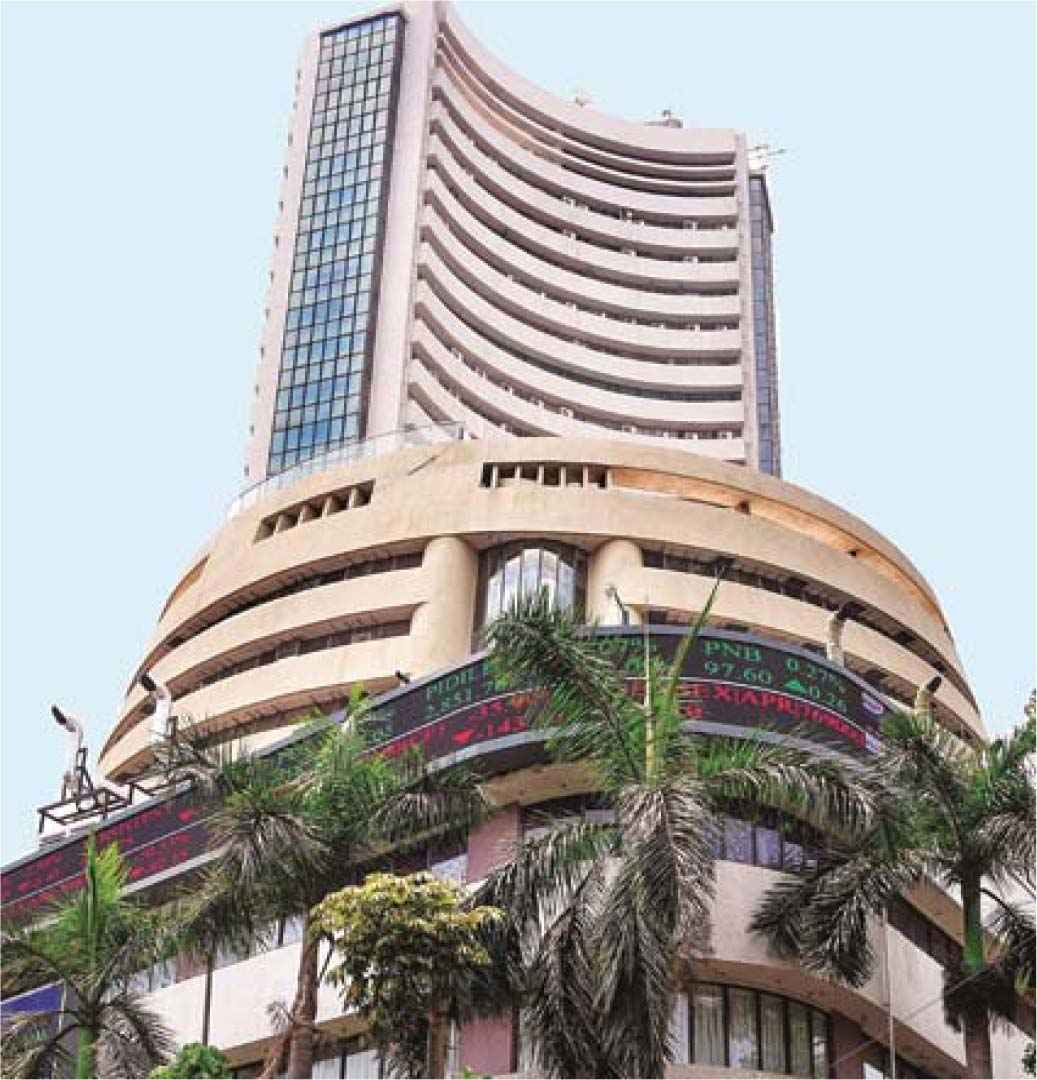
According to Goldman Sachs, the recent rupee weakness is overstated, and going ahead, the rupee is likely to trade in a range rather than fall steadily. Nomura has been more optimistic, forecasting a stronger rupee in due course, while DBS expects the currency to recover below 88/$. But the current situation does not support such an optimistic view. Of course, Goldman Sachs argues that India's macro situation is strong with high growth and low inflation, and hence the currency's slide looks larger than fundamentals justify. That means expect choppy trading, where the RBI steps in when moves get extreme but lets normal day-to-day volatility play out. The medium-term outlook is conditional recovery, albeit not guaranteed.
According to research analysts at ICICI Direct, several factors could push the rupee back forward the mid-80s, including improved foreign investment flows, a softer US dollar and RBI reserve rebuilding. Nomura's forecasts made 10 months earlier assumed a softer dollar momentum and inflows, and expected the rupee to strengthen to the low- to mid-80s by December-end. DBS similarly projects an end2025 level below 88/$, assuming these forces reassert themselves. But December 2025-end in very close and there are no positive changes in the environment.
Hence, it seems that if foreign investors continue offloading their holdings, India's trade deficit widens further, and President Trump does not soften his stand against India, the chances of the rupee sliding to the 100-mark cannot be stopped.
August 31, 2026 - Second Issue

Industry Review


VOL XVII - 12
August 16-31, 2026
Want to Subscribe?
Read Corporate India and add to your Business Intelligence
Unlock Unlimited Access
Lighter Vein

1 Year *
Subscription
Rs 1800 /-
3 Year *
Subscription
Rs 5000 /-
5 Year *
Subscription
Rs 8000 /-
5
International
Subscription
$ 99.99
Read Corporate India and add to your Business Intelligence
Popular Stories

A modern-day enigma and a ramification of humanity's never-ending advancements, e-waste refers to the scum con- cealed by the outward glow of ever-advancing technology.
Archives


Office Address
Unit No. 405, 4th floor, Madhu Industrial Park, Avadh Narayan Tiwari Marg, Mogra Village Road, Andheri (East), Mumbai – 400069.
Call/Whatsapp
If you are interested in advertising with Corporate India, please don't hesitate to contact us. Our team is here to assist you with the process and answer any questions you may have. We look forward to the opportunity to work with you and help your business reach its full potential.
Fill out the form below to subscribe to our newsletter and never miss an update