



Want to Subscribe?
Read Corporate India and add to your Business Intelligence

 Unlock Unlimited Access

Published: April 15, 2026
Updated: April 15, 2026
India's $2.6 billion transformer industry is on the cusp of a grand new phase, with powerful new drivers that include the country's increasing demand for electricity on the back of growing industrialisation and urbanisation. Upgradation of aging power infrastructure is another driver, propelling investments in advanced transformers and furthering the domestic sector's growth. New-age tech like digital monitoring, remote diagnostics and predictive maintenance has radically changed the image of a once stodgy sector.
Furthermore, government policies such as the Integrated Power Development Scheme (IPDS) and the National Smart Grid Mission are steering market growth by promoting the adoption of state-of-the-art transformers and green transformers that are easy on the environment. Industry estimates suggest that the domestic transformer market is growing at a CAGR of 7–9%, aside from its export potential. At a global level, the Asia Pacific region, driven primarily by China and India, is projected to grow at 6.7% annually, more than North America or Europe.
The $2.6 billion Indian transformer industry is on a roll. The silent backbone of India's power revolution, transformers remain the unsung national heroes as they enable power to travel across cities, industries and rural heartlands.
As India accelerates toward becoming a $5 trillion economy even as it pursues ambitious renewable energy goals, the transformer industry is undergoing a profound transformation of its own. What was once a stable, utility-driven sector is now at the crossroads of innovation, policy push and global opportunity. In other words, it's a market energised by demand. India's transformer industry has entered a high-growth phase driven by multiple converging forces.
According to the IMark Group, a renowned global research entity, the Indian power transformer market is undergoing a significant shift on the back of key drivers and emerging trends that reflect the nation's commitment to a resilient and efficient power infrastructure. A primary driver is the increasing demand for electricity, spurred by industrial growth and growing urbanisation. Besides this, the need to upgrade aging power infrastructure is propelling investments in advanced transformers, thereby bolstering the sector's market growth across the country.

Moreover, the increasing integration of digital monitoring, remote diagnostics and predictive maintenance technologies enhances the operational efficiency and reliability of power transformers — innovations that align with India's vision of a modernized and technology-driven sector. Furthermore, government initiatives and policies such as the Integrated Power Development Scheme (IPDS) and the National Smart Grid Mission are steering market growth. These initiatives aim to enhance quality and reliability of the power supply, promoting the adoption of state-of-the-art power transformers. Moreover, there is a growing emphasis on environmentally sustainable transformers with a focus on reducing losses and improving energy efficiency. Apart from this, the introduction of green transformers that comply with international standards for environmental consideration is anticipated to fuel market growth across India over the next decade.
The pace of growth of power transformers in India will quicken in line with rising demand for power on account of growing urbanization and industrial expansion, massive renewable energy integration, especially solar and wind, grid modernization initiatives like smart grids and digital substations, rural electrification, and infrastructure upgrades. Industry estimates suggest the Indian transformer market is growing at a CAGR of 7–9%, with export potential adding further momentum.
According to Mordor Intelligence, a renowned global think tank and research outfit, the transformer market is witnessing steady expansion as global energy systems continue to shift towards electrification and cleaner power sources.
Global renewable expansion and modernization are driving innovation in transformers. Rising solar, wind and EV charging demand leads to lower losses, higher permeability and smart monitoring capabilities. Nano crystalline amorphous alloys, along with advanced insulation, are being increasingly adopted to improve efficiency, reduce thermal stress and extend transformer life, boosting the growth of the transformer market worldwide.
Over a year ago, Asia Pacific accounted for 42.8% of global transformer revenue and is projected to grow at 6.7% (AGR), driven by China and India's renewable and grid investments. North America, the second largest market, may accelerate from a 4.2% to 5.8% CAGR through 2030. Europe faces retrofits amid material shortages, while South America and MEA see mid-single digit growth.
1. Renewable Energy Integration
The shift towards green energy is fundamentally altering transformer design and deployment. Solar and wind projects require specialized transformers capable of handling variable loads. There is an increased need for high-voltage transmission systems to connect remote sites, and a growing demand for grid stability solutions.
As India targets 500 GW of non-fossil fuel capacity by 2030, transformers will play a pivotal role in managing intermittency and ensuring efficient transmission.
2. Smart Transformers & Digitalisation
The industry is witnessing a shift from conventional hardware to intelligent systems. These comprise: adoption of IoT-enabled smart transformers; real-time monitoring and predictive maintenance; reduced downtime and improved efficiency. Digital substations and automation are no longer futuristic concepts — they are becoming industry standards.

3. Government Push & Policy Support
The following policy interventions are accelerating growth: Revamped Distribution Sector Scheme (RDSS); 'Make in India' initiatives boosting domestic manufacturing; and focus on reducing AT&C (Aggregate Technical & Commercial) losses. These policies are not just improving infrastructure — they are creating a robust demand pipeline for transformer manufacturers.
4. Global Hub
India is emerging as a global manufacturing hub due to competitive pricing and improving quality standards, increasing exports to Africa, the Middle East and Southeast Asia, and global supply chain shifts favouring India over traditional hubs. Indian companies are now competing with established global players, signalling a major shift in industry dynamics.
5. Sustainability & Efficiency Standards
Environmental considerations are becoming central due to adoption of energy-efficient transformers, transition towards eco-friendly insulating materials, and compliance with global efficiency norms. This trend aligns with India's broader climate commitments and corporate ESG goals.
Additionally, delayed payments from utilities remain a persistent issue affecting cash flows. According to experts, "India is uniquely positioned to become a global transformer manufacturing hub if policy and infrastructure support remain consistent."
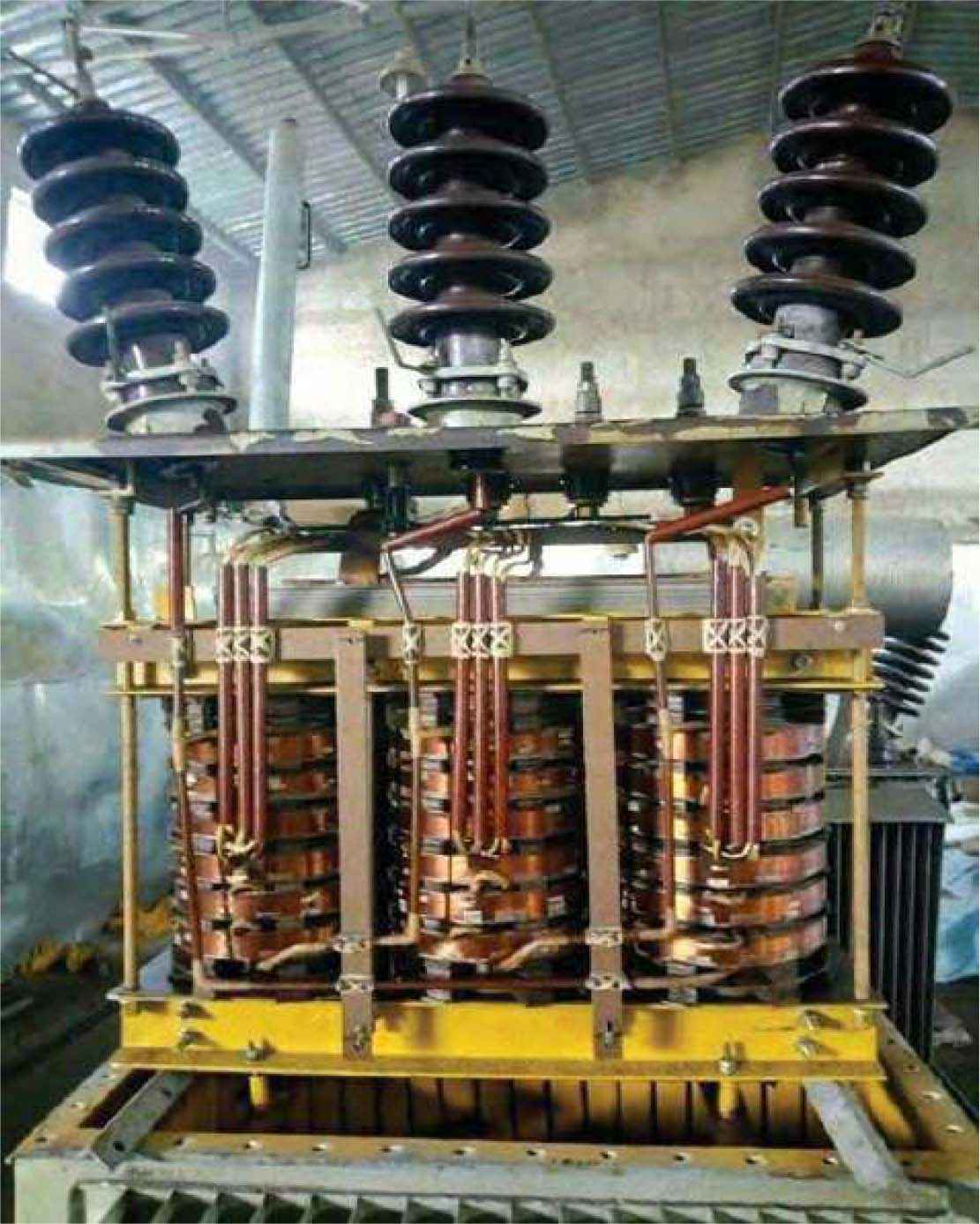
The outlook for India's transformer industry is undeniably optimistic. With rising electricity demand, rapid renewable expansion and strong policy backing, the sector is poised for sustained growth. The transition from conventional to smart, efficient and eco-friendly transformers will define the next phase. However, success will depend on how well companies navigate cost pressures, embrace innovation, and tap into global opportunities.
Transformers are no longer just electrical components - - they are enablers of India's economic ambition and energy transition. As the nation moves toward a smarter, greener grid, the transformer industry will remain at the core -- powering not just electricity, but progress itself.
The grand new phase of growth of the Indian transformer industry has brightened the prospects of the transformer companies. We have selected five top buys for discerning investors to accumulate at ever decline for rich long-term rewards.
Vadodare (Gujarat) - based, six decade old Voltamp Transformers is engaged in the business of designing, manufacturing and marketing transformers widely used by utilities, industries and infrastructure projects. The company has strong presence across all industry segments including power, steel, cement, oil and gas, chemicals and petrochemicals, data centers and energy among others. Large data giants like Larsen and Toubro, Technip, EPC, Thyssenkrup, Toyo, Petrotach, Engineers India, TATA Projects, Thermax and multinational engineering giants like Siemens, ABB, GE, Hitachi to name a few-have been regularly sourcing transformers upto 220kV voltage class from Voltamp since more than three decades. By now the company has completed more than 72000 installations in the country and overseas. Almost 15 percent of listed companies and MNCs operating in India are regular customers of Voltamp.
The company has four manufacturing facilities - all located in Gujarat with a total installed capacity of 14000 MVA. Needless to say that the company is doing very well in its financial performance during the last 12 years. Its sales turnover has expanded more than 4 times from Rs.445 crore in fiscal 2014 to Rs. 1934 crore in fiscal 2025 with operating profit shooting up over 24 times from Rs.15 crore to Rs.366 crore and the profit at net level spurting over 12 times from Rs.26 crore to Rs.325 crore. The company's balance sheet is very robust with its financial position being extremely strong with reserves at the end of 30th September 2025 standing at Rs.2161 crore- over 216 times its equity capital of Rs.10 crore. The company is having either negligible debt or zero debt. Prospects for the company going ahead are all the more promising. Interestingly, the demand for its transformers is exceeding its installed capacity of 14000 MVA. For the fiscal 2025, the sales volume was 16400 MVA and it will not be less than that in the fiscal 2026. Little wonder, the company is building up a new stateof- art facility in Gujarat with a capacity of 6000 MVA per annum. The plant is coming fast and is likely to go on stream in the first half of the fiscal 2027. Comments a leading rescarch analyst, if demand stays strong and execution steady Voltamp could be the tortoise in a field full of hares a slow and steady compounds that keeps delivering year after years.
Bharat Bijlee Ltd a pioneer of Electrical Engineering is in India an old school engineering firm with a solid reputation built over the last eight decades. The Company manufactures transfomers, Electric motors, and automation system a diversified base that gives it stability even in down cycles. The company's recent strategy has been to modernise production and expand export Markets. The company is expanding its transformer manufacturing capacity at its Airolei Works in Navi Mumbai from 18000 MVA to 28000 MVA with a goal of eventually reaching 35000 MVA.The move comes as demand surges for high voltage transfomers particularly those being used in 220 kV transmission systems. Also its move aligns perfectly with the government's big push to build green energy corridors and new transmission networks that can handle country's fast growing renewable energy output.
Gujarat-based Transformers and Rectifiers (TARIL) is the country's leading manufacturer of transformers of the 1200 kV class. It has a wide range of transformers like power and distribution transformers, furnace transformers, rectifir transformers and special transformers. The company has strong in-house design and technical expertise along with technical collaboration /JV ties for 765 kV transformers and rectifiere, along with a diversified customer base in India and a presence across 25 countries. Around 45% of its revenues come from utilities like SEB, PGCIL and Railways, while 55% comes from industries for renewables and exports, including third-party exports.
TARIL was dull and listless in performance for several years, but has now started doing very well on the financial front. Sales, which were moving in a narrow groove of Rs 732 crore (fiscal 2014) and Rs. 742 crore (fiscal 2021), shot up to Rs 2,017 crore in fiscal 2025, while operating profit which was more or less stagnant between Rs. 42 crore (fiscal 2014) and Rs. 71 crore (fiscal 2022), zoomed to Rs. 327 crore in fiscal 2025, and net profit which was hovering at single digit between Rs. 5 crore (fiscal 2014) and Rs. 8 crore (fiscal 2021), took a big jump to Rs 216 crore in fiscal 2025. Though the first half of 2026 was not that encouraging, the situation has started improving from Q3FY26 , and its future prospects going ahead are all the more promising.
The transformer rectifier market is poised for explosive growth. According to research analysts, this market will hit the $ 2 billion mark by 2026, driven by a rise in automation, and is expected to reach $ 2.70 billion by 2032, exhibiting a CAGR of 4.6 per cent in this period. The transformer rectifier market is experiencing increased adoption of energy-efficient and compact models. Additionally, the rising demand for renewable technologies is fuelling the need for advanced transformer rectifiers that can seamlessly integrate with solar and wind power systems.
The technology heavyweight of the electricity engineering segment, Hitachi Energy India (the Indian outfit of the Japanese multinational) does not make only transformers but also builds the systems that move power efficiently across vast networks. The company is doing very well in its financial performance, with its sales turnover during the last seven years.
almost doubling from Rs 3,236 crore in fiscal 2019 to Rs 6,385 crore in fiscal 2025, the net profit inching up from 337 crore to Rs 605 crore, and the profit at net level shooting up two and half times from Rs 165 crore to Rs 384 crore
Prospects for the company going ahead are all the more promising as it is poised for strong growth, driven by: A) It's being a leading player in HVDC technology with a Rs 434 billion addressable opportunity over the next three years B) An energy transition-led addressable market opportunity of Rs 1 trillion C) Increasing demand from high-growth industries such as data centre D) A strong global presence and E) Improving share of services and exports, driving margin expansion. Well-known brokerage house PL CAPITAL estimates a revenue/PAT CAGR of 36.3% /67.5% over fiscal 2025 /2028 with the EBIDTA margin expanding by 712 bps, led by operating leverage. Hitachi Energy India is a global pioneer in HVDC technology, having delivered over 50% of the world's HVDC projects. With a robust HVDC order book of Rs 20,000 crore, Hitachi Energy India is well-placed to capitalize on the HVDC upcycle and deliver robust growth in the coming years.
The company's edge lies in its parent's network access to global R&D deep relationships with utilities and the capital strength of Hitachi. The company is in the process of scaling up its transformer and insulation product facilities in India, and is aiming to cater to rising demand both at home and overseas. Unlike smaller players, Hitachi Energy India participates across the entire value chain from high-voltage transformers to digital substation solutions. That gives it a durable competitive advantage, and even its stock trends to trade at a premium valuation.
CG Power and Industrial Solutions is an engineering conglomerate engaged in providing end-to-end solutions to utilities, industries and consumers for the management and application of electricity. After emerging from a difficult restructuring phase from Crompton and Greaves, the company has found its footing under the new management of the Murugappa group and is investing heavily in future growth.
Today, the company is an undisputed leader in the electrical engineering sector. It manufactures transformers, motors and switchgears which are the core components of India's Industrial and power infrastructure. The company is investing Rs 712 crore in a new transformer plant in Sehore, Madhya Pradesh. Once complete, it will add 45,000 MVA of capacity and lift the company's total output to 85,000 MVA.The new plant will focus on manufacturing high-voltage transformers upto 765 kV class to capture demand from critical national power infrastructure projects.
CG Power's remarkable turnaround is one of the most interesting case studies in Indian manufacturing history. From a near debt trap to a robust balance sheet, it shows how disciplined capital allocation can revive a legacy business. During the last 12 years, the company's financial performance underwent tremendous fluctuations. Its sales turnover slumped from Rs 13,632 crore in fiscal 2014 to Rs 2,964 crore in 2021, when it was acquired by the Murugappa group. In addition to this, the company's operating profit tumbled from Rs 612 crore in fiscal 2014 to Rs 88 crore in fiscal 2016, and then plunged into the red in 2017, incurring a loss of Rs 128 crore. The company thereafter managed to turn the corner with a small profit of Rs 31 crore in 2021, but the net profit suffered a loss of Rs 1,331 crore that year.
A far-sighted and dynamic Velayam Subbiah, chairman of the Murugappa group, picked Natarajan Srinavasan to revive the company and take it back on the growth track. Mr Srinivasan wasted no time in taking effective measures to bring the company back to the path of growth. As a result, in fiscal 2025 , its sales turnover jumped to Rs 9,909 crore with operating net profit skyrocketing to Rs 973 crore. If the company can manage growth without overextending, CG Power may well be on its way of becoming the dominant transformer player in India's next industrial decade.

Around 30% to 50% of planned U.S. data centers set for 2026 are at risk due to transformer shortage, reveals a study report by bloom berg power grid limits,and supply chain delays from China. Tech giqawatts of 16 targeted are under construction.
Market reports indicate that almost Half of America’s AI data centers planned for 2026 are delayed or cancelled. They ‘re waiting on transformer, prices of which have tripled in the last four years. Lead times are 2 to 4 years.
Points out a chemical plant manufacturer. Each new plant we build competes with AI data centers for the same grid equipment. Every large power transformer in America runs on grain-oriented electrical steel. It’s made by rolling iron and silicon together until their crystals align in one direction. No other alloy works at utility scale and only one US company makes it : Cleveland - Cliffs. The average large power transformer on the grid is 38 years old. Service life is 40. Amazon, Google, Meta, and Microsoft committed $ 650 billion to Al infrastructure this year. Nvidia’s most expensive GPU is useless without a transformer. The US economy is increasingly tied to data centers and the AI boom. There’s just one problem: The electrical equipment needed to bring facilities online is hard to come by.
It’s already creating delays and forcing developers to get creative with how they source equipment. Today’s reality dives deep into one of the most pressing issues facing data centers today. Plus, the God Squad has passed judgment on the fate of endangered species in the Gulf of Mexico.
In the red dirt of Abilene, Texas, more than 6,000 workers travel around on electric buggies, spending day and night constructing a massive data center that will feed the world’s growing artificial intelligence needs. When completed this year, the eight sprawling buildings — which OpenAI will use — will consume 1.2 gigawatts of power, or enough electricity for nearly 1 million American households.
As the global AI race heats up, there is a huge rush to build data centers fast. There’s no lack of money chasing these projects, with tech giants Alphabet Inc., Amazon.com, Meta Platforms Inc. and Microsoft Corp. committed to spending more than $650 billion this year alone. Yet neither ambition nor capital is enough to materialize all the necessary components, particularly transformer.
September 30, 2026 - Combined Issue

Industry Review


VOL XVII - 13
September 16-30, 2026
Want to Subscribe?
Read Corporate India and add to your Business Intelligence
Unlock Unlimited Access
Lighter Vein

1 Year *
Subscription
Rs 1800 /-
3 Year *
Subscription
Rs 5000 /-
5 Year *
Subscription
Rs 8000 /-
5
International
Subscription
$ 99.99
Read Corporate India and add to your Business Intelligence
Popular Stories

A modern-day enigma and a ramification of humanity's never-ending advancements, e-waste refers to the scum con- cealed by the outward glow of ever-advancing technology.
Archives


Office Address
Unit No. 405, 4th floor, Madhu Industrial Park, Avadh Narayan Tiwari Marg, Mogra Village Road, Andheri (East), Mumbai – 400069.
Call/Whatsapp
If you are interested in advertising with Corporate India, please don't hesitate to contact us. Our team is here to assist you with the process and answer any questions you may have. We look forward to the opportunity to work with you and help your business reach its full potential.
Fill out the form below to subscribe to our newsletter and never miss an update