


Want to Subscribe?
Read Corporate India and add to your Business Intelligence

 Unlock Unlimited Access

Published: August 15, 2026
Updated: August 15, 2026

Along with the economy, the Indian stock market too is caught in the pincer grip of the US-Iran war and US President Donald Trump’s tariff sword, which he has unsheathed yet again.
The US/Israel-Iran dogfight has played havoc with the prices of crude oil, while the Iranian regime’s chokehold on the Strait of Hormuz has disrupted global supply chains.
This war of attrition has, combined with the effects of the long-drawn Russia-Ukraine war, administered a body blow to the economies of several other uninvolved countries, including India. With the Indian stock market taking a beating, stock prices have tumbled and investors have lost a cumulative Rs 2 lakh crore in wealth.

Given the fact that the Indian stock market is as good as dancing to the US President’s tune at this juncture, retail investors should play safe and opt for adequate returns rather than running after an illusory hike in market prices. Corporate India’s advice is to focus on well-managed companies which give up to four dividends annually, irrespective of market movements.
Of late, India’s stock market has morphed into a strange, intriguing creature. No research analyst or market pundit is in a position to predict in which direction the market will move the following day. Significant changes in any company fundamentals, which would normally influence the market price of a stock noticeably, seem inconsequential at present. Technical charts have started yielding topsy-turvy readings. RSI (relative strength index) has no relation to price movements, Bollinger bands have lost their ‘bonding’ with market trends, and moving averages don’t ‘move’ with market movements.
The market is primarily governed by two seemingly disparate factors: one, growing global geopolitical tensions exacerbated by the US-Iran war; and two, US President Donald Trump’s tariff ‘weapon’ to maintain American supremacy globally.
US air raids on Iran and the latter’s missile attacks on the infrastructure of American allies in the Middle East have stoked an inflationary price spiral in crude oil and have disrupted global supply chains, slowing down global economic growth. This war of attrition has not only hit the actors involved – Iran, the US and Israel – but, combined with the effects of the long-drawn Russia-Ukraine war, has administered a body blow to several other countries, most of whom have no role to play in the conflict. Among them, India, which is hundreds of miles away from the theatre of war, has been hit hard. The country’s economic growth is decelerating, inflation is spiralling, the value of the rupee is falling and the number of Indians below the poverty line is rising.
Unsurprisingly, the Indian stock market too has taken a beating. Stock prices have tumbled, with investors losing over Rs 2 lakh crore of their collective wealth. As things stand, the market’s next phase rests almost entirely on the actions of President Trump. If he announces that he is going to end the war, the market will shoot up, and if, as is quite likely, he reverts to talk of war, the market will collapse, regardless of the direction of the fundamentals or technical considerations. In other words, the Indian stock market will dance to the tune of the US President, regardless of factors that normally govern market movements.
Hence, the question making the rounds of market circles and giving sleepless nights to retail investors is: what should they do in this highly volatile market situation? This dilemma becomes even more acute since even fundamentally strong or technically bullish stocks may plummet if the US President sounds the drumbeats of war yet again. In fact, even in the case of a corporate behemoth like Reliance Industries, which has a robust balance sheet and ambitious growth plans, the stock price has declined to near its 52-week low.
Caught between the devil and the deep sea, our readers – many of whom are senior citizens living off the returns on their investments – have asked us what they should do in these circumstances. Our advice focuses on safe returns rather than illusions of high returns in these troubled times.
At a time when the Indian market – a victim of factors beyond its control – is highly volatile and fluctuates wildly, retail investors should play safe and opt for adequate returns rather than running after an expected appreciation in market price. In fact, there are companies which give up to four dividends in a year, irrespective of price movements in the market. We at Corporate India recommend five companies which give quarterly dividends, and whose managements are trustworthy. Here goes the list. Happy investing.

Mumbai-headquartered Tata Consultancy Services, a flagship company of the illustrious industrial house of the Tatas, is the country’s largest IT services company, and one of the world’s most respected technology consulting firms.
Founded in 1968 by Tata Sons, TCS began its career as a division of the Tata group to provide software services and IT consulting, and subsequently evolved into India’s largest IT services company, pioneering the global outsourcing model. Three decades after its establishment, it evolved into a global digital transformation, cloud, artificial intelligence, engineering and consultancy powerhouse with clients in more than 55 countries, expanding its offerings to include IT consulting, software development and digital transformation, serving clients across banking, retail, healthcare and manufacturing. By the end of fiscal 2025, TCS emerged as a global leader with a record $ 30 billion in revenue, employing over 6 lakh professionals across 50 countries. The company is highly profitable as it maintains industry-leading margins (24.3% in 2025) and a strong focus on AI, cloud and general AI innovations.
The company’s robust deal pipeline ($ 12.2 billion TCV in Q4 2025) and client-centric approach solidify its position as a trusted partner for enterprise transformation.
The company is doing extremely well on the financial performance front. During the last three years when the IT industry started facing challenges due to reduction in discretionary spending, the revenue of TCS has increased from Rs 2,40,893 crore in fiscal 2024 to Rs 2,55,324 crore in fiscal 2025 and further to Rs 2,67,021 crore in fiscal 2026, with operating profit shooting up from Rs 59,311 crore to Rs 66,338 crore respectively and the profit at net level surging from Rs 46,585 crore to Rs 52,820 crore. Operating margin improved from 24.6% in 2024 to 25% in 2026, and net margin from 19.3% to 19.8%.
The company consistently generates substantial free cash flow as capital expenditure is relatively low, working capital is efficiently managed, and collections remain strong. In fact, operating cash flow exceeded net income in fiscal 2026, supporting generous shareholder distributions.
Little wonder then that TCS is widely regarded as one of India’s premier dividend paying companies.
Thus, notwithstanding a weak global IT spending cycle, TCS has maintained positive revenue and profitability growth in reported terms, reflecting the resilience of its diversified business model.
The company’s future prospects are quite promising. Its growth drivers will be: (a) Artificial intelligence, (b) Generative AI, (c) Cloud integration, (d) Cyber Security, (e) Banking modernisation, (f) Engineering Services, (g) Healthcare digitisation, (h) Digital transformation, and (i) Large multi-year outsourcing contracts.
The company’s order book is robust. It has reported strong total contract value (TCV) wins in fiscal 2026, providing revenue visibility for quite a long time. At the beginning of the current fiscal 2027, it recorded its highest ever quarterly TCV of $ 10 billion, indicating an increase of 16% YOY, with BFSI at $ 3.2 billion and consumer business at $ 1.8 billion. Fiscal 2026 international business growth has surpassed FY 2025, supported by deal ramp-ups and robust demand in AI-led transformation, modernisation and cost optimisation programmes.
TCS has moved toward an AI-led enterprise model, prioritising autonomous decision-making and cognitive reasoning to capture high-margin transformation opportunities. Its AI strategy rests on a five-level service autonomy framework, which has helped scale AI-related services to a $1.5 billion annualised revenue run rate with 16.3% sequential growth.
TCS eyes a 26-28% EBIT margin while committing $ 1 billion in annual opex on AI innovation and talent development. It expects a revenue/EBITDA/PAT CAGR of 5.4%/6.9%/7.2% over FY25-FY28E, on strong deal wins, deep tech expertise and robust execution history.
With major downside risks largely behind it, TCS presents a favourable risk-reward profile. As a result, a research analyst maintains a ‘Buy’ with a PT of Rs 3,900. At the current market price, the stock trades at 20.9x and 19.0x on FY27E and FY28E EPS.
The company’s shift to transform into an AI-led enterprise prioritises autonomous decision-making and cognitive reasoning over basic data digitisation, broadening its addressable market for end-to-end enterprise transformation. TCS aims to capture higher-value advisory and implementation revenues by positioning AI as a ‘decision coach’ rather than a mere productivity tool, while fostering deep structural integration across client value chains. TCS’s five pillars to drive this AI shift are: Internal Transformation – an ‘AI-first’ culture that prioritises AI development; Service Autonomy – shifting from manual automation to a five-level service autonomy framework to re-engineer all service lines; Talent Re-engineering – restructuring the workforce into an AI-native model, transforming how teams are built and projects are delivered; Value Chain Transformation – re-imagining client business processes to drive high-value outcomes beyond simple software productivity; and AI Ecosystem & M&A Play – better speed-to-market via hyper scaler partnerships and targeted acquisitions to capture rapid technological shifts.
The following points demonstrate the firm’s successful traction in the AI-led services market: AI-related services have achieved a $1.5 billion annualized revenue run rate. TCS reported a 16.3% q-o-q growth specifically for AI-related work. About 54 of the top 60 clients (those generating >Rs 60 crore annually) are actively engaged in AI projects.
About 85% of all clients generating over $ 20 million in revenue are leveraging the firm for AI-specific work. TCS has trained its entire sales and pre-sales force in AI and over 180,000 associates in higher-order AI skills.
The company has executed ~5,000 AI engagements. Over 200 platform implementations have been completed across core AI assets like Ignio and Wisdom Next. TCS’s inorganic strategy prioritises accelerating speed-to-market by acquiring specialized capabilities in strategic advisory, deep tech expertise and market access.
In the recent depressed market situation, the TCS stock price has moved down to Rs 2,315. Once the prevalent geopolitical tensions start receding, the stock price will start moving up. No doubt, the Iran-USA war, US President Donald Trump’s negative policy approach to countries like India, and reduction in discretionary spending have adversely affected the IT industry, and TCS will not remain the same as it was last year. But relatively speaking, it will keep its share-holders happy with reasonably good returns.
Firmly rooted and welcoming a bold, new dawn
Coal India (CIL), the undisputed titan of fossil fuels, is engineering a historic pivot that could permanently alter its corporate trajectory. For decades, the public sector undertaking (PSU) has built its fortunes solely on digging black diamonds out of the earth. However, the global landscape is changing fast. In an extraordinary strategic shift, the miner is actively evaluating a high-stakes proposal to acquire Chilean lithium assets held by a unit of Canada’s Wealth Minerals. This massive move into battery-grade raw materials signals that the world’s largest coal miner is ready to shed its monolithic fossil fuel identity.
This shift is more than just an ambitious expansion into a flashy sector. It represents a vital survival mechanism for a brand facing an impending global energy transition. By targeting hard rock and brine lithium prospects in Chile’s mining heartlands, Coal India is aggressively positioning the public sector giant as an indispensable player in the future electric vehicle (EV) supply chain. The decision injects new life into its investment narrative, turning a traditional dividend utility stock into a forward-looking transition asset.

B Sairam, CMD, Coal India
The implications for long-term growth are immense. Securing global lithium mines gives the company access to the critical minerals necessary to power modern battery technology. While coal continues to feed India’s power grids, this new initiative opens a separate, fast-growing revenue pipeline. The venture cushions the enterprise against evolving climate regulations, satisfies eco-conscious institutional funds and ensures long-term corporate viability.
“Increased coal production and improved quality coal supplies remain our core functional area in meeting the energy demand of the country. We are also actively foraying into solar power, critical mineral acquisitions and coal gasification. This dual approach cushions the company against imminent disruptions,” opines Coal India Chairman and Managing Director B Sairam.
Even as green opportunities emerge, the core business continues to perform exceptionally well. The coal miner operates on an unparallelled scale, running more than 350 active mines alongside processing plants and research complexes. Powering India’s growth requires massive amounts of raw energy, and this State-backed giant reliably handles that pressure well.
The company controls a massive mining footprint through seven wholly owned coal-producing subsidiaries – Bharat Coking Coal (BCCL), Central Coalfields (CCL), Eastern Coalfields (ECL), Mahanadi Coalfields (MCL), Northern Coalfields (NCL), South Eastern Coalfields (SECL) and Western Coalfields (WCL). A specialised eighth subsidiary Central Mine Planning & Design Institute (CMPDIL) provides critical technical support and architectural planning. Together, these bodies work in sync to safeguard India’s long-term energy security.
To fully appreciate this massive modern enterprise, one must look back at its historical origins. The foundation was built out of deep economic necessity. Before the 1970s, India’s coal mining industry was highly fragmented, plagued by erratic private operations and unsafe labour practices. Realising that vital natural resources required centralised oversight, the government nationalised coking coal mines in 1971 and non-coking operations in 1973. These individual systems were subsequently merged in 1975 to create the unified entity known today as Coal India. Over the next 50 years, the organisation evolved from a basic domestic miner into a celebrated Maharatna public sector enterprise, securing massive influence across global heavy industry.
Coal India’s top management has officially branded 2026 as its Year of Reform and Transformation. The current 360-degree blueprint prioritises mechanical loading setups, artificial intelligence (AI) for mine site safety and automated conveyor corridors. Massive capital allocations are flowing directly into building dedicated rail links to cut transport friction. Additionally, the company is reviving abandoned underground pits through collaborative public-private partnerships (PPPs).
The overall production path remains highly ambitious. To comfortably support India’s growing economic engine, the government has set a firm output target of 1.5 billion tonnes (bt) by 2030. The corporate strategy also includes an investment pool of over Rs 46,000 crore dedicated to coal gasification initiatives designed to convert raw fuel into clean chemicals. This comprehensive multi-sector approach keeps competitors at bay while extracting the highest possible value from evolving energy markets.
The underlying operational strength shows clearly on the corporate balance sheet. In FY26, the consolidated revenue from operations reached a massive Rs 1,68,400 crore, demonstrating its immense structural value to the country. The financial year concluded with a consolidated profit after tax (PAT) of Rs 31,071 crore, proving its ability to extract strong profits even amid changing macroeconomic conditions.
The positive financial momentum continued straight into the new financial year. For Q1 FY27, the company posted consolidated revenue of Rs 48,295 crore, achieving a steady 8.44% year-on-year (YoY) growth compared to the Rs 44,535 crore reported in the same quarter last year. Consolidated net profit for Q1 FY27 came in at Rs 8,852.11 crore, a marginal rise from Rs 8,797.40 crore in Q1 FY26, despite absorbing higher operating overheads and an expanded capital expenditure programme.
A review of these fundamental metrics reveals a highly attractive investment profile. With a full-year FY26 EPS of Rs 50.46, a quarterly Q1 FY27 EPS of Rs 14.36, and a Book Value Per Share of Rs 193, the company demonstrates excellent financial health. The stock trades at a P/E ratio of 8.04x, reflecting very reasonable valuations for a company generating massive free cash flows. A P/B ratio of 2.11x further underscores that the stock is fundamentally well supported by tangible industrial assets.
For retail shareholders, this financial health translates into strong, predictable rewards. The company remains an exceptional dividend-paying powerhouse. Following its strong FY26 performance, the board declared a final dividend of Rs 5.25 per share. Immediately after, the leadership declared a Rs 5.50 per share interim dividend for Q1 FY27. This consistent payout pattern provides defensive equity protection and an attractive yield that easily beats standard fixed-income options.
“Coal India is entering a new phase of growth, with its 1 billion tonnes production ambition, diversification into renewables, coal gasification and critical minerals, and potential value unlocking through subsidiary listings, providing multiple levers for long-term shareholder returns,” points out ICICI Direct.
Long-term investors have a lot to look forward to. The company’s traditional cash-flow model is backed by steady domestic demand, since coal still generates a little over 70% of India’s electricity. At the same time, the transition into international lithium assets opens up exciting new growth horizons. The company offers a unique combination: a high-yielding value asset and an emerging player in the clean energy transition.
The era of viewing this industrial giant as a slow-moving, legacy PSU is officially over. By combining its massive domestic coal mining operations with forward-looking transition investments, the company is actively reinventing itself for the modern age. It remains an essential cornerstone of India’s heavy industry, effectively balancing present power demands with future energy needs. As the global economy evolves, this mining titan stands strong, powering the nation’s current grid while building the foundations for a cleaner tomorrow.
On the financial front, the company has made steady progress. During the last 12 years, its sales turnover has more than doubled from Rs 74,120 crore in fiscal 2015 to Rs 1,68,401 crore in fiscal 2026, with operating profit also more than doubling from Rs 17,343 crore to Rs 37,172 crore and net profit spurting from Rs 13,727 crore to Rs 31,071 crore.
The company’s shares are quoted around Rs 405-410. According to research analysts at ICICI Direct, the company is entering a new phase of growth with its 1 billion tonnes production ambition, diversification into renewables, coal gasification and critical minerals, as well as potential value unlocking through subsidiary listings, thus providing multiple levers for long-term shareholders.
Evolved from being a computer hardware company in the 1970s into one of India’s top three global IT services companies, HCL Technologies is a world-renowned IT player serving Fortune 500 clients across banking, healthcare, telecom, manufacturing, retail and government sectors.
The company, which operates in 60 countries, is particularly strong in engineering services, cloud transformation, cyber security and AI-led digital transformation. Its acquisition of IBM software products and continued investment in AI have diversified the business beyond traditional IT outsourcing.
In mid-July 2026, HCL Technologies (HCLTech) signed an expansive seven-year strategic partnership with The Guardian Life Insurance Company of America. The agreement expanded HCLTech’s association with the US life insurer by facilitating an artificial intelligence (AI)-led transformation of Guardian over the next seven years. The centrepiece of the pact was HCLTech’s $10.5 million acquisition of Guardian India Operations, the global capability centre (GCC) of Guardian Life.
HCLTech’s agreement with Guardian is not a vanilla outsourcing transaction. It represents a tactical shift in how an Indian technology company navigates corporate scaling. By absorbing nearly 2,000 highly specialised technology and operations professionals directly into a dedicated strategic business unit (SBU), HCLTech has carved out a GCC within its control. This transaction immediately creates a high-margin, intellectual property (IP)-centric delivery framework tailored to advance HCLTech’s analytics, data engineering and automation.
The immediate implications are profound. While its peers have struck similar deals in the past to buy their clients’ units, HCLTech’s pact stands out in many ways. The TCS-Citigroup partnership and Wipro-Metro tie-up in the past were designed to gain from cost arbitrage. But with the Guardian Life agreement, HCLTech effectively converts the Indian software services industry’s largest adversity – the expansion of GCCs – into its advantage.

Roshni Nadar, Chairperson, HCLTech

Motilal Oswal, MD & CEO, MOFSL
By taking absolute ownership of a client’s internal capability engine, HCLTech converts a legacy operational cost centre into a proprietary engine of global innovation. The deal effectively embeds the company’s proprietary AI Force platform within the exclusive 2,000-person SBU and allows Guardian’s domain experts to train the software’s insurance intelligence. The SBU and the AI Force platform will simultaneously co-create specialised IP that HCLTech can later leverage to pitch for future AI-powered enterprise deals.
“The technology industry is undergoing a tectonic shift as AI reshapes how work gets done, with its promise of agility and productivity. We see AI and its adjacent technologies as a powerful tailwind, one that will open larger opportunities and accelerate our growth,” stresses HCLTech Chairperson Roshni Nadar.
The Guardian India deal once again reinforces HCLTech’s strategic gambits that place it ahead of its competitors. As India’s third-largest information technology (IT) services exporter, HCLTech has historically charted a course fundamentally distinct from the linear headcount-led models of its peers.
While its competitors relied heavily on traditional banking and financial services software outsourcing, HCLTech segmented its operational focus into three distinct business segments: IT and business services – delivering large-scale corporate application transformations – engineering and R&D services – helping clients build physical and digital products – and HCL Software products and platforms – a high-margin segment that sells proprietary software licences directly to global enterprises.
This product-and-platform-heavy focus dates back to the company’s founding in 1976. Emerging from an entrepreneurial garage, HCL – set up by Shiv Nadar, Arjun Malhotra, Ajay Chowdhry, Yogesh Vaidya, Subhash Arora and D S Puri – originally manufactured and sold computer hardware before shifting to software engineering. That deep hardware-software integration ingrained an engineering-first culture in HCL that its peers have struggled to replicate.
The jewel in its financial crown is HCL Software. This unit was heavily reinforced by the $240 million (around Rs 2,100 crore) acquisition of Jaspersoft in December 2025. By integrating Jaspersoft, a premier embedded business intelligence and analytics platform, into its Actian data platform, HCLTech avoids the trap of standard time-and-materials pricing. When clients pull back on discretionary consulting spend, HCLTech continues to generate high-margin recurring software maintenance revenue. This capability sets it apart from rivals that depend solely on human billing hours.
The global technology services industry is navigating a confluence of macroeconomic and technological shifts. The proliferation of GenAI threatens to automate baseline coding, testing and support workflows, directly undermining traditional volume-based pricing models. Concurrently, strict immigration, visa and local protectionist policies across the US unveiled by President Donald Trump have compelled Indian tech majors to rethink their legacy offshore delivery mechanisms.
HCLTech has proactively adjusted to these pressures by using automation to improve internal efficiencies while repositioning its external market offerings. Rather than ignoring the threat of GenAI to its baseline talent metrics, the Noida, Uttar Pradesh-based company has deployed its proprietary AI Force platform. This orchestration layer embeds developer assistants across the entire software delivery lifecycle, improving legacy-to-cloud transition speeds by up to 30%. This allows the company to execute complex transformation deals with lean, high-output teams, sustaining operating margins even as legacy billing rates face downward pressure.
To counter protectionist policies in its largest revenue geography North America, HCLTech has executed a targeted onshore engineering expansion. Rather than relying on visa-dependent talent transfers, the company has ramped up hiring inside local, near-shore delivery hubs across Canada, Eastern Europe and Latin America.
Furthermore, by finalising the acquisition of Hewlett Packard Enterprise’s (HPE) Communications Technology Group, HCLTech has added highly specialised telco engineering software assets and an advanced engineering base directly inside global markets. This ensures full compliance with local regulatory requirements while embedding the company deeply within Western engineering ecosystems.
Smart plans have helped the software company sail past the turbulent waters engulfing the IT industry. Besides, they have also boosted its balance sheet amid broader macroeconomic friction across global corporate tech ecosystems. For the full financial year ending March 31, 2026, HCLTech reported consolidated revenues of approximately Rs 1,22,340 crore, representing a steady, stable 3.9% year-on-year (YoY) growth in constant currency. Full-year net income reached around Rs 15,600 crore. The underlying balance sheet remains exceptionally strong, showcasing near-zero long-term debt and a robust cash-to-free-cash-flow conversion rate exceeding 120%. The robust numbers ensure ample internal resources for ongoing IP investments.
The operational momentum accelerated into the first quarter of FY27 ended June 30, 2026. Quarterly net sales stepped up to about Rs 30,450 crore, generating an optimised net profit of around Rs 4,070 crore. This bottomline performance beat general market consensus expectations, driven primarily by disciplined pricing across specialised cloud infrastructure and high-margin product renewals.
Despite encountering persistent labour cost headwinds and minor wage revisions, the company maintains its long-term EBIT (earnings before interest and tax) operating margin within a resilient corridor. Concurrently, the management has retained its formal constant-currency revenue guidance for the full financial year at a measured, conservative baseline. This underscores the company’s focus on high-margin deal selection over pure volume acquisition.
From an equity market perspective, HCLTech presents a compelling value case for investors. Trading on the National Stock Exchange (NSE) at Rs 1,349.30 (CMP of August 7, 2026), the equity commands a market capitalisation of Rs 3.65 lakh crore. The stock trades at a current trailing Price-to-Earnings (P/E) ratio of 20.9x, presenting a clear valuation alternative relative to historical industry peaks. With Book Value Per Share (BVPS) standing firmly at Rs 277, this yields a Price-to-Book (P/B) ratio of roughly 4.8x.
Backed by an established corporate capital allocation blueprint mandating substantial payout structures, the company maintains an expected dividend yield of 4.45 per cent. This is reinforced by a fresh interim quarterly payout of Rs 12 per share. The generous dividend payout confirms HCLTech’s status as a core cash-generating vehicle for long-term investors.
“HCLTech remains a preferred pick in the IT services space due to its superior execution and resilient business model. The company’s exceptional free-cash-flow conversion directly underpins its aggressive capital allocation strategy, allowing it to consistently deliver high payout structures and an attractive dividend yield while simultaneously funding its enterprise AI expansion,” notes Motilal Oswal Financial Services.
The company commands a stable valuation multiple reflecting its structural software exposure. It also offers a higher dividend yield profile than that of its service peers while matching them on underlying capital returns. HCL Technologies is no longer a traditional, labour arbitrage-dependent IT contractor. It has methodically reconstructed its operational core. By executing tactical asset additions, as seen in the acquisition of Guardian GCC and the purchase of a targeted business like Jaspersoft, HCLTech has successfully detached its topline expansion from linear headcount scaling.
HCLTech’s dual revenue architecture of balancing traditional digital enterprise modernisation with a high-margin corporate software ecosystem provides a highly reliable operational safety net. HCLTech stands out as a highly resilient and cash-generative technology company that is leveraging an AI-driven world far ahead of its competitors.

Udaipur (Rajasthan) headquartered, a PSU-turned-private sector entity, Hindustan Zinc is the largest zinc producing company in India, the second largest integrated zinc producer and the third largest silver producer (as a by-product) in the world. Now belonging to the Vedanta group headed by Mr. Anil Agarwal, the Indian industry leader and the global market leader, Hindustan Zinc is distinguished for its operational excellence, financial acumen, innovation, technological supremacy, customer centricity, ethical governance and leading ESG practices.
Established in 1966 as a government of India owned PSU, the company operated with low productivity. The country was heavily dependent on imports as the domestic production was far short of the country’s requirement. In 2002, the government sold the management control to the Vedanta Group. The privatisation of HZL proved transformational for the company, which has made sustained growth and value creation its central pillars and sustainability its overarching ethos of business strategy.
Today, HZL runs a fully integrated mine-to-metal operation with facilities across Rajasthan and Uttarakhand. In fiscal 2026, it delivered record mined metal output of 1,114 KT and refined metal production 1,048 KT, alongside silver production of 627 MT. Zinc, which accounts for 81% of the refined metal portfolio, reached 851 KT, reinforcing the company’s dominant position with an estimated 74% share of India’s primary Zinc market.
The company is doing quite well in its financial performance. During the last 12 years, its sales turnover has expanded from Rs 14,788 crore in fiscal 2015 to Rs 18,729 crore in fiscal 2026, with operating profit almost trebling from Rs 7,450 crore to Rs 21,929 crore and the profit at net level inching up from Rs 8,178 crore to Rs 13,712 crore. The company’s financial position is very strong, with reserves at the end of March 2026 standing at Rs 21,630 crore, over 21 times its equity capital of Rs 845 crore.
Future prospects are also quite promising as capacity expansion and efficiency gains strengthen the long-term outlook. Ongoing enhancements including a higher hydro smelter cell house current (212 KA), addition of 21 KTPA refined zinc capacity and commissioning of a 160 KTPA roaster at Debari plant have reinforced the production base. Operational efficiencies improved through higher renewable energy usage (18%) and record domestic coal utilisation (53%). With over 25 years of mine life and among the world’s largest zinc and lead reserves, the company benefits from strong integration, scale and long-term sustainability visibility.
The company is driving future growth through innovation, capacity expansion and portfolio diversification, including the implementation of Hot Acid Leaching at Dariba for silver and lead recovery and a 510 ktpa fertiliser plant at Chanderiya (both targeted by 2QFY27). It aims to expand resources to ~30 MnT, scale mining and smelting capacity to 2 Mtpa, and increase silver output to 1,500 MTPA, while maintaining cost leadership below $1,000/t through efficiency gains and higher renewable energy usage (target ~70%).
Additionally, the focus remains on enhancing value-added products, expanding into critical minerals, and advancing sustainability goals around emissions, water and circular economy practices.
For FY27, the Company has outlined a clear production and cost roadmap, targeting mined metal output of ~1,150 (+10) kt and refined metal production of ~1,100 (+10) kt, alongside silver output of ~680 (+10) metric tonnes. Cost discipline remains a key focus, with zinc cost of production guided at $975-$1,000 per tonne. To sustain this growth trajectory, the company plans to undertake growth capex in the range of $500-600 million, aimed at capacity expansion, operational efficiency and long-term value creation.
Meanwhile, the Company has announced a couple of new projects. It has formed a new wholly-owned subsidiary for setting up a 5.0 ltpa fertiliser plant with a capacity of 5 lakh tonnes at the initial level and with a plan to scale it up to 10 lakh tonnes going ahead. The cost of the plant is estimated at Rs 1,300-1,400 crore. The Company has also planned to set up a new roaster plant with a capacity of 160 KTPA with an estimated capex of Rs 700-800 crore.
The company has also undertaken an ambitious expansion programme. Its intermediate milestone of 1.35 MTPA expansion plan includes Zavar mine output increasing from 4 million tonnes to 8 million tonnes and Rajpura Dariba mine output increasing to 4 million tonnes from the current 1 million tonnes.
The Company’s ambitious expansion programme continues, with refined metal capacity being scaled up to 1,379 KTPA and mined metal to 1,510 KTPA with an estimated investment of Rs 12,000 crore, targeted for completion by Q2 FY 2029. In parallel, India’s first zinc tailings reprocessing plant (10 MTPA feed, Rs 3,823 crore investment) is on track for Q4 FY 2028, with engineering and execution underway. These growth plans will enable the Company to grow sustainably.
Current as well as near-term future prospects for Hindustan Zinc are highly promising. Little wonder, many leading research analysts have given a BUY rating for the stock. The stock is worth investing. Consider these factors:
After its privatisation in 2002, the Company has improved its financial and operational performance remarkably. Today, the Company’s operational and financial performance is very strong, with industry-leading profitability.
For fiscal 2026, the Company has delivered a robust financial and operational performance, supported by record production and strong cost reduction. The new year (fiscal 2027) has started on a buoyant note with revenues amounting to Rs 13,544 crore (49% spurt YoY) and EBITDA of Rs 7,747 crore, suggesting a 61% spurt YoY. Profit at net level crossed the Rs 5,000-crore mark at Rs 5,033 crore, indicating a 68% jump YoY.
After privatisation, the new management resorted to strong operating leverage, and an imaginative as well as effective cost rationalisation programme. These steps led to remarkable cost reduction; the zinc cost of production has tumbled down to a five-year low of US $959 per tonne (ex-royalty), driving an industry-leading EBITDA margin of 54%, while return ratios remained best-in-class with ROCE of 67% and ROE of 77%. The Company also generated strong free cash flow of Rs 13,337 crore, further reinforced by its leading market position, and enhanced investor participation following inclusion in the F&O segment.
“The management’s pro-shareholder approach has gladdened the hearts of investors. Consistent shareholder rewards backed by robust earnings have emerged as the best insurance policy for shareholders in a wartime crisis led by the current West Asia war between Iran and the USA. HZL’s liberal dividend policy reflects strong financials and commitment to shareholder value. Despite undertaking significant capex, the management has consistently balanced growth investments with shareholder payouts, largely funded through internal accruals,” notes an analyst tracking the counter.
For the current fiscal year (2027), the Company has already declared an interim dividend of Rs 11 per share, in line with its stated policy of distributing at least 30% of profit after tax. Supported by retained earnings of Rs 22,000 crore and robust cash generation, the Company is well-positioned to sustain dividends without compromising expansion plans.
The Oil and Natural Gas Corporation Limited (ONGC) is an Indian central public sector undertaking which is the largest government-owned oil and gas explorer and producer in the country. It accounts for around 70 per cent of India’s domestic production of crude oil and around 84 per cent of natural gas. Headquartered in Delhi, ONGC is under the ownership of the Government of India and administration of the Ministry of Petroleum and Natural Gas. It was founded on 14 August 1956 by the Government of India. In November 2010, the Government of India conferred Maharatna status on ONGC.
Big energy moves quietly before it changes the landscape completely. In a massive development, India’s mega engineering company Larsen & Toubro (L&T) has secured two big offshore contracts valued up to Rs 10,000 crore from state-owned ONGC. These engineering, procurement, construction, installation and commissioning (EPCIC) projects are focused on brownfield and maintenance work along India’s west coast.
Simultaneously, private drilling pioneers, like Jindal Drilling & Industries, have locked in lucrative three-year rig deployment deals with ONGC to install heavily refurbished equipment to fuel this expansion. This aggressive capital expenditure signals a major operational pivot. It sets the stage for a production-led growth cycle designed to transform India’s offshore capabilities.
This developmental surge comes at a fascinating time. It coincides with the government’s recent extension granted to Arun Kumar Singh to steer the oil and gas giant as Chairman and CEO until December 2026. Under his tenure, which began in December 2022, the company has shifted focus to executing long-delayed projects, adopting deepwater drilling technologies and aggressively hunting for frontier basins.
For shareholders, this extension brings structural stability. It guarantees that the aggressive exploration blueprints drawn over the last few seasons will not suffer from bureaucratic gaps. In a sector where project execution takes years, leadership continuity directly impacts operational speed and efficiency.
The implications of this multi-thousand crore spending stretch far beyond immediate operational updates. Historically, India’s ageing oil fields in the Mumbai High area require modern, enhanced oil recovery interventions. By pumping fresh capital into brownfield assets through L&T, ONGC is targeting the infrastructure limits that have restricted output in previous years.
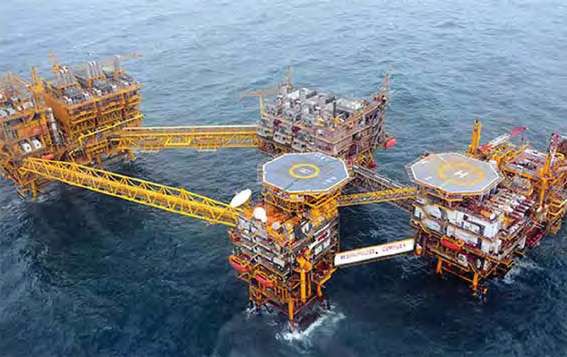
This domestic push lowers India’s reliance on volatile global oil supply. Furthermore, the capital expenditure creates a powerful ripple effect across the domestic industrial ecosystem. Heavy engineering firms, offshore logistics providers and domestic rig operators will experience multi-year order visibility. The projects reinforce ONGC’s primary goal of achieving a standalone production target of roughly 39 million tonnes (mt).
ONGC occupies a unique position in India’s corporate hierarchy. It is not just an oil enterprise; it is the fundamental engine driving India’s domestic energy security. While multiple domestic peers limit their operations to specific niches, like standalone refining or fuel marketing, ONGC stands as an unshakeable, completely integrated hydrocarbon superpower.
The company single-handedly accounts for nearly 70 per cent of the country’s total crude oil production and about half of its natural gas output. Its absolute control over the upstream exploration sector provides an unrivalled competitive moat. This scale insulates it against market shifts that frequently hurt smaller players. “We should call ourselves a gas and oil company, and not an oil and gas company. Gas is now slightly more than oil in our portfolio,” reveals Mr Singh, highlighting a shift in the company’s product basket.
The foundational steps of this energy giant trace back to 1955. Initially established as an Oil and Natural Gas Directorate, it quickly evolved into a statutory commission in 1956. The real transformation occurred with the iconic discovery of the Mumbai High oilfield in 1974, which permanently remapped India’s industrial capabilities.
Over seven decades, ONGC has systematically expanded its reach. It has integrated downstream refining through Mangalore Refinery and Petrochemicals (MRPL) and acquired a majority stake in another state-owned refiner, Hindustan Petroleum Corporation (HPCL). By combining exploration, MRPL’s high-margin refining assets and specialised petrochemical arms like ONGC Petro additions (OPaL), ONGC captures value from the moment a drill touches the seabed to the final delivery of commercial polymers.
Navigating geological difficulties and deepwater engineering hurdles requires massive scale. ONGC mitigates the challenges of domestic exploration through its overseas subsidiary, ONGC Videsh (OVL), which manages equity oil assets across 15 countries. While regional geopolitical flare-ups create supply risks elsewhere, OVL actively diversifies its operations. It is currently expanding its footprint in Venezuela to secure long-term crude oil shipments.
Domestically, the company capitalises on strong refining margins. Simultaneously, it is executing its new strategic roadmap by entering new energies and reserving half of its upcoming storage facilities for India’s strategic petroleum reserves. This integrated operational strategy positions ONGC far ahead of its domestic peers.
ONGC’s operational excellence translates directly into its highly resilient financial results. For the whole of FY26, ONGC delivered a phenomenal performance. It posted a consolidated net profit of Rs 49,793 crore, which reflects an impressive 30% year-on-year (YoY) growth, over consolidated net sales of Rs 6,62,247 crore. Building seamlessly on this momentum, the company began Q1FY27 on a strong note. It recorded consolidated net sales of Rs 2,04,987.35 crore, up by 25.68% compared to the Rs 1,63,108.12 crore reported in Q1FY26. Quarterly consolidated net profit for Q1FY27 climbed to Rs 11,898.93 crore, marking a robust 21.37% increase over the previous year’s matching quarter.
A deep dive into the valuation metrics reveals a highly attractive profile for value investors. The hydrocarbon company’s standalone trailing twelve months (TTM) Earnings Per Share (EPS) jumped significantly to Rs 9.46 for the June 2026 quarter, up from Rs 7.79 in the previous year’s corresponding quarter. The company’s consolidated book value rests at a solid Rs 296 as of June 2026, demonstrating strong underlying asset backing.
Trading near a historical dividend yield zone at an estimated market price of Rs 238, the stock maintains a conservative trailing Price-to-Earnings (P/E) ratio of around 7.5x, significantly below the wider energy sector average. The Price-to-Book (P/B) ratio at 0.84x shows that the market values the stock below its actual balance sheet equity worth.
“With its extensive downstream integration cushioning raw price volatility and the stock trading at an ultra-low single-digit valuation multiplier, the company offers long-term investors an institutional-grade combination of deep value and resilient dividend returns,” stresses ICICI Direct Equity Research.
Undoubtedly, ONGC remains a reliable cash-generating powerhouse for retail and institutional portfolios alike. Following its highest-ever total dividend payout of Rs 16,669 crore in FY26 (amounting to Rs 13.25 per share), the board maintains a steady 50%+ payout ratio. Market experts project a production-led upside. This growth will be driven by the monetisation of mega offshore gas fields and enhanced volumes from western offshore developments. Shareholders can rest assured that every move of the hydrocarbon giant generates millions of rupees, which are invariably shared with them.
September 30, 2026 - Combined Issue

Industry Review


VOL XVII - 13
September 16-30, 2026
Want to Subscribe?
Read Corporate India and add to your Business Intelligence
Unlock Unlimited Access
Lighter Vein

1 Year *
Subscription
Rs 1800 /-
3 Year *
Subscription
Rs 5000 /-
5 Year *
Subscription
Rs 8000 /-
5
International
Subscription
$ 99.99
Read Corporate India and add to your Business Intelligence
Popular Stories

A modern-day enigma and a ramification of humanity's never-ending advancements, e-waste refers to the scum con- cealed by the outward glow of ever-advancing technology.
Archives


Office Address
Unit No. 405, 4th floor, Madhu Industrial Park, Avadh Narayan Tiwari Marg, Mogra Village Road, Andheri (East), Mumbai – 400069.
Call/Whatsapp
If you are interested in advertising with Corporate India, please don't hesitate to contact us. Our team is here to assist you with the process and answer any questions you may have. We look forward to the opportunity to work with you and help your business reach its full potential.
Fill out the form below to subscribe to our newsletter and never miss an update