


Want to Subscribe?
Read Corporate India and add to your Business Intelligence
 Unlock Unlimited Access

Published: August 15, 2026
Updated: August 15, 2026
By Dr Navin Malhotra
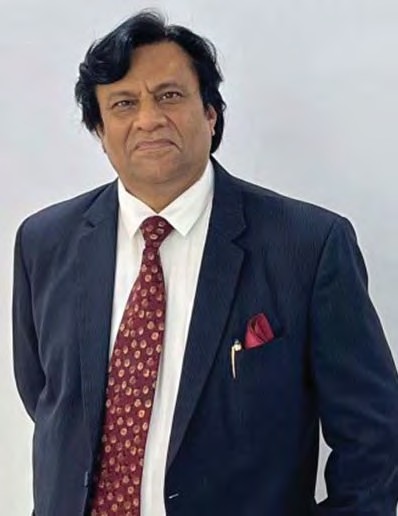
Dr Colonel Naveen Malhotra
The organizations that will define the next decade will not necessarily be those with the best technology, the largest balance sheets or the biggest market share. They will be those that build exceptional leadership capability, organizational resilience and the ability to adapt continuously. At the centre of this transformation stands a role that has quietly evolved from an administrative function into one of the most influential positions in the boardroom – the Chief Human Resources Officer.
Walk into any boardroom today and the conversation is very different from what it was a decade ago. Revenue growth still matters. Profitability remains a priority. Market expansion continues to shape corporate strategy. Yet, alongside these familiar discussions are new questions that increasingly determine an organization’s future.
Do we have the leadership to execute our strategy? Are we developing the skills needed for an AI-enabled future? Why are our best people leaving? Is our culture encouraging innovation or resisting change? Could our workforce become our biggest business risk? Are we prepared for the next disruption? These are no longer HR questions. They are business questions.
This shift reflects a fundamental change in how organizations create competitive advantage. Products can be copied. Technology becomes obsolete. Capital is available to those who can attract it. Even successful business models are eventually replicated. What competitors cannot easily copy is an organization’s ability to attract exceptional talent, develop capable leaders, build a strong culture, adapt to change and execute strategy consistently. In other words, organizations now compete through organization capability. That changes the role of the Chief Human Resources Officer fundamentally.
Today’s CHRO is no longer responsible only for managing people. The role has expanded to building leadership capability, strengthening organizational resilience, preparing the workforce for digital and AI transformation, shaping culture, reducing enterprise risk and ensuring that the organization has the capabilities needed for long-term success. These responsibilities are no longer peripheral to business performance.
The consequences of getting them wrong are significant. A poor leadership appointment can derail a major strategic initiative. Weak succession planning can undermine investor confidence. A toxic culture can destroy a brand that took decades to build. A poorly managed digital transformation can leave an organization with advanced technology but a workforce unable to use it effectively. Increasingly, the greatest business risks are no longer purely financial or technological. They are human.
History provides powerful reminders. Nokia possessed world-class technology but lacked the leadership agility needed to respond to changing markets. Kodak recognized the potential of digital photography long before its competitors but failed to transform its organizational mindset. More recently, organizations that invested in continuous learning, adaptability and leadership development have consistently outperformed those that relied solely on legacy business models.
In each case, the greatest challenge was not technology. It was organizational capability. This explains why boards today spend far more time discussing leadership, succession, culture, workforce capability and organizational resilience than ever before. The conversation has shifted from: “How is HR performing?” to “Can our organization execute its strategy through its people?” That distinction changes everything.
The expectation is no longer that the CHRO will be an efficient administrator of HR processes. The expectation is that the CHRO will become an architect of organization capability. Global research reinforces this evolution. Conversations with Chief People Officers across industries consistently show that the role now extends far beyond traditional HR responsibilities. Today’s CHRO is expected to connect business strategy with workforce capability, use technology and data to improve decision-making, prepare organizations for AI, influence executive teams and contribute as an enterprise leader rather than simply a functional specialist.
The challenge is that while expectations have changed dramatically, preparation for the role often has not.
Most CHROs do not struggle because they lack HR expertise. They struggle because they find it difficult to translate people decisions into business outcomes.
Today’s CHRO is expected to influence enterprise strategy, yet many enter the boardroom with deep functional knowledge but limited commercial perspective. They understand recruitment, learning, compensation, employee relations and talent management, but are often less comfortable discussing growth, productivity, capital allocation, operating margins, market dynamics or shareholder value.
Other members of the executive team naturally connect their expertise to business performance. The CFO explains financial performance. The COO explains operational performance. The CIO explains technology. The CMO explains markets and customers. The CHRO must explain how people create business value.
When a CEO asks, “What workforce capabilities will improve our margins over the next three years?”, the answer cannot be another HR programme. It must explain how leadership, capability, culture and talent will help achieve the organization’s business goals. This is the defining shift in the role. The CHRO is no longer measured by the efficiency of HR processes alone. The role is measured by its contribution to growth, innovation, productivity, resilience and long-term enterprise value. The most effective CHROs therefore ask a different question. Not “How do we improve HR?” But “How do we improve business performance through people?” That single shift in thinking separates functional excellence from enterprise leadership.
One of the clearest examples of the CHRO’s evolving role comes from Microsoft. When Satya Nadella became Chief Executive Officer in 2014, Microsoft did not lack talented people. It employed some of the world’s best engineers, possessed immense financial resources and remained a global technology leader.
The real challenge was not technology. It was culture. Years of internal competition had created organizational silos. Leaders were rewarded for having the right answers rather than asking the right questions. Collaboration weakened, innovation slowed, and although the organization possessed enormous intellectual capital, its ability to learn and adapt had diminished.
Nadella recognized that Microsoft’s future would not be secured by better technology alone. Before transforming products, he focused on transforming leadership behaviour. His now well-known shift from a “know-it-all” culture to a “learn-it-all” culture was far more than a leadership slogan. It became a business strategy.
Kathleen Hogan, Microsoft’s Chief People Officer, played a central role in embedding this transformation across the organization. Leadership development shifted from hierarchy to curiosity. Performance conversations evolved from evaluation to coaching. Learning became continuous rather than event-driven. Collaboration became an expectation rather than a choice, and succession planning increasingly valued adaptability, empathy and a growth mindset alongside technical expertise.
What followed was not simply an HR initiative. It was a business transformation driven through people. People practices did not merely support the strategy, they became one of the primary ways the strategy was executed. The lesson extends well beyond Microsoft.
Lasting business transformation rarely begins with technology, products or organizational restructuring. It begins with leadership behaviour.
Building enterprise capability through strategy, culture and leadership. Lasting business success is rarely determined by how well organizations respond to disruption. It is determined by how well they prepare for it before it becomes visible.
Look at the organizations that have sustained their leadership over the past three decades. Whether it was Microsoft’s reinvention under Satya Nadella, Toyota’s pursuit of operational excellence, Unilever’s investment in digital capability or Tata Consultancy Services’ focus on workforce readiness, each recognized the same principle: strategy succeeds only when the organization has the capability to execute it. This is where the CHRO creates the greatest business value.
The conversation no longer begins with policies, recruitment plans or training calendars. It begins with a far more important question: What capabilities must this organization build over the next three to five years to remain competitive? Everything else follows from that answer.
Exceptional people leaders view every people decision through a business lens. Recruitment is not simply about filling vacancies, it is about acquiring future capability. Learning is not measured by training hours but by its impact on innovation, productivity and customer experience. Attrition is not just an HR metric, it helps identify where competitive advantage may be weakening. This change in perspective fundamentally changes the role. The starting point is no longer HR. It is business strategy.
People leaders first understand how the organization creates value, identify the capabilities required for future success and then build the leadership, talent, culture and organizational systems needed to deliver that strategy.
That is why today’s CHRO spends as much time understanding customers, markets, operations, finance and technology as discussing people practices. Every hiring decision is an investment in future capability. Every leadership decision influences business performance. Every cultural choice shapes the organization’s ability to compete.
Organizations that make this shift build stronger leadership, better talent and more resilient cultures. Those that do not often discover that sustainable competitive advantage depends less on technology or capital than on organizational capability.
Many ambitious business strategies fail not because organizations lack capital or technology, but because they lack the capabilities needed to execute them. Companies often invest heavily in expansion, digital transformation or new markets before asking a critical question: Do we have the leadership, skills and organizational capability to make this strategy succeed?
The electric vehicle industry provides a good example. While many manufacturers invested heavily in factories, technology and partnerships, those that invested early in battery engineers, software specialists and power electronics experts gained a significant advantage. The difference was not financial investment. It was workforce readiness.
The lesson is straightforward. Business strategy without workforce strategy remains an aspiration. The question is no longer, “How many people do we need?” It is, “What capabilities will create our competitive advantage tomorrow?”
Culture is not created by vision statements, mission statements or values displayed on office walls. It is created by the behaviours leaders reward, tolerate and reinforce every day. Every promotion sends a message. Every performance discussion shapes expectations. Every difficult decision reveals what the organization truly values.
Toyota demonstrates this principle exceptionally well. Its culture of continuous improvement has endured not because of HR policies, but because leaders coach their teams, solve problems together and treat learning as part of everyday work.
Culture is built through thousands of daily leadership decisions. This explains why employees rarely leave because of policies alone. They leave because of leadership. Improving managers therefore improves far more than employee engagement. It strengthens customer experience, increases productivity and ultimately improves business performance. Culture is not an HR programme. It is a leadership responsibility.
Leadership cannot be developed during a crisis. By the time a Chief Executive Officer, Business Head or Plant Director resigns, retires or leaves unexpectedly, the organization should already know who is ready to step into the role. Leadership pipelines are built over years through deliberate investment, not during moments of uncertainty.
The most successful organizations understand this well. Companies such as the Tata group, Infosys and Hindustan Unilever identify high-potential talent early, expose future leaders to diverse assignments and prepare them for increasing responsibility long before leadership transitions occur.
Their objective is not simply to replace today’s leaders. It is to prepare leaders for tomorrow’s business. Leadership continuity is therefore one of an organization’s most valuable and often least visible competitive advantages. For the CHRO, succession planning is no longer an HR exercise. It is a business continuity strategy.
Artificial Intelligence is transforming the way HR operates. Routine activities such as resume screening, payroll processing, employee services and workforce administration are increasingly being automated. The real opportunity, however, is not automation itself. It is what organizations choose to do with the time, insight and capacity that automation creates.
Unilever provides a strong example. By integrating AI into talent acquisition, workforce planning and employee development, the company reduced administrative effort while enabling its people teams to spend more time strengthening leadership capability, improving organizational effectiveness and preparing the workforce for future skills.
Technology did not replace people. It allowed people to focus on work that creates greater business value. As AI becomes more capable, administrative efficiency will become the minimum expectation. The real differentiators will be judgment, coaching, strategic thinking and the ability to help organizations adapt to continuous change. Technology will continue to evolve. Leadership will become even more important.
Most organizations plan their finances, operations and capital investments years in advance. Far fewer apply the same discipline to workforce planning. Too often, organizations begin searching for talent only after capability gaps become visible. By then, competitors may already have the skills needed to seize new opportunities.
Leading organizations take a different approach. Companies such as Tata Consultancy Services, Infosys and Accenture anticipated the growing demand for cloud computing, cyber security and artificial intelligence long before these skills became scarce. Rather than relying solely on external hiring, they invested heavily in reskilling thousands of employees, creating a workforce that could adapt as technology evolved.
The lesson is simple. The strongest organizations recruit less because they prepare more. Workforce planning is no longer an operational activity. It is a strategic investment in future competitiveness.
Governance today extends far beyond legal and regulatory compliance. It includes ethics, leadership behaviour, organizational culture, data privacy, AI governance and stakeholder trust. Increasingly, these factors determine not only an organization’s reputation but also its long-term performance.
The Wells Fargo sales scandal illustrates this clearly. The problem was not a lack of compliance policies. It was a culture shaped by unrealistic targets, poor incentives and leadership behaviours that encouraged the wrong outcomes. The lesson reaches far beyond one organization. Culture shapes behaviour. Leadership shapes culture. Governance protects both.
This is why boards increasingly expect CHROs to identify leadership and cultural risks before they become business crises. The conversation is no longer limited to compliance. It is about protecting the organization’s long-term ability to grow, innovate and earn trust. The most important governance question is no longer, “Are we compliant?” It is, “Could our culture become tomorrow’s biggest business risk?”
Every business strategy is ultimately executed through people. Markets may be shaped by technology, capital or innovation, but sustained success depends on an organization’s ability to build the leadership, skills and culture needed to execute its strategy. Organizations that align leadership capability, workforce readiness, culture and technology with business priorities adapt faster, execute more effectively and create lasting value.
This represents a fundamental shift in the role of the CHRO. The focus is no longer on managing people. It is on building the organizational capability that enables the business to compete, grow and adapt.
For many years, HR measured what was easy to count – recruitment numbers, training hours, employee engagement scores and time to hire. These metrics remain useful, but they rarely answer the questions that matter most to CEOs and boards: Do we have the leadership capability to deliver our strategy? Where are our most critical capability gaps? Which teams consistently create the greatest business value? What workforce risks could affect future performance?
These are business questions, not HR questions. The real value of people analytics lies not in explaining what happened yesterday but in helping leaders prepare for tomorrow. Leading organizations use data to identify emerging leadership risks, predict skill shortages, anticipate workforce trends and strengthen succession pipelines before they become business challenges. The most valuable dashboard is therefore not the one that explains last quarter’s performance. It is the one that helps shape the next four. For the modern CHRO, people analytics has evolved from reporting activity to enabling better business decisions.
Organizational resilience is not created during a crisis. It is built long before disruption occurs. Most organizations maintain financial reserves to withstand uncertainty. Far fewer invest with the same discipline in leadership capability, organizational learning and workforce adaptability.
The Covid-19 pandemic demonstrated why this matters. Organizations with capable leaders, strong cultures and adaptable workforces responded faster and recovered more effectively than those that relied primarily on technology or processes.
Infosys provides a strong example. Years of investment in leadership development, continuous learning and organizational capability enabled the company to adapt rapidly while maintaining business continuity during an unprecedented global disruption. The lesson is clear. Resilience is not a reaction. It is a long-term organizational capability built through leadership development, succession planning, continuous learning and a culture that embraces change.
Board expectations of the CHRO have changed significantly. Recruitment updates, compensation reviews and compliance reports remain important, but they are no longer sufficient. Boards increasingly want answers to broader business questions: Do we have the leadership capability to execute our strategy? Does our culture strengthen performance and innovation? Are successors ready for our critical leadership roles? Which workforce risks could affect future growth?
Investors are asking the same questions. Increasingly, organizational value is judged not only by financial performance but also by leadership quality, culture, workforce capability and organizational resilience. This creates a significant opportunity for the CHRO. By connecting workforce capability with business performance, people leaders move from reporting on the organization to helping shape its future. The role is no longer to explain what has happened. It is to help the board prepare for what comes next.
Every organization reviews its financial performance, operational results and business strategy on a regular basis. Far fewer review an equally important question: Do we have the leadership, skills, culture and enterprise capability needed to execute that strategy?
Every strategy is ultimately delivered by people. Without the right leadership, workforce capability and organizational culture, even the most ambitious business plans remain unrealized. Organizations that continuously assess and strengthen these capabilities are better equipped to respond to change, sustain performance and create long-term value.
The debate about whether the CHRO deserves a seat in the boardroom is over. The more important question is this: What value does the CHRO create once at the table?
The answer lies in the ability to connect people decisions with business outcomes. The future belongs to people leaders who understand strategy as well as they understand talent, who connect leadership with execution, culture with performance and workforce capability with long-term growth.
The organizations that will lead the next decade will not simply have better technology or greater financial resources. They will build stronger leadership, deeper organizational capability and cultures that enable continuous learning and innovation.
This is where the modern CHRO creates lasting value. The role has evolved beyond managing people processes to shaping enterprise capability. Every leadership appointment, succession decision, cultural intervention and workforce investment becomes a strategic business decision because each influences the organization’s ability to compete.
The most influential CHROs will therefore not be remembered for improving HR. They will be remembered for strengthening the business through people.
Every era of business has been shaped by a defining executive role. During the industrial age, operational excellence elevated the Chief Operating Officer. As capital markets grew in complexity, the Chief Financial Officer became central to enterprise value, capital allocation and investor confidence. The digital revolution transformed the Chief Information Officer from a technology manager into the architect of digital transformation.
The next transformation is already underway. It is redefining the role of the Chief Human Resources Officer. This evolution is not because HR has become more important. It is because business itself has become more dependent on leadership, organizational capability and the ability to adapt.
Technology can be acquired. Capital can be raised. Infrastructure can be replicated. Products can be copied. What competitors cannot easily replicate is an organization’s leadership capability, culture, institutional knowledge and capacity to learn faster than the market. These capabilities are built over time through deliberate leadership, disciplined execution and sustained investment in people. That is why the CHRO can no longer be viewed as the custodian of HR processes. The CHRO must become the architect of enterprise capability. This is more than a change in responsibilities. It is a change in purpose.
The strategic CHRO does not begin with policies, recruitment or performance management. These remain essential, but they are no longer the destination. They are the mechanisms through which organizational capability is built.
The real responsibility is to ensure that every people decision strengthens the organization’s ability to execute strategy, respond to disruption and create sustainable competitive advantage. Every hiring decision should answer a strategic question: Will this appointment strengthen our future capability? Every leadership programme should answer another: Are we preparing leaders for the business we aspire to become – not simply improving the leaders we have today? Every culture initiative should ask: Are the behaviours we reward accelerating performance, innovation and trust? Every succession discussion should begin with a board-level question: If our most critical leaders left tomorrow, would our strategy remain intact?
Few executives have visibility across the entire organization. The CHRO does. The role connects the shop floor with the boardroom, emerging talent with future CEOs, organizational culture with business strategy, and workforce capability with long-term performance.
That perspective brings unique responsibility. The CHRO must identify leadership risks before they become succession crises; recognize cultural weaknesses before they damage reputation; anticipate capability gaps before they slow growth; prepare the workforce for technologies, business models and customer expectations that are still emerging.
In doing so, the CHRO translates business ambition into organizational capability. The role demonstrates how leadership drives productivity, culture influences customer experience, workforce capability accelerates innovation, succession protects enterprise continuity and organizational resilience creates long-term value.
The organizations that will lead the next decade will not simply have better technology or greater financial resources. They will build stronger leaders, more adaptable cultures and workforces capable of continuous learning and change.
Those organizations will view the CHRO not as the head of a function, but as an enterprise leader. One who turns business strategy into organizational capability; one who converts human potential into competitive advantage; one who helps build organizations that outperform because they learn faster, adapt better and lead with purpose.
The future belongs to organizations where the CHRO is no longer invited to discuss people. Rather, those where the CHRO is invited to shape the business itself.
Dr Colonel Naveen Malhotra brings rare, lived credibility to leadership. Beginning his career as an Indian Army Officer with experience in high-risk operational environments, he transitioned seamlessly into corporate leadership, earning an MBA and PhD in Human Resources and serving as a Chief Human Resources Officer across complex organizations. Known for aligning people strategy with business performance, he has led transformation, industrial relations, and leadership development initiatives with clarity and conscience.
September 30, 2026 - Combined Issue

Industry Review


VOL XVII - 13
September 16-30, 2026
Want to Subscribe?
Read Corporate India and add to your Business Intelligence
Unlock Unlimited Access
Lighter Vein

1 Year *
Subscription
Rs 1800 /-
3 Year *
Subscription
Rs 5000 /-
5 Year *
Subscription
Rs 8000 /-
5
International
Subscription
$ 99.99
Read Corporate India and add to your Business Intelligence
Popular Stories

A modern-day enigma and a ramification of humanity's never-ending advancements, e-waste refers to the scum con- cealed by the outward glow of ever-advancing technology.
Archives


Office Address
Unit No. 405, 4th floor, Madhu Industrial Park, Avadh Narayan Tiwari Marg, Mogra Village Road, Andheri (East), Mumbai – 400069.
Call/Whatsapp
If you are interested in advertising with Corporate India, please don't hesitate to contact us. Our team is here to assist you with the process and answer any questions you may have. We look forward to the opportunity to work with you and help your business reach its full potential.
Fill out the form below to subscribe to our newsletter and never miss an update