



Want to Subscribe?
Read Corporate India and add to your Business Intelligence

 Unlock Unlimited Access

Published: February 15, 2026
Updated: February 15, 2026
Shaken by the Finance Minister’s Budget announcement on February 1 of an increase in STT – an impost only on Futures and Options which marketmen realised after the initial shock — the stock market went into a tailspin and leading indices Sensex and Nifty shed several thousand points.
But the recovery followed almost immediately in the wake of US President Donald Trump’s tariff reprieve from 50 per cent to 18 per cent for Indian exports to the US.
Despite the lingering disappointment over the Budget not reducing long-term capital gains tax or abolishing dividend tax, both marketmen and investors salivated at the Indian government’s portrait of a ‘$ 30 trillion US market for exports’.
Foreign investors, who had withdrawn Rs 1.5 lakh crore from the market, rushed to rebuild their portfolios, with domestic institutional investors and retail investors following suit.
In the event, both the Sensex and the Nifty recovered almost the same ground they had lost after the ‘STT scare’.

On February 1, 2026, almost immediately after the Finance Minister read out her budgetary proposals in Parliament, the stock market collapsed. The most popular benchmark index, the BSE Sensex, based on prices of 30 pivotal stocks quoted on the BSE, tumbled down by over 1800 points to 80722, while the darling of investors, Nifty50, based on 50 leading stocks quoted on the National Stock Exchange, lost around 500 points to 24825. Interestingly, the very next day (Monday, February 2, 2026), when US President Donald Trump announced an India-US trade deal wherein the import duty on Indian goods entering was cut from 50 per cent to 18 per cent, the market rebounded, with the Sensex surging to 84273 by February 10 and the Nifty climbing to 25935 by that Monday.
Stunned by the budget – particularly the increase in the STT on Futures and Options – marketmen later realised that the duty hike was only in the case of F&O and the FM had not touched the market in any other way. Thus, the initial disappointment vanished, although marketmen were upset that the Budget had not reduced long-term capital gains tax or abolished dividend tax altogether.
Though most marketmen and investors were unsure of the overall benefits of the trade deal with the US, they went with the government narrative terming the trade deal a landmark trade victory for India as it would ‘unlock the $ 30 trillion US market for exports across key sectors’. Widespread buying followed and foreign investors, who had withdrawn Rs 1.5 lakh crore by offloading their stock holdings, rushed to rebuild their portfolios, pushing up market prices to new highs.
Earlier, the Sensex, which had slumped from the all-time of 86,759.02 (on December 1, 2025), crashed by more than 5,300 points to 80,722.94 on Budget Day. But on February 2 – after Mr Trump’s announcement on the trade pact — the market started recovering fast, and by February 10 the Sensex reached 84,273.92. The sentiment continues to be buoyant as FIIs and FPIs have reentered the market with extra vigour and have been followed by domestic institutional investors as well as retail investors. In line with the Sensex, Nifty50 too initially nosedived from its all-time high of 26,325.80 (December 1, 2025) to 24,825.45 on Budget Day. But it soon started recovering and moved up to 25,935.15 by February 10, 2026.

No doubt, the market was buoyant on February 10, 2016 as FIIs and FPIs have changed their mind after the announcement of the Indo-US trade pact. But the full details of the trade agreement are not out as yet and the agreement is yet to be signed. On one hand, the US President is known to be unpredictable. How he changed the terms of an agreement finalised with South Korea is well-known. On the other hand, there remains confusion about the actual provisions for the agriculture and dairy industry in India. Ergo, the actual impact on the market will be known only after the agreement is finalised.
On the whole, the main provision – Washington reducing the import duty on Indian goods from around 50 per cent to 18 per cent — has thrilled the Indian government and the stock market. The fact sheet on the India-US trade deal released by the White House indicates that under the arrangement, India will benefit from lower duties on a broad range of exports, including textiles and garments, leather and footwear, plastic and rubber products, organic chemicals, home decor items, artisanal goods and certain categories of machinery.
In return, New Delhi will eliminate or cut tariffs on US industrial goods, along with a large group of agricultural and food products. These include dried distillers’ grains, red sorghum used as animal feed, tree nuts, fresh as well as processed fruits, soybean oil, and wine and spirits. Alongside, India will also import more goods from the US, targeting purchases exceeding $ 500 billion across energy, information and communication technology, farm goods, coal and additional categories.
As part of the exchange, Mr Trump agreed to withdraw the additional 25 per cent duty imposed on Indian imports, pointing to New Delhi’s commitment to halt purchases of oil from the Russian Federation. Washington further added that in light of India’s “willingness to align with the United States to confront systemic imbalances in the bilateral trade relationship and shared national security challenges”, the reciprocal tariff will be brought down from 25 to 18 per cent.
The Joint Statement also records a commitment from India to deal with non-tariff obstacles that affect bilateral commerce in priority areas. The White House release claimed that India will end its digital services taxes and has agreed to pursue an ambitious set of bilateral digital trade disciplines aimed at discriminatory or burdensome measures and other impediments, including rules preventing customs duties on electronic transmissions.
The White House statement further claimed that India has historically applied some of the steepest duties faced by the United States among major economies, with agricultural tariffs averaging as high as 37 per cent and levies topping 100 per cent on certain automobiles. Washington also pointed to what it calls a pattern of protectionist non-tariff measures that have shut many American products out of the Indian market.
However in certain circles there is hue and cry about the ambiguities about the deal provisions. In fact, the deal has not been finalised as yet and as President Trump is whimsical and unpredictable, some observers feel that even after the deal is finalised he may attempt to change the provision. In these circumstances though the market will remain firm at present what will happen going ahead is cannot be predicted.
The initial cynicism about a ‘hum-drum’ fiscal exercise by Finance Minister Nirmala Sitharaman has given way to an acknowledgement of its focus on the larger national economic picture. With growing domestic consumption and with the fiscal deficit achieving its target of 4.4 per cent this year and the FM fixing the target for 2026-27 at 4.3 per cent, the country’s GDP has risen to 7.4 per cent for the current year as compared to 6.5 per cent in the previous year (2024-25). The FM’s growth road map focuses on six key areas: Scaling up manufacturing in seven strategic and frontier sectors; rejuvenating legacy industrial sectors; creating champion micro, small and medium enterprises; a sustained push to infrastructure building; ensuring long-term energy security and stability; and developing city economic regions.
‘Unexciting’, ‘boring’, ‘pedestrian’, ‘a fiscal exercise lacking innovation’, ‘a Budget that miserably fails to face the current problems – domestic as well as global — that have created a lot of headwinds.’
These were the first reactions that critics used to describe Budget 2026-27 when Finance Minister Nirmala Sitharaman presented her ninth consecutive Budget on Sunday, February 1, 2026. Some argued that at a time when the country is facing an external environment in which trade and multilateralism are imperilled and access to sources and supply chains are disrupted, the Finance Minister had not shown any way out to deal with an environment which has been vitiated by growing geopolitical tensions. Our export earnings are on the decline. The value of the Indian currency is going down and down against the US dollar, and unemployment is on the rise, making the life of lower middle class and low-income people more and more miserable.
The stock market, which has been hit hard by the growing geopolitical tensions and the tariff war waged by US President Donald Trump, was expecting some sops like a reduction in long-term capital gains tax and/or abolishing tax on dividends. But the FM instead slapped a higher securities transaction tax (STT) on futures and options, sending major market indices tumbling and wiping out Rs. ——— of investors’ wealth.
But on subsequent readings, many critics realised that though the Budget had missed a lot, it was still a salutary exercise. With the Indian macro system improving on account of growing domestic consumption and continued fiscal consolidation, with the fiscal deficit achieving its target of 4.4 per cent this year and the FM fixing the target for 2026-27 at 4.3 per cent, the GDP (gross domestic product) has risen to 7.4 per cent for the current year as compared to 6.5 per cent in the previous year (2024-25).
With a view to sustaining this growth momentum, the Finance Minister announced measures in six key areas: Scaling up manufacturing in seven strategic and frontier sectors; rejuvenating legacy industrial sectors; creating champion micro, small and medium enterprises; a sustained push to infrastructure building; ensuring long-term energy security and stability; and developing city economic regions.
The FM also said that the government has accepted the recommendation of the 16th Finance Commission to retain the vertical devolution at 41 per cent. The Union government has allocated Rs 1.4 trillion to the states in 2026-27 as Finance Commission grants. On the fiscal front, the government is projected to achieve the fiscal deficit target of 4.4 per cent of GDP in the current financial year. From 2026-27, however, the government will start targeting the debt-to-GDP ratio. Accordingly, debt-to-GDP is pegged at 55.6 per cent in 2026-27, compared to the revised estimate of 56.1 per cent of GDP in 2025-26.
In her Budget speech, Ms Sitharaman said: “Our endeavour will be to keep the fiscal deficit each year such that the Central government debt remains on a declining path as a percentage of the GDP.” It was indicated that the Union government would target reaching a debt-to-GDP ratio of 50±1 per cent by 2030-31. The fiscal deficit target, as a result, has been reduced marginally to 4.3 per cent of GDP for 2026-27. The nominal growth for the next financial year has been pegged at 10 per cent compared to the estimate of 8 per cent in the current year. A slower nominal growth would naturally make achieving the target more difficult. Further, receipts under miscellaneous capital receipts, read as disinvestment and asset monetisation receipts, have been pegged at RS 80,000 crore, compared to Rs 33,837 crore in revised estimates for the current year.
Besides sustaining the focus on building public infrastructure, the FM announced several measures to improve activity in both the real and financial sectors. Among them is the proposal to launch India Semiconductor Mission 2.0. The allocation for the Electronics Components Manufacturing Scheme — launched in April 2025 — has been increased from Rs 22,919 crore to Rs 40,000 crore. The Budget also proposed to launch a scheme for rare-earth permanent magnets. It further proposed measures to improve capabilities in the capital goods sector. The Budget also focused on the textile sector, which would be useful as India looks to increase exports through free trade agreements.
Union Budget FY 26-27 has doled out huge amounts to traditional and sunrise sectors of the economy with the aim of making India a global leader across the board as well as improving the standard of living of the population.
The launch of Indian Semiconductor Mission 2.0, with a Rs 40,000 crore allocation (previous year Rs 22,805 crore), boosts domestic chip manufacturing, design and AI-related infrastructure. The electronics components manufacturing scheme has also received significant support to reduce reliance on imports.
The budget provided a higher defence allocation of Rs 7,84,678 crore, marking a 15% increase over the previous year. Modernisation and self-reliance have been significantly emphasised with a focus on indigenous aerospace manufacturing and shipbuilding, following the ‘Operation Sindoor’ security scenario. Almost 75% of the capital acquisition (around Rs 1.39 lakh crore) is reserved for domestic industries, which augurs well for local players.
Advancing proposals for three new dedicated freight corridors (DFCs) with a total estimated investment of Rs. 1.5 trillion. These corridors are designed to complement the existing eastern and western DFCs to enhance logistics efficiency. The routes are Dankuni (West Bengal) to Surat, Kharagpur to Vijaywada and Vijaywada to Itarsi (MP) via Nagpur.
Dedicated rare earth corridors have been proposed in Odisha, Kerala, Andhra Pradesh and Tamil Nadu to integrate mining, processing and manufacturing. Key proposals include a Rs 7,280 crore outlay for rare earth permanent magnets (REPM) to boost domestic capacity of 6,000 mtpa, alongside customs duty exemptions for processing equipment.
Significant capital expenditure on roads, railways, ports and urban development, coupled with a specific scheme for construction and infrastructure equipment (CIE) benefits heavy engineering and machinery manufacturers, including a Rs 10,000 crore outlay for manufacturing containers in India, as they are being largely imported from China.
A 20-year tax holiday for foreign companies sourcing services from local, approved data centres. Aiming to boost the digital infrastructure sector is a big push in the right direction at the right time.
Under the PM Surya Ghar Scheme, the Budget has reaffirmed its commitment to Muft Bijli Yojana with an increased financial support of Rs 22,000 crore. The scheme aims to install rooftop solar units in one crore households, providing up to 300 units of free electricity per month.
The establishment of three dedicated plug-and-play chemicals parks and Rs 20,000 crore for carbon capture, utilisation and storage (CCUS) projects aims at bolstering the sector.
A significant push is proposed for the Indian biopharmaceutical sector through a new initiative, Biopharma SHAKTI (Strategy for healthcare advancement through knowledge, technology and innovation) with a financial outlay of Rs 10,000 crore over the next five years. The main objective of this project is to shift India from a volume-driven small molecule generics manufacturer to an innovation-led, high-value biosimilars and biologics leader.
Focused on the entire value chain (fibre-to-fashion), the Budget promotes mega textile parks, manmade fibres, technical textiles and modernisation of traditional clusters. This will help in further improving India’s global competitiveness.
Promotion of the ‘orange economy’ with the setting up of AVGC labs in schools/ colleges and a new national institute of design. The fruits of this proposal could take a longer time but it has the potential to change the AVGC landscape of India.
Enhanced credit guarantees, increased turnover limits for classification, and special support for women and SC/ST entrepreneurs under the Make in India initiative will provide a much-needed impetus to the deserving group.
The proposed committee is meant to suggest the long-term development needs of the banking sector, keeping an eye on the Viksit Bharat goal (2047). It will look into the areas of size, competitiveness, technological advancement, and a well-capitalised system, while also reviewing NBFC restructuring and foreign investment regulations. One can safely anticipate the merger-amalgamation of small public sector banks like Central Bank of India, Bank of Maharashtra, Indian Overseas Bank, and Punjab and Sind Bank with Bank of Baroda, Punjab National Bank, etc. Also, the merger of two right-sized banks like Union Bank of India and Bank of India cannot be ruled out.
In the area of services, notably, the FM spoke about the ‘orange economy’. An institute will be set up to train individuals in animation, visual effects, gaming and comics. The Budget also focused on improving professional education in the areas of health and tourism. To attract investments, the Budget proposed a tax holiday up to 2047 for any company that provides services outside India by procuring data centre services in India. This should help boost investment, even as large global companies are already looking to set up data centres in India.
In order to boost activity in the financial services sector, the Budget proposes the setting up of a high-level committee on banking to comprehensively review the sector. A restructuring of Power Finance Corporation and Rural Electrification Corporation has also been proposed. An incentive has been proposed to encourage municipal corporations to approach the bond market. It is interesting that in pursuit of long-term objectives, her trademark focus on fiscal stability has not wavered. The fiscal deficit glide path is on schedule, with the deficit target for the current fiscal met and the next year’s set at 4.3 per cent. The committed reduction in the debt-GDP ratio has been adhered to, with the target for 2026-27 set at 55.6 per cent (56.1 per cent this fiscal).
Quality of expenditure has not been lost sight of. Total expenditure at Rs 53.47 lakh crore is up 7.70 per cent compared to the Revised Estimate of this fiscal, but effective capital expenditure at Rs 17.14 lakh crore (including grants in-aid to states) is up a whopping 22.12 per cent. Capex by the Centre is now almost a third of its total expenditure. It is another matter, though, that ministries and departments have not been able to spend their allocation. For instance, in 2025-26, effective capital expenditure was 9.3 per cent lower than what was budgeted last year.
To her credit, Ms Sitharaman has not allowed these near-term worries to cloud her long-term vision. The focus is on sectors such as semiconductors, rare-earth magnets, electronic components, chemicals, biopharmaceuticals, logistics, tourism and MSMEs. While most of these are statements of intent such as an India Semiconductor Mission 2.0, mining of rare earth minerals in Odisha, Andhra Pradesh, Tamil Nadu and Kerala, and setting up a new dedicated freight corridor from Dankuni to Surat, the FM has committed Rs 10,000 crore over five years for the biopharma scheme and doubled allocation to Rs 40,000 crore for the electronics components manufacturing scheme. For MSMEs, Ms Sitharaman has announced an SME Growth Fund with a capital of Rs 10,000 crore and changes in the TReDS scheme that are meant to benefit them. A high-powered committee will be set up with a focus on the services sector to create jobs.
From a sectoral perspective, the Budget is expected to have differentiated yet broadly positive implications across the economy. Manufacturing and labour-intensive industries may benefit from ongoing labour reforms, continued public investment and expanded market access through recent free trade agreements. The financial services ecosystem -- particularly institutions linked to International Financial Services Centres such as GIFT City -- stands to gain from extended tax incentives, regulatory clarity and deeper global integration. Export-oriented businesses and MSMEs should experience reduced compliance friction, while individuals and internationally mobile professionals may welcome procedural simplification, targeted TCS adjustments and clearer disclosure pathways. Together, these measures help strengthen a policy environment supportive of competitiveness and private investment.
On the regulatory front, proposed reforms to the Non Debt Instruments Policy -- including increasing the permissible limit for portfolio investments by persons resident outside India from 10 per cent to 24 per cent - - reflect a calibrated opening of India's capital markets. The Reserve Bank of India's refreshed export-import framework aims to streamline cross-border trade transactions, improve operational efficiency and reduce compliance burdens. Draft guidelines on External Commercial Borrowings similarly seek to rationalise borrowing norms, recalibrate end-use conditions and provide clarity on eligible lenders and structures.
A central feature of the direct tax agenda is the implementation of the Income tax Act, 2025, effective from 1 April 2026. This landmark legislation replaces the Income tax Act, 1961 and represents a comprehensive modernisation of India's tax framework. While personal income tax slabs and rates remain unchanged for FY 2026- 27, several compliance-oriented measures have been introduced. These include extending the deadline for revised returns from 31st December to 31st March of the assessment year, subject to a nominal fee, and introducing staggered return filing deadlines, with salaried taxpayers filing by 31st July and non-audit business taxpayers by 31st August.
Recognising increased cross-border mobility and global asset ownership, the Budget introduces the Foreign Assets of Small Taxpayers - Disclosure Scheme, 2026. This one-time, six-month voluntary disclosure window enables eligible taxpayers -- including students, young professionals and returning non-resident Indians -- to regularise limited undisclosed foreign income or assets within prescribed thresholds, with immunity from penalties and prosecution under the Black Money Act.
The Budget also rationalises several TDS and TCS provisions to ease cash flow pressures and clarify withholding obligations. Notably, the reduction of TCS to 2 per cent on overseas remittances for education and medical purposes under the Liberalised Remittance Scheme is expected to improve the efficiency of legitimate foreign outflows.
A significant strategic emphasis is placed on strengthening International Financial Services Centres, particularly GIFT City. Extending the tax holiday to 20 years, followed by a concessional regime, considerably enhances India's attractiveness as a global financial hub and is expected to draw long-term foreign capital and high value financial services.
Overall, the direct tax measures reflect a coherent philosophy rooted in simplification, compliance facilitation and strategic competitiveness. While headline tax rates remain unchanged, the cumulative impact of statutory modernisation, procedural flexibility, targeted disclosure mechanisms and IFSC-focused incentives marks a decisive step towards a more transparent, efficient and globally aligned tax ecosystem. The Union Budget 2026 embodies a mature and confidence-driven policy stance -- prioritising certainty, structural reform and long-term competitiveness over short-term fiscal considerations. As India navigates a complex global landscape, the Budget reinforces a consistent reform agenda that positions the economy for resilient growth, deeper global integration and a more predictable regulatory and tax environment.
“The Rs 53.5 lakh crore Budget presented by me last Sunday (February 1, 2026) should be seen as a long-term blueprint for sustaining growth amid rising global risks,” maintained Ms Nirmala Sitharaman, Union Finance Minister. In an interview, she added that “though we have not made changes in the income-tax slabs, we have announced the implementation of the New Income Tax Act 2025 which will come into effect from April 1, 2026.” She pointed out that the Budget has focused on three ‘kartavyas’ —accelerating and sustaining economic growth, fulfilling people’s aspirations, and ensuring that every family, sector and region has access to resources and amenities, and opportunities for meaningful participation in ‘Sabka Vikas’ – growth and development of all. She stepped up the government’s capital expenditure outlay to Rs 12.2 lakh crore from Rs 11.2 lakh crore last year. Insisting that “we have maintained fiscal discipline”, she added that the government expects the fiscal deficit at 4.3 per cent of GDP in 2026-27, lower than 4.4 per cent targeted and achieved for fiscal 2025-26.

Ms Sitharaman: We are certainly concerned about the rising outflow of foreign investments. Please note that in this Budget, the transfer pricing arrangements are being made simpler. Advance authorisation is being made simpler and offers certainty. Steps are being taken for both simplifying the process and ease of doing business. What is more, customs laws are being simplified, compliances are being eased, and we now want to move to a completely mechanised scanning process for goods to remove individual discretion. We have actually taken quite a few such steps in this Budget. At the same time, we have removed the cap on courier exports, besides relaxing baggage rules.
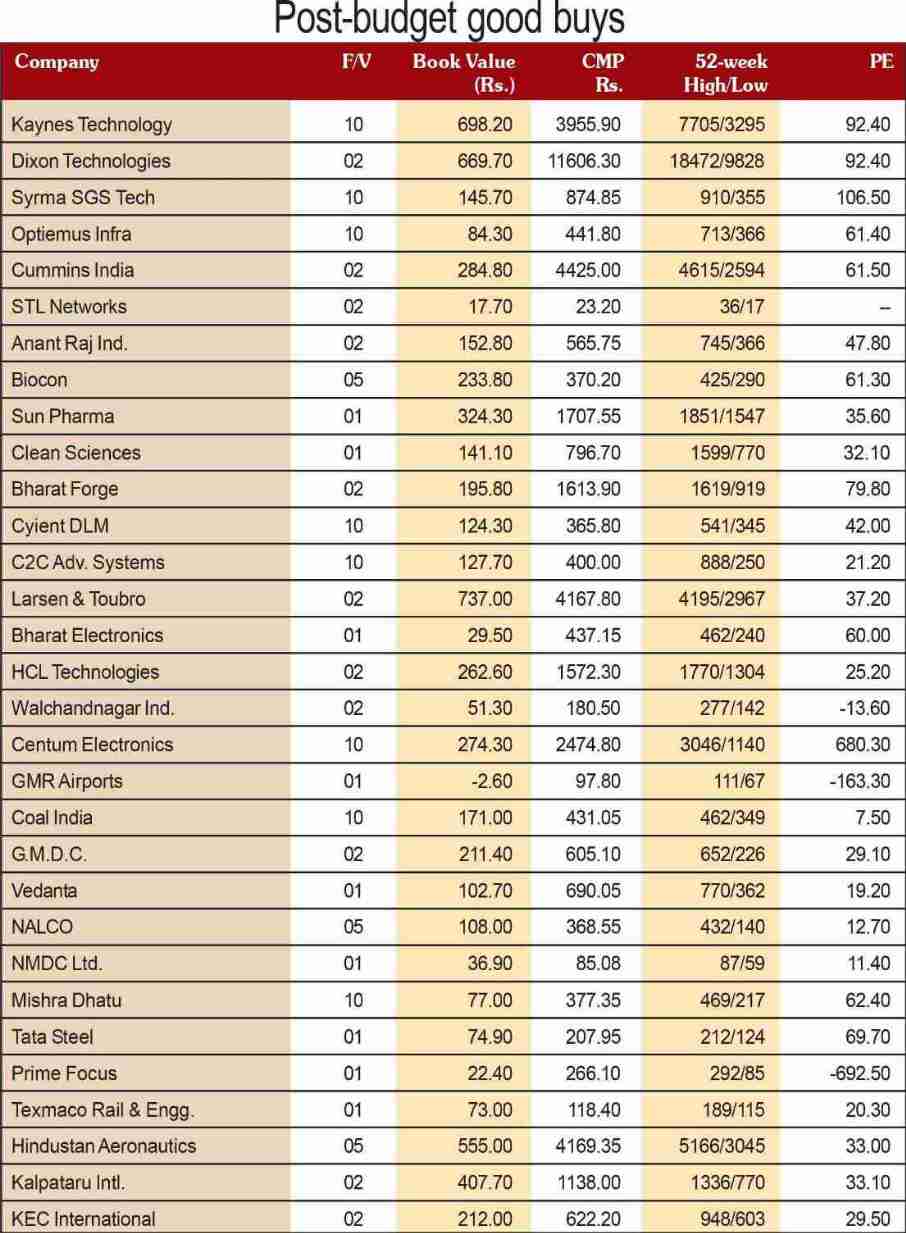
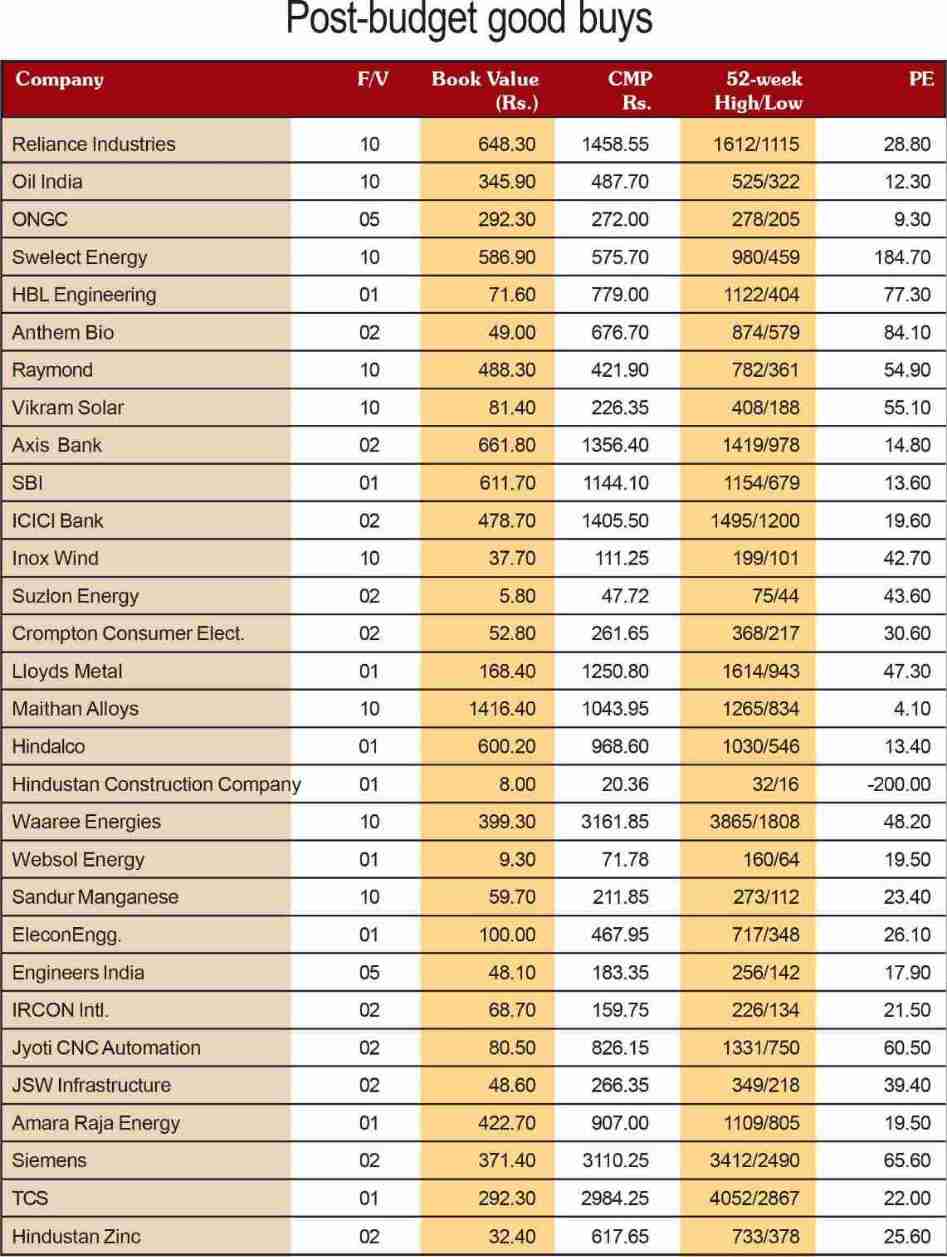
Ans: Of course, there are clear signs of improving private capex. And you have seen after a day or two of the presentation of the Budget that there was substantial buying in the stock market by FIIs and FPIs. Prospects are better going ahead as opportunities open up on account of booming export possibilities. Businessmen are highly happy with government schemes like PLI (production linked incentives).
Ans: The ‘other’ side of manufacturing which we want to support is like the way we have done in the last three budgets to create MSME (micro, small, medium enterprises) champions. This time, we want to make champions out of medium enterprises. Mind you, 40 per cent of India’s exports is dependent on MSMEs. I intend to give them three things — equity support, liquidity support and professional support. It is not only about electronics and semiconductors. We have identified seven strategic sectors — one of them is biopharma. India should be and can be a leader in pharmaceuticals by becoming a leader in biosimilars. There are other such areas of high potential for the future.
Ans: This time, we did not want to disturb last year’s Budget. So there was no question of touching the market as such. And mind you, the STT has been hiked only on futures and options, nothing else. We had a lot of complaints from parents and elders that youngsters were getting drowned in speculative excesses and losing heavily. The regulating agency, SEBI, had also found out that over 90 per cent of F&O players are losing money. These speculative excesses lead to severe social issues. Hence, in order to curb this activity, we have raised the tax on securities transactions, and that too only on futures and options.
August 31, 2026 - Second Issue

Industry Review


VOL XVII - 12
August 16-31, 2026
Want to Subscribe?
Read Corporate India and add to your Business Intelligence
Unlock Unlimited Access
Lighter Vein

1 Year *
Subscription
Rs 1800 /-
3 Year *
Subscription
Rs 5000 /-
5 Year *
Subscription
Rs 8000 /-
5
International
Subscription
$ 99.99
Read Corporate India and add to your Business Intelligence
Popular Stories

A modern-day enigma and a ramification of humanity's never-ending advancements, e-waste refers to the scum con- cealed by the outward glow of ever-advancing technology.
Archives


Office Address
Unit No. 405, 4th floor, Madhu Industrial Park, Avadh Narayan Tiwari Marg, Mogra Village Road, Andheri (East), Mumbai – 400069.
Call/Whatsapp
If you are interested in advertising with Corporate India, please don't hesitate to contact us. Our team is here to assist you with the process and answer any questions you may have. We look forward to the opportunity to work with you and help your business reach its full potential.
Fill out the form below to subscribe to our newsletter and never miss an update