



Want to Subscribe?
Read Corporate India and add to your Business Intelligence

 Unlock Unlimited Access

Published: January 31, 2026
Updated: January 31, 2026
IN line with the 'India story' which has become a global talking point, as well as to counter the dampening effect of the draconian US tariffs, the Union budget for FY 2026-27 is expected to incentivise robust economic growth with a focus on, among other things, infrastructure, investment and tax simplification, as well as on improving public infrastructure and reducing the taxation and compliance burden.
WHILE the aam aadmi should not get his hopes up on income-tax sops, considering the substantial reliefs that have already been offered earlier, the government's focus on boosting consumption may result in further relaxations in tax slabs.
NOTWITHSTANDING its preference for the new income-tax regime, the government will likely not scrap the old tax regime as many taxpayers still prefer the latter for its larger number of tax deductions.
FURTHERMORE, to try and stop the heavy offloading of stocks by foreign investors, the Finance Minister may include a single-window mechanism for large FDI proposals, more so as China is wooing FPIs and FIIs with liberal stimuli.
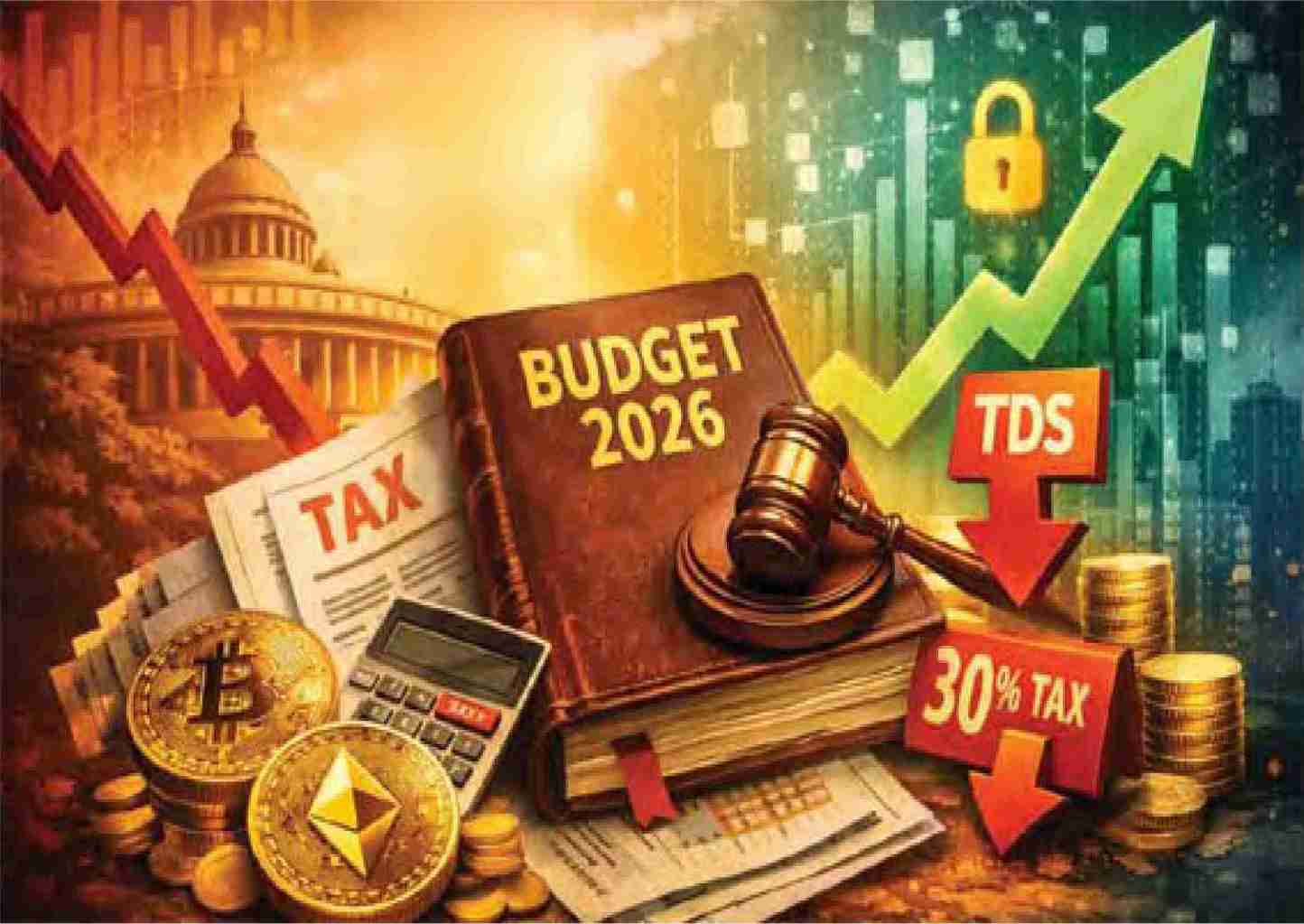
Once again, February 1 is approaching very fast, and trade, industry and market circles are waiting for the presentation of the Union budget for FY 2026-27. At 11 o'clock on Sunday, February 1, Union Finance Minister Nirmala Sitharaman will present the annual budgetary exercise. Of course, members of the public as well as trade, industry and markets are not as excited about Budget Day as they were a decade ago. However, some trade, industry and market circles still await the budgetary proposals with a sense of hopeful anticipation.
As India moves steadily on the path of economic development, the forthcoming budget is expected to incentivise robust economic growth with a focus on infrastructure, investment, tax simplification (especially ahead of the new Income Tax Act 2025), manufacturing, MSMEs, climate change, green energy transition, development in agriculture, Artificial Intelligence and robotic technologies, together with improving public infrastructure and reducing the taxation and compliance burden. Of equal urgency and interest are the measures Madam FM might propose to counter the dampening effect of President Donald Trump's punitive tariffs on Indian exports to the US.
Based on hints from North Block and pre-budget discussions with industry circles, economists and economic forecasters feel the Union budget this time may contain the following: As far as income-tax is concerned, the budget will act as a bridge to the new Income Tax Act 2025 which comes into effect from April 1, 2026, and aims for simpler language and fewer sections.

As for personal income tax relief, people should not expect anything substantial as significant reliefs were already given in the previous three years, with the last year providing the highest relief – which made income up to Rs 12 lakh tax-free under the new tax regime. However, with the government’s focus on boosting consumption to push economic growth, slight relaxations in tax slabs may be expected so as to leave some money in the purse of taxpayers.
When it comes to TDS, withholding tax provisions are complicated, with many TDS rates for a variety of transacNirmala Sitharaman - Finance Minister tions. In order to simplify compliances for the business and investment class, the budget is expected to standardise TDS rates. Numerous TDS rates may be now reduced to 2-3 prescribed rates for most transactions.
Needless to say, the government would like to promote the new tax regime but will very likely not scrap the old tax regime in the forthcoming budget. It may take 3 to 4 years before the old tax regime is phased out, as many taxpayers still prefer the old regime for its larger number of tax deductions.
Of late, foreign investors have been heavily offloading their stock holdings. During calendar year 2025, they have withdrawn a record Rs 166 lakh crore by selling their stocks in the Indian market. In just the first fortnight of January 2026, they have sold shares worth Rs 22,530 crore. The Finance Minister may strive to stop such withdrawals of foreign investment, and may include in the budget a singlewindow clearance mechanism for large FDI proposals, and an optional prescriptive tax scheme for foreign entities in technical consultancy or e-commerce so as to attract foreign capital. As China is trying to attract FPIs and FIIs to invest in its stock market by offering liberal stimuli, the forthcoming budget may also offer some stimuli to these FIIs and FPIs for retaining and further investing in the Indian stock market.
With a view to stimulating economic activity and employment, the Union budget may resort to high capital expenditure on transport, energy and digital infrastructure. The budget may include a continued emphasis on in frastructure, boosting foreign investment and leveraging digital transformation. The budget is also likely to reinforce India’s growth story by providing a stable policy environment, encouraging private capital, and supporting key sectors for global competitiveness and domestic welfare.
In its pre-budget survey 2026-27, KPMG, one of the four largest global accounting firms, points out that at this juncture India's economy is forecast to expand by 7-7.5 per cent, driven by resilient consumer spending, infrastructure upgrades and ongoing policy initiatives. It makes the following suggestions:
People in general, particularly common folk, are anxiously waiting to see whether the Union budget, to be presented by Finance Minister Nirmala Sitharaman, will make their day-to-day life a little more comfortable or add to their hardships on account of an acute shortage of employment opportunities and rising living costs on almost all fronts, including roti (food), kapda (cloth) and makaan (housing), and education, transport and entertainment. But as substantial tax relief has been given in income tax during the last three years, there may not be any further substantial relief in this budget. However, as the government seems to be eager to give a boost to consumption to kindle economic growth, there is a strong possibility of enhancing standard deduction for salaried employees from Rs. 50,000 under the old tax regime and Rs. 75,000 in the new tax regime to Rs 1 lakh.
As far as the housing loan interest is concerned, under the new tax regime, taxpayers cannot offset this interest against salary income, even for self-occupied property. Viewed in the context of the significant burden of home loan repayments, and the goal of promoting home ownership, there is no reason why taxpayers should not be allowed to offset the loan interest burden against salary income in a country wedded to social welfare.
Abhishek Jain, Partner and Head-Indirect Tax at KPMG in India, feels there is a need for a well-designed amnesty scheme for pending customs litigation which could significantly reduce the burden on courts and tribunals, unlock blocked revenue and provide clarity to businesses. If structured with reasonable settlement terms and clear eligibility, such a scheme can be a powerful tool for dispute resolution, improving the ease of doing business.
The cost of education is on the rise. School and college fees as well as the cost of books are becoming an unbearable burden for millions of low income and lower middle class groups. In order to reduce the financial burden on parents and encourage poor parents to send their children to school, the budget should contain some provision for relief to parents.
If indications available from North Block are any guide, the budget may reduce customs duties on essential medicines and advanced medical equipment, and increase support for the infra-linked PLI scheme to increase hospital beds.
For the Union budget 2026-27, the authorities had comprehensive consultations with industrialists, economists, industry organisations and taxation experts. This time, a novel feature was the district-level budget discussions led by the Ministry of Finance and aimed at gathering community insights and encouraging inclusive participation with stakeholders, including councillors, youth representatives, civil servants, business owners and development partners such as UNICEF. A notable shift in this year’s consultations was the adoption of a group-based discussion format
After these consultations, there were a lot of discussions in North Block, and sources close to North Block say the discussions have raised the following expectations.
As on account of American President Donald Trump's tariff war India's exports will be hit hard. There are indications that the budget 2026-27 may unveil SEZ (Special economic zones) reforms to boost exports and domestic sales discussions between the commerce and revenue departments are focused on easing domestic market access allowing reverse job work and permitting rupee payments for services to domestic units. The government is considering a SEZ reforms package as part of the budget 2026-27 to boost manufacturing competitiveness and help exporters better leverage the domestic market as they grapple with global uncertainties and US tariffs, North Block sources said.
Industry bodies have emphasised the need for: (1) expanded and faster access to institutional credit, especially for micro and small units; (2) stronger credit guarantee mechanisms to support first-time borrowers; (3) Continued focus on last-mile delivery of financial support, ensuring schemes reach smaller towns and rural enterprises.
Corporate deal activity remains robust, with M&A volumes reaching USD 61.3 billion in H1 20251, and foreign investment inflow continues to rise. However, tax litigation remains a challenge, with over 540,000 pending appeals, signaling the need for faster disposal of tax appeals and clarity and simplification in tax laws. Against this backdrop, several tax measures are expected to accelerate progress and strengthen India's global competitiveness.

The government is promoting fast-track mergers and demergers. However, the Income-tax Act, 2025 does not provide for tax neutrality to fast-track demergers, creating uncertainty for businesses. Granting tax-neutral status is expected to streamline restructuring, cut compliance burdens, and allow businesses to reorganise swiftly and unlock new growth opportunities.
Another expectation is the rationalisation of the holding period for slump sale transactions. While most assets qualify as long-term after 12 or 24 months, undertakings transferred through a slump sale still require a 36-month holding period. Lowering this threshold to 24 months would
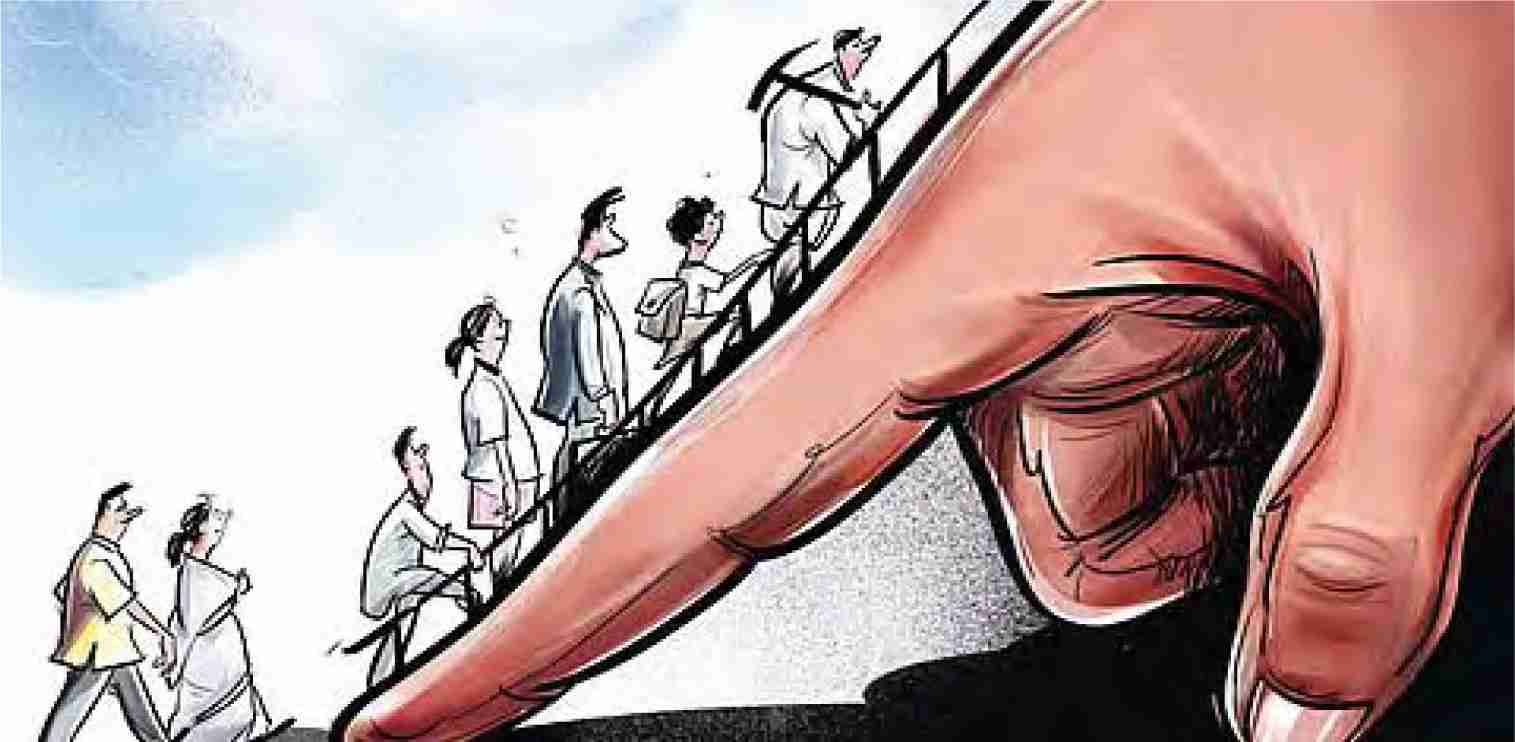
align regulations and enhance the appeal of asset transfers and reallocating capital effectively. On the international tax front, MAT exemptions for foreign companies taxable in India under presumptive tax regimes (i.e., operation of ships, aircraft, civil construction, oil exploration services) is available only if their income solely comprises income from the said specified businesses. The current provision creates a challenge when incidental income is earned alongside business income, potentially exposing these foreign companies to MAT. A clear exemption would help improve India's competitiveness for foreign companies engaged in these businesses in India.
KPMG points out that similarly, removing ambiguity in the definition of Associated Enterprises would reduce compliance complexity and disputes in transfer pricing. Overlapping clauses and unclear thresholds often lead to litigation. A more objective and streamlined definition would simplify reporting and enhance certainty for multinational groups.
Extending dividend tax exemption for IFSC investors is expected to make India's financial ecosystem more competitive globally. While interest income from IFSC units is exempt, dividends to non-resident shareholders are taxed at 10 per cent. Removing this tax would attract long-term foreign capital and strengthen India's position as a hub for wealth management and global investment funds.
In addition, several GST related measures are expected to significantly improve cash flows, reduce disputes, and
enhance ease of doing business. A key anticipated reform is the deletion of Section 13(8)(b) of the IGST Act, which would shift the place of supply for intermediary services from the supplier's location to the recipient's location. This change would align India's GST framework with global tax principles, reduce litigation in cross border transactions, and provide much needed clarity for service exporters. Simplification is also expected in relation to post sale discounts through amendments to Section 15(3)(b) of the CGST Act. Removing the requirement for discounts to be pre agreed and linked to specific invoices would bring GST provisions closer to commercial realities, reduce procedural complexity, and ease compliance for businesses operating high volume or incentive based pricing models.
Further, the proposed omission of Section 54(14) of the CGST Act, which currently prescribes a minimum threshold for export refund claims, would be a major relief for small and medium exporters. This measure would enable exporters using courier and postal channels to access GST refunds without value restrictions, directly improving liquidity and export competitiveness.
Another impactful expectation is the introduction of provisional refunds for inverted duty structure cases by amending Section 54(6) of the CGST Act. Allowing risk based provisional sanction of refunds would speed up access to working capital, reduce prolonged refund delays, and place inverted duty refunds on par with zero rated supplies, offering timely relief to affected industries. One hopes that the direct and indirect tax changes in the upcoming budget will deliver a tax ecosystem that is simpler, predictable, and aligned with the best global practices. By reducing disputes, easing compliance, and improving cash flow efficiencies, the budget has the potential to unlock investment, support exporters and MSMEs, and reinforce India's position as a preferred destination for global capital.
Maintaining that in recent times the government has taken several measures to boost manufacturing and attract industrial investment, Kalpesh Maroo, Partner and National Head, Deal Advisory-M&A and PE Tax, adds that, however, provisions around corporate restructuring have largely remained untouched and the upcoming Budget 2026 provides an opportunity for the Finance Minister to introduce relevant reforms in this space. At the same time, there is still room to shape a tax regime that more directly supports investment in strategic technologies. India's ability to attract such investment is limited by the absence of targeted incentives, especially when many competing jurisdictions offer substantial credits, super deductions and innovation-linked allowances that reduce the cost of building advanced technology and R&D capacity. India has progressed, but the available incentives remain modest.
To strengthen its industrial position, tax policy should pivot toward investment acceleration, deeper innovation, and boost competitiveness in green energy. Allowing full expensing or accelerated depreciation for eligible technology and equipment would help, along with more flexible loss carry forward provisions that could allow entities to access these benefits even through periods of early stage investment or market cycles.
According to Mr Maroo, another area that requires attention is the tax treatment of asset-light acquisitions. In deals where value is driven by strategic teams, knowhow or other intangibles, there is uncertainty on the manner and permissibility around amortisation rules, and clearer guidance would create far more predictable outcomes for strategic tech transactions. Another area worth reviewing is the patent box regime. India's current structure offers a concessional tax rate on royalty from patents developed and registered domestically, but its scope is narrow and excludes many forms of modern technology-driven IP, which limits its usefulness.
Referring to the capital market, Mr Maroo feels, "Our booming capital markets and rich valuation offers a strategic edge to allow Indian companies to buy assets overseas. India is also blessed with the deepest talent pool in the strategic technologies space. What is therefore needed is a well-thought-out and holistic long-term plan to make deep inroads in the strategic technologies space, both on innovation and R&D as well as on the manufacturing front. This will, however, need India to be nimble and strategic on many fronts, from securing long-term supplies of rare earth materials to flexibility in forging JVs, including with Chinese companies, to allowing big bold acquisitions."
Budget 2026 provides a window to bring some of these structural changes by backing emerging sectors with targeted incentives, and bringing in changes to the tax and regulatory framework to keep pace with global innovation hubs. Real estate is a critical asset class for Indian households. However, with property prices, particularly in metros like Mumbai and Bengaluru, shooting up significantly in 2025, the existing tax incentives have lost their punch. Under section 24b, the current Rs 2 lakh deduction on home loan interest is no longer sufficient today. Taxpayers expect that the current deduction capped at Rs 25,000 for self/family and Rs 50,000 for senior citizens is doubled to Rs 50,000 and Rs 1,00,000 respectively.
Again, there is a massive outcry to reduce the 18 per cent GST on health insurance premiums to nil, on the ground that taxing a protection tool is counter-productive to the goal of universal healthcare. With the 8th Pay commission expected to be implemented from January 1, 2026, over 1.1 crore central government employees and pensioners are set to see a salary hike of approximately 25% to 35%. But without slab adjustments, this salary hike will simply push millions of employees into higher tax brackets, neutralizing the real gain in their pockets.
Well-known brokerage house Motilal Oswal suggests the government must align the 2026 tax slabs with the 8th pay commission fitment factor to ensure that the consumer discretionary factor gets the boost it deserves from this massive liquidity infusion.
As far as the issue of capital gains is concerned, Indian investors are currently navigating a maze of different holding periods (12, 24, 36 months) and different rates for various asset classes. Investors want a simple classification -- long term (more than one year) and short term (less than one year) across all financial assets.
With these concessions and reliefs, the taxpayer will be a happy person, and as Motilal Oswal feels, a happy taxpayer will emerge as an aggressive investor. By addressing these expectations, Budget 2026-27 can transform the Indian middle class from being mere savers into becoming wealth creators.
The road to a $ 16 billion economy is paved with the aspirations of 1.4 billion people. If the government gives the taxpayer the right tax rates structure and longevity (policy stability), economic growth will follow naturally. Wil the finance minister bat for growth?
August 31, 2026 - Second Issue

Industry Review


VOL XVII - 12
August 16-31, 2026
Want to Subscribe?
Read Corporate India and add to your Business Intelligence
Unlock Unlimited Access
Lighter Vein

1 Year *
Subscription
Rs 1800 /-
3 Year *
Subscription
Rs 5000 /-
5 Year *
Subscription
Rs 8000 /-
5
International
Subscription
$ 99.99
Read Corporate India and add to your Business Intelligence
Popular Stories

A modern-day enigma and a ramification of humanity's never-ending advancements, e-waste refers to the scum con- cealed by the outward glow of ever-advancing technology.
Archives


Office Address
Unit No. 405, 4th floor, Madhu Industrial Park, Avadh Narayan Tiwari Marg, Mogra Village Road, Andheri (East), Mumbai – 400069.
Call/Whatsapp
If you are interested in advertising with Corporate India, please don't hesitate to contact us. Our team is here to assist you with the process and answer any questions you may have. We look forward to the opportunity to work with you and help your business reach its full potential.
Fill out the form below to subscribe to our newsletter and never miss an update