



Want to Subscribe?
Read Corporate India and add to your Business Intelligence
 Unlock Unlimited Access

Published: July 15, 2026
Updated: July 15, 2026
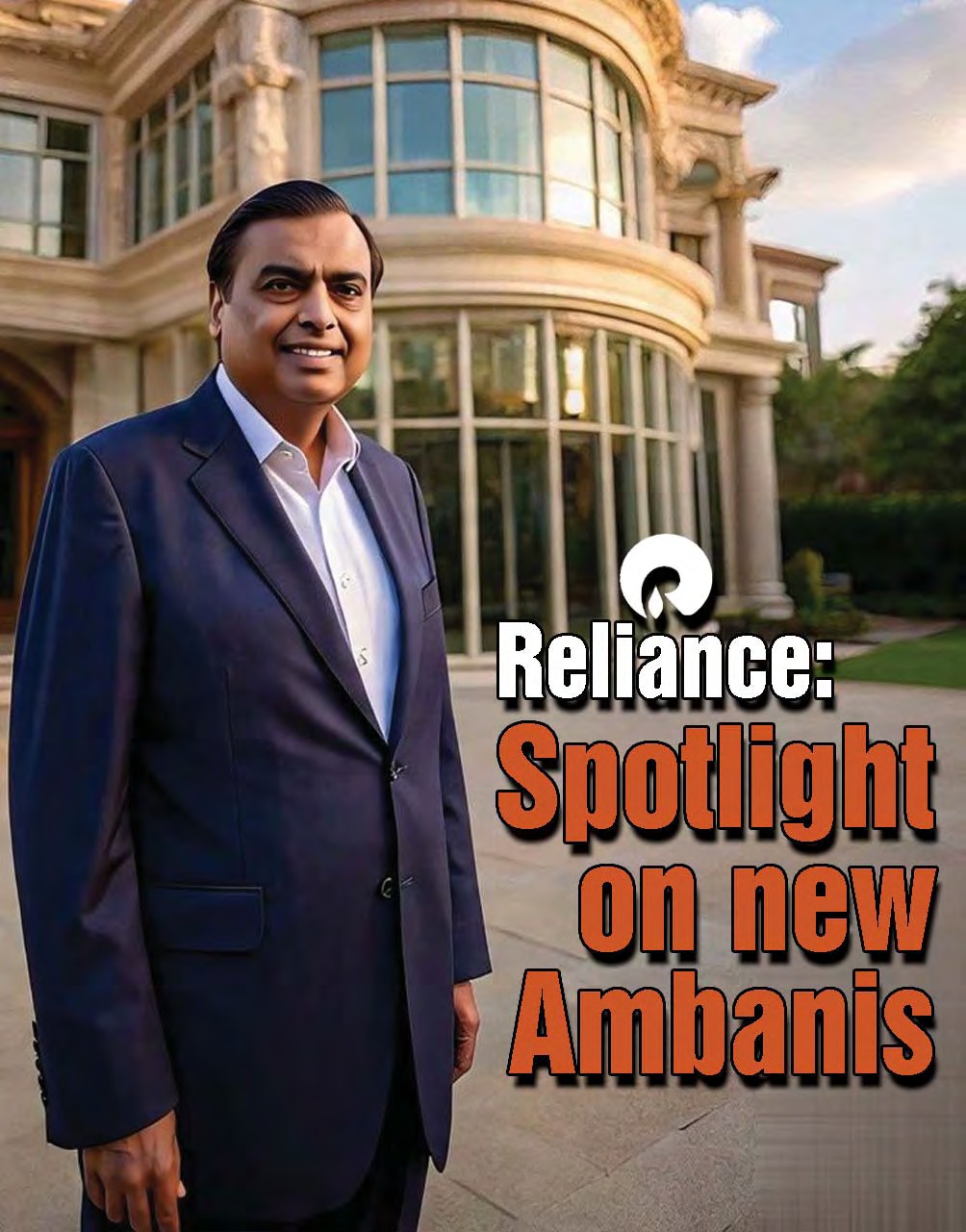
India’s legendary corporate success story, Reliance Industries, was the brainchild of Dhirubhai Ambani and was further nurtured to superstar status by Dhirubhai’s son Mukesh. Its mind-boggling business spans telecom, energy, retail, media, defence & aerospace, solar energy and hydrogen.
If Dhirubhai laid the foundation for RIL’s growth with his laser-like focus on controlling every critical stage of production to improve quality, reduce costs and protect the business from supply chain disruptions, his son and heir Mukesh has expanded it from an energy and petrochemicals company into a diversified conglomerate, one of the world’s largest by revenue and market capitalisation.
Now, the RIL baton is being passed on to Ambani next-gen – Mukesh’s daughter Isha Ambani and sons Anant and Akash. They have each been given weighty portfolios – Digital for Akash, Retail for Isha, and Energy for Anant – even as Mukesh continues to be their guide and mentor. The children know they have big shoes to fill, and the next few years will indicate how well they have taken their legacy forward.

The 50-year journey of Reliance Industries – India’s largest private sector business enterprise – is a fascinating saga of RIL’s evolution from a textile trader to a well-diversified global business conglomerate spanning telecom, energy, retail, media, defence & aerospace, solar energy and hydrogen, and aptly reflects the radical transformation of the Indian industrial sector and ecosystem. In fact, few corporate stories have so strongly influenced the nation’s economic landscape.
India’s biggest corporate success story, RIL was imagined and conceived by the late Dhirubhai Ambani – a far-sighted, highly ambitious, extremely capable and dynamic first-gen entrepreneur. Hailing from a middle-class family and son of a school teacher in a small Gujarat town, Dhirubhai started his career as a petrol pump attendant in Aden on a ‘royal’ monthly salary of Rs 40. After saving a few thousand rupees, he returned to India and started trading in yarn.
Subsequently, he expanded his business and set up a textile mill at Naroda in Ahmedabad under the ‘Vimal’ brand. His defining strategy was backward integration, moving from textile to polyester to petrochemicals and refining. This policy of backward integration by Dhirubhai became one of the most admired industrial strategies in corporate history. At a time when many Indian textile companies depended heavily on imported raw materials and fragmented domestic suppliers, Reliance moved steadily ahead in the manufacture of polyester fibre, yarn, petrochemicals, plastics and, eventually, refining.
Thus, by the 1990s, Dhirubhai Ambani, who had started in the 1970s as a trader in yarn, became one of the topmost industrialists in the country, drawing the attention of major industrialised countries and their leaders.
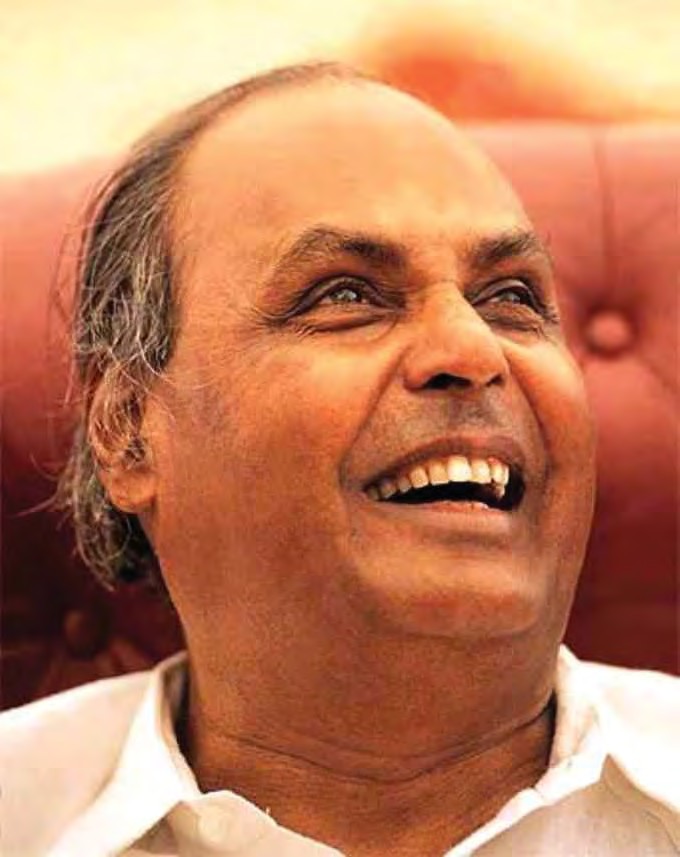
Dhirubhai’s philosophy was simple, yet transformative: control every critical stage of production to improve quality, reduce costs, and protect the business from supply chain disruptions. This strategy allowed Reliance to evolve from a textile manufacturer into a fully integrated industrial enterprise. Rather than purchasing polyester yarn from third parties, the company produced it internally. Instead of sourcing petrochemical feedstock from external suppliers, Reliance invested in its own production facilities. Each new investment strengthened the next, creating a business model that competitors found increasingly difficult to replicate.
The strategy also enabled economies of scale. By producing large volumes across the value chain, Reliance reduced unit costs, improved operating efficiency and generated higher margins. This disciplined focus on integration became a defining characteristic of the company and continues to underpin its competitive advantage.
Reliance’s manufacturing complexes at Patalganga in Maharashtra and Hazira in Gujarat became symbols of India’s industrial modernization.
Patalganga: Commissioned during the 1980s, the Patalganga complex significantly expanded RIL’s polyester production capacity. Equipped with modern technology and designed for future expansion, it quickly became one of India’s leading synthetic fibre facilities. The plant helped Reliance meet rising domestic demand while reducing dependence on imports.
Hazira: The Hazira complex represented an even larger strategic leap. Integrating petrochemicals, polymers and intermediates, it established Reliance as a major player in the global chemicals industry. The project demonstrated Dhirubhai Ambani’s willingness to undertake capital-intensive investments that many considered too ambitious for the Indian business environment of the time.
These complexes not only increased production capacity but also created thousands of direct and indirect jobs, stimulated ancillary industries, and strengthened India’s manufacturing ecosystem.
One of Dhirubhai Ambani’s most significant achievements was transforming the relationship between Indian corporations and retail investors. In 1977, RIL launched its Initial Public Offering (IPO). At a time when equity investing was largely confined to institutions and affluent investors, Reliance invited ordinary Indian households to become shareholders.
The response was extraordinary. Thousands of middle-class families invested in the company, many entering the stock market for the first time. Reliance’s transparent communication, regular dividends, and bonus share issues helped build trust with investors. Annual General Meetings became iconic events, attracting tens of thousands of shareholders. These gatherings reflected Dhirubhai’s belief that shareholders were partners in the company’s journey rather than merely providers of capital.
This shareholder-centric approach fundamentally changed India’s equity culture and inspired a generation of companies to broaden public participation in capital markets. In a true sense, Dhirubhai Ambani is the father of India’s equity cult.
In July 2002, Dhirubhai closed his eyes forever, signifying the end of an era when regulatory controls ruled the roost and the quota-permits-licence raj was the order of the day – a time in which a school teacher’s son, who had not studied beyond the secondary school level, and with hardly any of his own resources or outside financial support, literally started from scratch and dared to ‘catch the world’ in his hands. He was succeeded by his elder son Mukesh in a more business-friendly era of economic liberalisation and globalisation.
When Mukesh became chairman of RIL, many sceptics gave him ‘passing marks’ by opining that, at best, he would preserve the Reliance empire built by Dhirubhai. But Mukesh has proved these critics completely wrong. (Of course, at this juncture, the Reliance empire was divided within the family, with infrastructure, finance and telecom companies entrusted to younger brother Anil. While the decline and fall of this part of Reliance is well-known, it is by no means a reflection or comment on Mukesh’s management of RIL.)
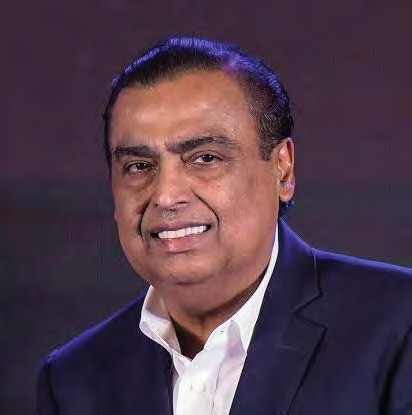
In fact, if Dhirubhai built a business empire from scratch, Mukesh modernised and expanded it in newer directions. Like his pioneering father, Mukesh has been a strong believer in growth as a way of life at Reliance. One of his favourite motifs has been, ‘Only when you dream it can you do it.’
Under Mukesh Ambani, Reliance Industries has evolved from an energy and petrochemicals company into a diversified consumer and technology conglomerate. Massive investments in refining, telecommunications, retail, digital platforms, media, renewable energy, and artificial intelligence have fundamentally changed the company’s growth trajectory. Today, Reliance is not only India’s most valuable private sector enterprise but also one of the world’s largest integrated corporations by revenue and market capitalisation.
When Mukesh inherited the RIL empire, it was already the country’s largest private sector company, with business interests spanning textiles, polyester, petrochemicals, and oil & gas. Mukesh has successfully transformed this industrial giant into a global technology powerhouse. This transformation took place as Mukesh recognised that while energy and petrochemicals would remain foundational, India’s future growth would be increasingly driven by consumer demand and digitally organised retail. Accordingly, Reliance adopted a dual strategy of continuing to expand world-scale industrial assets, and investing aggressively in businesses that would define India’s next phase of economic development. This long-term vision would reshape the company over the next 20 years.
One of Mukesh Ambani’s earliest and most significant achievements was expanding the Jamnagar refinery complex in Gujarat. The complex is widely regarded as one of the largest and most sophisticated refining hubs in the world. Its integrated design allows Reliance to process a wide variety of crude oils efficiently while producing high-value petroleum products for domestic consumption and export.
The complex also benefits from extensive integration with petrochemical operations, enabling the company to maximize value across the hydrocarbon chain. Its key advantages include economies of scale, high operational efficiency, strong export competitiveness, advanced process technology, flexible crude sourcing and integration with downstream manufacturing. The Jamnagar complex became a cornerstone of Reliance’s global energy business and generated substantial export earnings for India.
While refining attracted global attention, Reliance continued strengthening its petrochemical operations. The company expanded production of polymers, polyester, elastomers, polyethylene, polypropylene, chemicals, performance materials and advanced intermediates.
Under Mukesh Ambani, Reliance leveraged its integrated manufacturing model to become one of the world’s leading producers in several product categories. These businesses supplied industries ranging from automotive and construction to packaging, pharmaceuticals, agriculture and consumer goods.
Perhaps Mukesh Ambani’s boldest strategic insight was recognizing that India’s rapidly expanding middle class would transform the retail landscape. In 2006, Reliance entered organized retail. What began with grocery and consumer stores gradually expanded into one of the world’s largest retail ecosystems. Today, the retail business spans grocery, electronics, fashion, luxury brands, jewellery, pharmacy, consumer electronics, cash-and-carry, e-commerce and quick commerce.
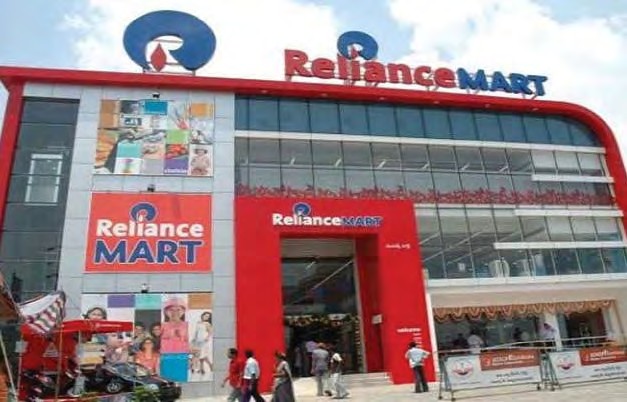
Reliance Retail has also partnered with leading global brands, bringing international fashion, beauty, and lifestyle products to Indian consumers while strengthening its own portfolio of private labels. Its omnichannel strategy – integrating physical stores with digital platforms – has become a benchmark for modern retailing in India.
If one decision transformed both Reliance Industries and India itself, it was the launch of Jio Platforms. In September 2016, Reliance commercially launched Jio with an unprecedented proposition: nationwide 4G network, affordable smartphones, low-cost data plans, free voice calling and high-speed internet. The impact was immediate and far-reaching.
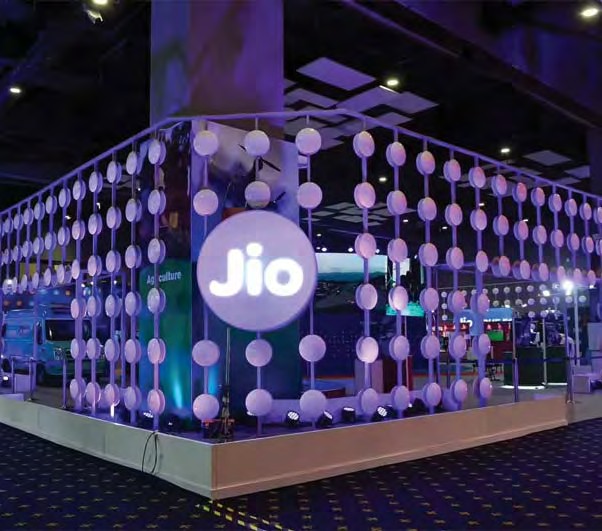
Jio accelerated India’s transition into one of the world’s largest digital economies and fundamentally altered the competitive dynamics of the telecommunications sector. For Reliance, it represented a shift from being primarily an industrial company to becoming a major technology and consumer-platform business.
Rather than positioning Jio solely as a telecom operator, Mukesh Ambani envisioned an integrated digital ecosystem, which now encompasses: mobile connectivity, broadband, enterprise networking, cloud services, digital entertainment, music streaming, video streaming, connected devices, artificial intelligence, digital commerce and financial services. The objective is to create a seamless digital experience for consumers and businesses, leveraging technology across multiple sectors.
Mukesh Ambani’s first decade of leadership demonstrated a willingness to invest at unprecedented scale, often years before market demand fully materialized. This long-term orientation, combined with Reliance’s integrated business model and strong balance sheet, enabled the company to enter entirely new industries while maintaining leadership in its traditional energy and manufacturing businesses.
The commercial launch of Jio in 2016 was far more than the entry of a new telecommunications operator – it marked the beginning of Reliance Industries’ transformation into a digital platform company. Within a few years, Jio emerged as one of the world’s fastest-growing mobile networks, serving hundreds of millions of subscribers and dramatically reducing the cost of mobile data in India.
This transformation was driven by Mukesh Ambani’s belief that digital connectivity would become as essential to economic development as roads, electricity, and ports. Rather than treating telecom as an isolated business, Reliance integrated it with retail, media, cloud computing, entertainment and financial services to create a comprehensive consumer ecosystem.
The strategy generated powerful network effects. As more consumers joined the Jio platform, the company gained opportunities to cross-sell broadband, digital content, e-commerce and enterprise services, strengthening customer loyalty while creating new revenue streams.
Reliance’s digital ambitions attracted some of the world’s largest technology investors. In 2020, Meta Platforms invested in Jio Platforms, recognizing the scale of India’s digital opportunity. This investment was followed by participation from Alphabet, as well as several leading global private equity firms. These partnerships were significant for several reasons – they validated Reliance’s digital strategy, strengthened Jio Platforms’ balance sheet, accelerated technology collaboration, enhanced investor confidence in India’s digital economy, and demonstrated Reliance’s ability to attract world-class strategic partners. The investments also positioned Reliance as one of the world’s most valuable digital infrastructure companies.
Reliance expanded beyond connectivity into content and entertainment. The combination of connectivity through Jio and content distribution through media businesses created a vertically integrated ecosystem. Consumers could access entertainment, sports, education and information through Reliance-owned platforms, strengthening customer engagement and monetisation opportunities.
While Jio transformed India’s digital landscape, Reliance Retail reshaped organized commerce. Reliance invested heavily in logistics, warehousing and digital supply chains. Its omnichannel strategy integrated physical stores with online platforms, enabling consumers to shop seamlessly across multiple channels. The retail business increasingly focused on three priorities: (1) expanding into underserved markets, (2) strengthening private-label brands, and (3) enhancing customer experience through digital technologies. These initiatives positioned Reliance Retail as one of the largest and fastest-growing retail organizations globally.
Recognizing the long-term global shift toward sustainability, Mukesh announced an ambitious new growth engine: New Energy. Reliance committed billions of dollars to develop integrated manufacturing facilities for solar photovoltaic modules, advanced battery storage systems, green hydrogen production, fuel cells and power electronics. The objective is to create one of the world’s largest clean-energy ecosystems while supporting India’s transition toward lower-carbon energy sources.

Mukesh Ambani has repeatedly emphasized that artificial intelligence will shape the next phase of economic development. Reliance is investing in AI-enabled cloud infrastructure, high-performance data centres, enterprise digital solutions, automation, predictive analytics, smart manufacturing and intelligent retail systems. These investments aim to improve operational efficiency while creating new digital services for businesses and consumers. AI is expected to play a central role across nearly every Reliance business – from refining and logistics to telecommunications, retail, healthcare and education.
One of the defining characteristics of Reliance’s financial strategy has been its ability to balance large capital investments with disciplined capital allocation. Major projects have typically been planned with a long-term perspective, supported by strong operating cash flows and strategic partnerships. However, the company’s history suggests that it has repeatedly transformed challenges into opportunities by investing ahead of market trends.
Mukesh Ambani’s greatest contribution has been expanding Reliance’s identity beyond manufacturing. He transformed the company into a diversified enterprise that combines industrial scale with digital innovation, consumer businesses, and emerging technologies. This strategic diversification has reduced dependence on any single business segment while positioning Reliance to benefit from long-term structural trends in India’s economy, including rising consumption, digital adoption, urbanization and renewable energy.
If Dhirubhai Ambani built one of India’s greatest industrial companies, Mukesh redefined it for the digital age. His willingness to invest at scale, years before opportunities fully matured, has positioned Reliance as a company that spans manufacturing, technology, retail, media, and clean energy – an increasingly rare combination even among the world’s largest corporations.
It is intriguing that, at a time when leading research analysts and market experts are distinctly bullish over RIL, the company’s shares remain distinctly subdued. Needless to say, the stock market is inevitably highly volatile, with a current downward inclination on account of growing geopolitical tensions in the wake of the military conflict between the US and Iran. Understandably, investors don’t know what to make of such contradictory developments.
Well-known global brokerage house Jefferies has maintained a ‘BUY’ rating on RIL with a target price of Rs 1,675, implying a 28 per cent upside over the current market price. Renowned Japanese brokerage Nomura has also maintained a ‘BUY’ rating with a target price of Rs 1,640, implying a 24 per cent upside over CMP. Among domestic brokerages, Motilal Oswal Financial Services, while reiterating ‘BUY’, has set a target price of Rs 1,655, implying a 26 per cent upside.
However, even as leading analysts are bullish on RIL, the market thinks differently. Even as the stock market is subdued under the pressure of growing geopolitical tensions, there are over 200 stocks which are quoted at Rs 2,000 and above. However, RIL has been kept suppressed and is quoted around Rs 1,300, near its 52-week low.
Knowledgeable investors agree that RIL’s market value does not fully reflect the worth of its highly promising growth engines like telecom, digital businesses and retail commerce. The country’s largest private sector company, with a humongous market capitalisation of Rs 17.5 lakh crore, is going abegging at Rs 1,300 (on a face value of Rs 10 per piece) – ridiculous, to say the least.
Market circles indicate that some of the major factors keeping the RIL stock price subdued are heavy foreign institutional selling, the adverse impact of the ongoing geopolitical tensions on account of the US-Iran war on the company’s profitability, and regulatory actions by SEBI.
No official figures on how many RIL stocks have been offloaded by foreign investors this year are available, as they are disclosed at the end of every quarter. But if we compare FII/FPI stocks at the end of the December 2025 quarter and the March 2026 quarter, it shows that foreign investors have sold around 27 million stocks. In fact, foreign investors have been reducing their exposure to many Indian large cap stocks, including RIL, because of the high valuation of Indian equities.
Growing global geopolitical tensions have prompted these investors to sell high-priced shares. However, if the US-Iran war ends, the situation will certainly change. Investors are also concerned at RIL’s aggressive expansion plans into the clean energy and renewable businesses, which weigh on short-term profitability.
Besides, a SEBI notice to the RIL management over alleged insider trading by some top officials of the company has unnerved investors, it is reported. All these factors have a role to play, but in the context of the fundamental strength of the company’s balance sheet, its highly satisfactory financial performance and remarkable growth potential ahead, they are not that serious – hence, the prolonged subdued trend in the RIL stock price is intriguing. However, once these ‘clouds of doubt’ disperse, RIL shares should climb towards the Rs 2,000 mark.
The question being asked everywhere is: will Ambani scions live up to Dhirubhai, Mukesh stature? The evolution of the Ambani empire is synonymous with the Rs 10,57,219-crore Reliance Industries (RIL), the country’s largest private sector company. Not only is it India’s biggest corporate success story, it goes beyond the saga of one company and mirrors India’s industrial evolution over nearly half a century.
Dhirubhai, a ‘Johnny-come-lately’ when he started, created a giant corporate entity literally from scratch. Starting with textiles, he diversified into fields as diverse as oil, gas and petrochemicals. Though Dhirubhai was only a matriculate, he was a ‘master of business’. His defining strategy was backward integration – starting with textiles, he moved to its major raw material, polyester, went further backwards and entered petrochemicals, and then went further backwards into oil refining, creating a fully integrated value chain. In fact, his business strategy became a subject of study at elite business schools.
Besides creating a giant business empire and the most valuable corporate entity in the country, he made a major contribution to India’s financial sector by initiating shareholder ownership, which pushed up the number of shareholders in the country from less than 2 crore to over 20 crore.
After July 2002, when Mukesh Ambani succeeded Dhirubhai, he transformed the country’s biggest business enterprise, which was mainly into textiles and petrochemicals, into a global technology, telecom, retail and consumer giant. He built the world’s largest oil refining complex at Jamnagar (Gujarat) and launched the Jio platform, which boasts subscriber numbers of nearly 500 million. He also created Reliance Retail, a giant consumer products entity, and diversified into media, cloud computing, artificial intelligence and clean energy like solar and green hydrogen. He also succeeded in attracting strategic investments from leading global technology firms, including Facebook, Google and Alphabet.
In 2026, the new generation came on the scene. With this, Mukesh Ambani has shown that he is not only a great industrialist but also a great business administrator. He divided various business segments among his three children. Accordingly, Akash Ambani has been entrusted the responsibility of driving Jio platforms, telecom, artificial intelligence and next-generation connectivity businesses. Mukesh’s daughter Isha Ambani has been asked to lead retail, fashion, beauty, luxury and e-commerce initiatives. Anant Ambani has been tasked with focusing on energy, sustainability and green hydrogen initiatives.
Patriarch Dhirubhai and his heir Mukesh have proved themselves; Anil Ambani has no role to play in RIL at present. As far as Akash, Isha and Anant are concerned, their innings have just begun, and only time will bear witness to how well they perform. At the same time, it is clear that the future growth engines for RIL are: (a) Artificial Intelligence, (b) Green Hydrogen, (c) Battery storage, (d) Semiconductor Ecosystem, (e) Cloud Computing, (f) Digital Commerce, (g) Retail (including manufacturing), (h) Healthcare, and (i) Media. If the new generation can contribute to RIL’s growth at the level of Dhirubhai and Mukesh, RIL is bound to emerge as a shogun of global business.
If India’s corporate history is studied, it can be seen that very few family-controlled corporations have attempted succession planning as done by Mukesh Ambani for RIL. Several such ‘successions’ have been marked by serious turf wars, and several industrial houses have met with an untimely end because of leadership vacuums. Mukesh Ambani, on the other hand, has set an excellent example by handing over charge of various businesses to his three children. He has gradually entrusted major responsibilities to them while continuing to provide strategic oversight. As the future of the RIL business empire depends on these new legatees, the world of business will be watching their performance. In any case, the leadership transition will be evolutionary rather than abrupt and unpredictable. Mukesh Ambani has planned the devolution thus:

Akash Ambani

Isha Ambani

Anant Ambani
Akash Ambani for Digital: As Chairman of Jio Platforms, Akash Ambani is responsible for one of India’s most influential digital businesses. His focus areas include expansion of 5G infrastructure, development of artificial intelligence capabilities, cloud computing and enterprise services, digital devices and connected ecosystems, cybersecurity and digital trust, and strategic technology partnerships. Under his leadership, Jio is expected to evolve beyond telecommunications into a comprehensive digital infrastructure company, providing services that support businesses, governments and consumers. Artificial intelligence is likely to become central to Jio’s future strategy – AI-powered customer support, predictive analytics, intelligent networks and enterprise automation could significantly enhance the company’s competitiveness while creating new revenue opportunities.
Isha Ambani for Retail: Isha Ambani has emerged as a prominent leader within Reliance’s retail and consumer businesses. Her strategic priorities include omnichannel retail integration, expansion of digital commerce, strengthening private label brands, luxury retail partnerships, beauty and wellness, consumer experience, data-driven merchandising, and e-commerce innovation. Isha has also played an important role in expanding partnerships with international fashion and lifestyle brands, reflecting Reliance’s ambition to become a leading destination for premium and luxury retail in India.
Anant Ambani for Energy: Anant Ambani is increasingly associated with Reliance’s energy transition and sustainability agenda. His responsibilities are expected to encompass renewable energy projects, green hydrogen, solar manufacturing, battery technologies, ESG initiatives, environmental stewardship, and long-term infrastructure investments. Reliance’s New Energy strategy aims to build integrated manufacturing capabilities across the clean-energy value chain. This mirrors the company’s earlier success in petrochemicals, where backward integration created scale and cost advantages.
Only time will tell how the new generation performs. Clearly, the next-gen Ambanis have big shoes to fill, and one can only wait and watch for a couple of years before making any conclusions on their success, or otherwise, in growing their father’s and grandfather’s legacy.
September 30, 2026 - Combined Issue

Industry Review


VOL XVII - 13
September 16-30, 2026
Want to Subscribe?
Read Corporate India and add to your Business Intelligence
Unlock Unlimited Access
Lighter Vein

1 Year *
Subscription
Rs 1800 /-
3 Year *
Subscription
Rs 5000 /-
5 Year *
Subscription
Rs 8000 /-
5
International
Subscription
$ 99.99
Read Corporate India and add to your Business Intelligence
Popular Stories

A modern-day enigma and a ramification of humanity's never-ending advancements, e-waste refers to the scum con- cealed by the outward glow of ever-advancing technology.
Archives


Office Address
Unit No. 405, 4th floor, Madhu Industrial Park, Avadh Narayan Tiwari Marg, Mogra Village Road, Andheri (East), Mumbai – 400069.
Call/Whatsapp
If you are interested in advertising with Corporate India, please don't hesitate to contact us. Our team is here to assist you with the process and answer any questions you may have. We look forward to the opportunity to work with you and help your business reach its full potential.
Fill out the form below to subscribe to our newsletter and never miss an update