


Want to Subscribe?
Read Corporate India and add to your Business Intelligence

 Unlock Unlimited Access

Published: March 15, 2026
Updated: March 15, 2026
Texmaco Rail & Engineering (Texmaco) is gearing up for robust growth, as this leading player in railway infrastructure has speeded up the reorientation process of widening its strong business verticals. An ever-increasing budget outlay for the Railways by the Centre is opening up enormous opportunities for players in the field. Texmaco has started focusing aggressively on its verticals and simultaneously preparing itself with technological upgradation, increased manufacturing capacity supported by expanded geographies, various tie-ups with domain leaders, and meaningful acquisitions.
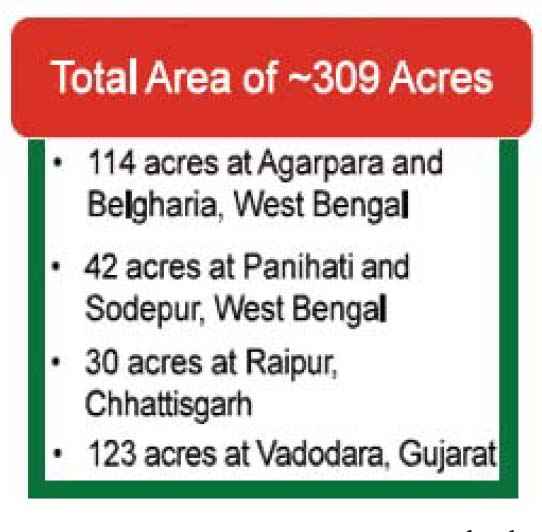
With seven manufacturing facilities spread across West Bengal, Gujarat and Chhattisgarh, the company specialises in rolling stock, loco components, hydro-mechanical equipment, rail infra, bridges and steel structures, in addition to its core competence of freight cars for the Indian Railways, private sector clients and exports, where of late it has started paying added attention.
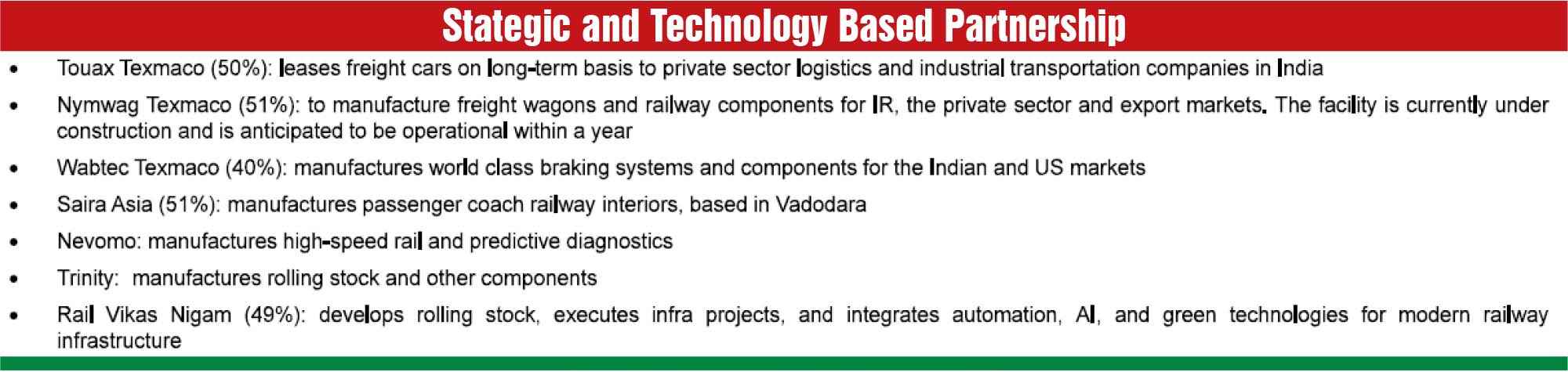
The company’s major joint ventures are with global leaders like Wabtec, Nymwag, Touax, Trinity Rail Group LLC, Nevomo, etc, for different domains. Very recently, it has collaborated with a Navratna CPSE – Rail Vikas Nigam (RVNL) — which is primarily engaged in implementing rail infrastructure projects across the country.
The signing of the Joint Venture Shareholders’ Agreement has formally launched the next phase of collaboration, establishing a unified platform that is capable of delivering scalable, sustainable and future-ready rail solutions for India and the rest of the world. The JV will focus on advanced rolling stock segments, life cycle maintenance and asset management solutions and large-scale EPC and turnkey infrastructure projects in India and abroad. With RVNL retaining a majority ownership (51%), Texmaco holds 49%. This public-private partnership is structured to leverage a muchneeded execution depth in manufacturing.
As per estimates, the annual installed capacity of Texmaco is pegged in the range of 13,000-15,000 wagons. Titagarh Rail Systems Ltd has a current annual capacity of 12,000 wagons and is aiming to ramp up production to 1,500 wagons per month by FY26 (18,000 units annually). Jupiter Wagons Ltd currently has a capacity of 9,600 wagons annually and with ongoing investments is likely to reach 12,000 units.
In 2024, Texmaco made two strategic acquisitions. It acquired a 51% stake in Saira Asia Interiors Pvt Ltd (Saira Asia) for Rs 9 crore and the railway wagon business of Jindal Rail Infrastructure (JRIL) for Rs 615 crore.
Saira Asia specialises in railway and metro interiors. It has designed the interiors of Delhi Metro and Vande Bharat. This will strengthen Texmaco’s commuter mobility segment and solidify its presence in the global railway industry.
JRIL is of more importance to the company. Instead of going for greenfield or brownfield expansion, the company opted for the inorganic route to augment its wagon manufacturing capacity.
JRIL is based at Vadodara, Gujarat, with a huge manufacturing facility spread over 123 acres, of which only half has been utilised, suggesting good potential for expansion. The facility is designed for special-purpose wagons and is equipped with strong R&D design capabilities. The plant features three covered bays and two 700-metre railway sidings, and is capable of producing wagons meeting RDSO standards.
On a cumulative basis, the company currently manufactures 2,500-3,000 wagons per quarter. As per estimates, the annual installed capacity is pegged in the range of 13,000- 15,000 wagons. The two other leading players are Titagarh Rail Systems Ltd (TRSL) and Jupiter Wagons Ltd (JWL). TRSL has a current annual capacity of 12,000 wagons and is aiming to ramp up production to 1,500 wagons per month by FY26 (18,000 units annually). JWL currently has a capacity of 9,600 wagons annually and with ongoing investments is likely to reach 12,000 units.
In addition to the Railways, private companies are also increasingly investing in specialised wagons (e.g., container wagons and double-decker auto carriers), driving demand for players like Texmaco and Jupiter. The industries involved are automobiles, cement and aluminium.
Texmaco is one of the largest suppliers of freight cars in India, manufacturing one out of every four wagons on the IR network, and has a manufacturing track record of 50,000+ freight cars supplied over 20 years, of which 7,000+ freight cars have been sold to private customers in the last 10 years. Over 20 types of freight cars are supplied for a broad range of end-industry applications. Similarly, 550+ units have been supplied to international markets in the last three years. Its capability to use mild steel, stainless steel and composite materials for rolling stock solutions gives an edge to the company.
Indian Railways is planning to procure 100,000-130,000 freight cars in the next 3-4 years. Movement of freight by the railways is estimated to go up significantly from 27% to 45% by 2030. An investment of Rs 1.5 lakh crore has been announced by the government for a dedicated freight corridor (DFC). A 3-5x growth in exports of components and railway castings is expected over the next 2-3 years. These developments directly lead to brighter prospects for the company.
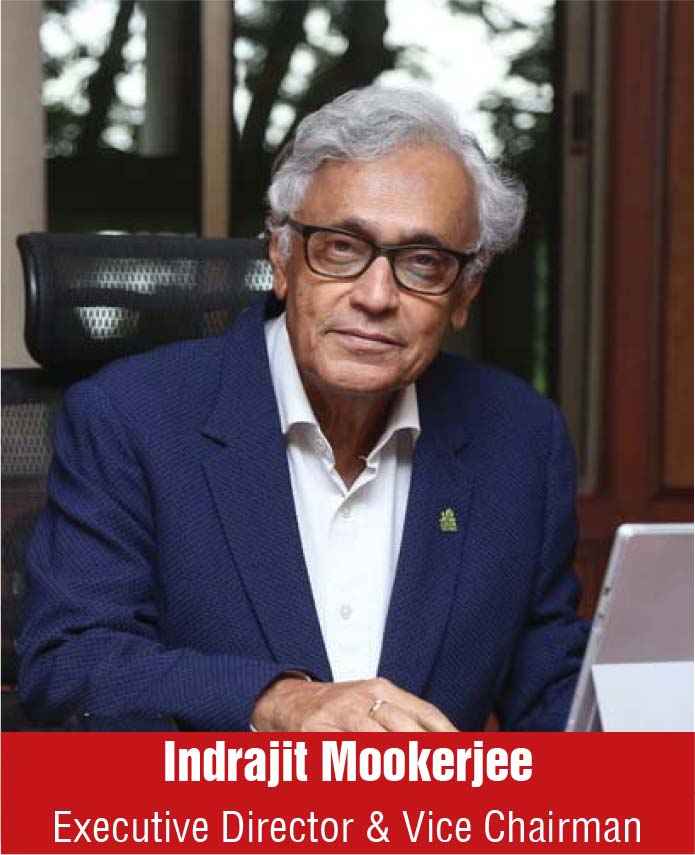
Commenting on the business outlook, Indrajit Mookerjee, Executive Director and Vice-Chairman, said, “As high-density routes expand and freight corridors are strengthened, demand for rail infrastructure, including wagon manufacturing and rail electrification, is expected to remain strong. These initiatives complement Texmaco’s focus on these areas, positioning the company for growth in advanced rail infrastructure.”
On passenger coaches, Mr Mookerjee said, “Currently, we are manufacturing components for passenger coaches. We have plans to produce passenger coaches going ahead, because now there are huge requirements for metro coaches in India.”
Elaborating on opportunities in the EPC division, Mr Mookerjee said, “We see tremendous future for the EPC business related to IR. The government has started focusing on activities like laying of tracks, signalling and coverage. We have unique credentials in these areas. Barring one or two areas that we are yet to acquire, we are ready to be a part of this growth trajectory. We are in a very advanced stage of acquiring the missing domain space.”
The company has two steel foundry units forming an integrated part of freight care, providing railway castings with a combined capacity of 48,000 mtpa.
Most of this division’s capacity is being used captively by the heavy engineering division and the balance is being exported. The new greenfield steel foundry is coming up in Odisha at an investment of about Rs 439 crore with an installed capacity of 35,000 MTPA.
When it gets operational is not clear, but the facility is designed to meet rising demand and strengthen the company’s leadership in the domain. Once it starts, Texmaco will have the largest foundry capacity in India with 83,000 mtpa, and perhaps the largest in the world as well. The Association of American Railroad (AAR) has accredited ‘largest foundry’ status to the company.
Uptil December (9 months), the foundry division achieved sales of 25,326 mt, of which Q3 contributed 7,646 mt. Explaining the reason for the fall in sales, Sudipta Mukherjee, Managing Director, said, “The foundry export business was impacted by US tariff impositions, leading to a decline in comparable export volumes.”
With regard to freight cars, Mr Mukherjee said, “During the first 9 months, deliveries reached 6,176 units, wherein 2,027 units represent Q3. Despite challenges, average realisation per wagon improved over the past two quarters, driven by a better product portfolio.”
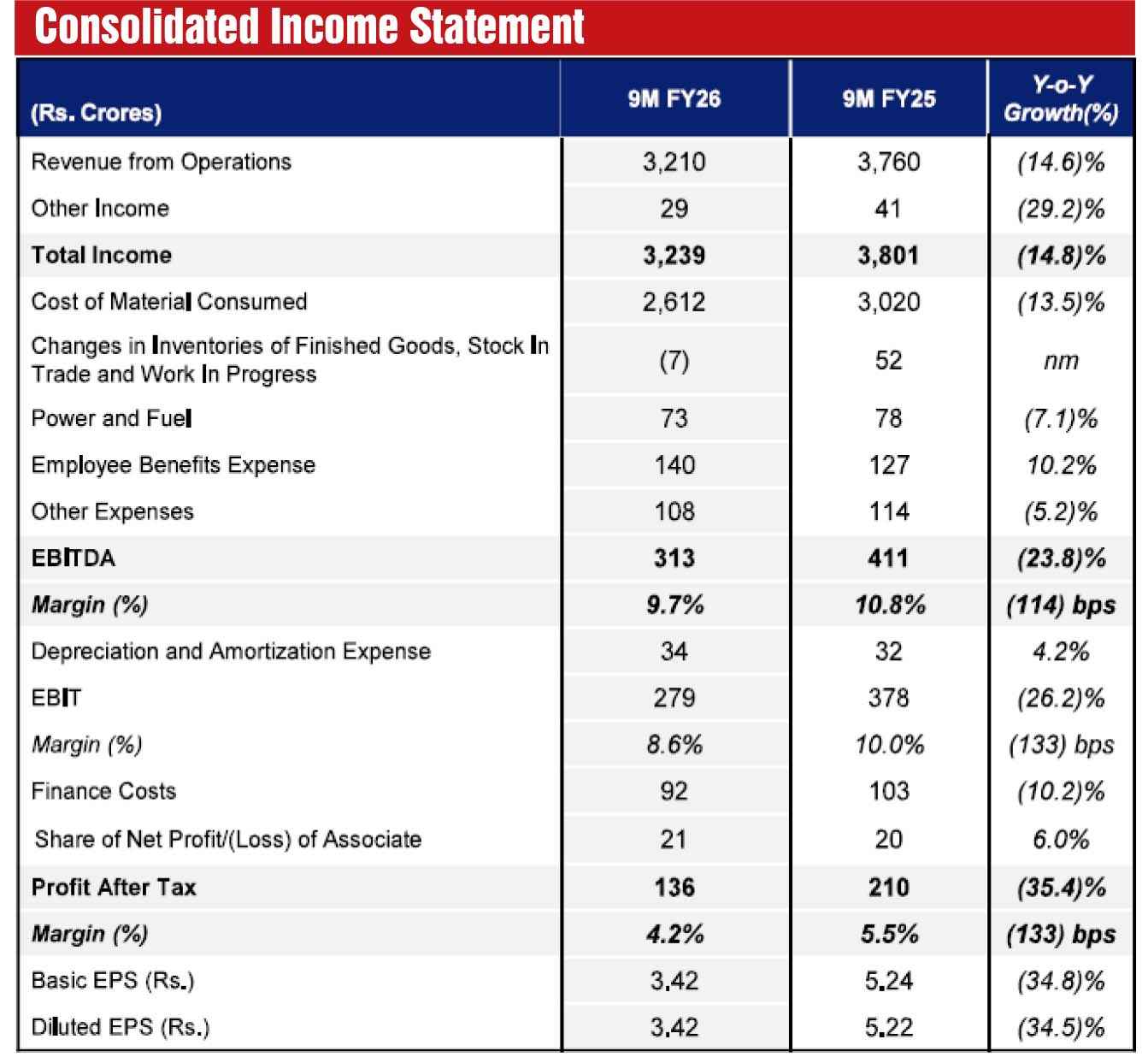
The third quarter witnessed a dip in operational revenue at Rs 1,042 crore, a decline of 21.5% yoy. EBITDA was Rs 102 crore vis-à-vis Rs 139 crore in the corresponding period of the previous year, translating into an EBITDA margin of 9.6% against 10.4%. Profit after tax suffered a 44.7% fall from Rs 76 crore to Rs 42 crore, resulting in a drop in NPM to 4% vis-à-vis 5.7%.

The cumulative performance for 9 months ended December 2025 reflected net revenue of Rs 3,210 crore (PY Rs 3,760 crore), EBITDA at Rs 313 crore (PY Rs 411 crore) and PAT at Rs 136 crore (PY Rs 210 crore). Accordingly, EPS declined to Rs 3.42 from Rs 5.22 per Re 1 face value and equity capital of Rs 40.69 crore with a book value of Rs 73 and a promoter holding of 48.14%.
The Union Budget 2026-27 allocated a record Rs 2.93 lakh crore to Indian Railways, with a strong emphasis on rail electrification, enhancement of freight capacity, safety infrastructure, and development of high-speed corridors. These four areas are expected to translate into sustained public investment across network expansion, high-density routes, and upgrades to traction and maintenance infrastructure. This policy focus aligns well with Texmaco ‘s strategic priorities and long-term growth road map.
Considering encouraging developments taking place in sectors like infrastructure, minerals, coal, iron ore, automobiles, food grains and perishable items, one could conservatively conclude that private sector investment will surely grow gradually in all these areas, providing a good growth momentum to an established player like Texmaco, which is not only future-ready but also consciously determined to de-risk its overdependency on government business by increasing the private sector share in its revenue basket.
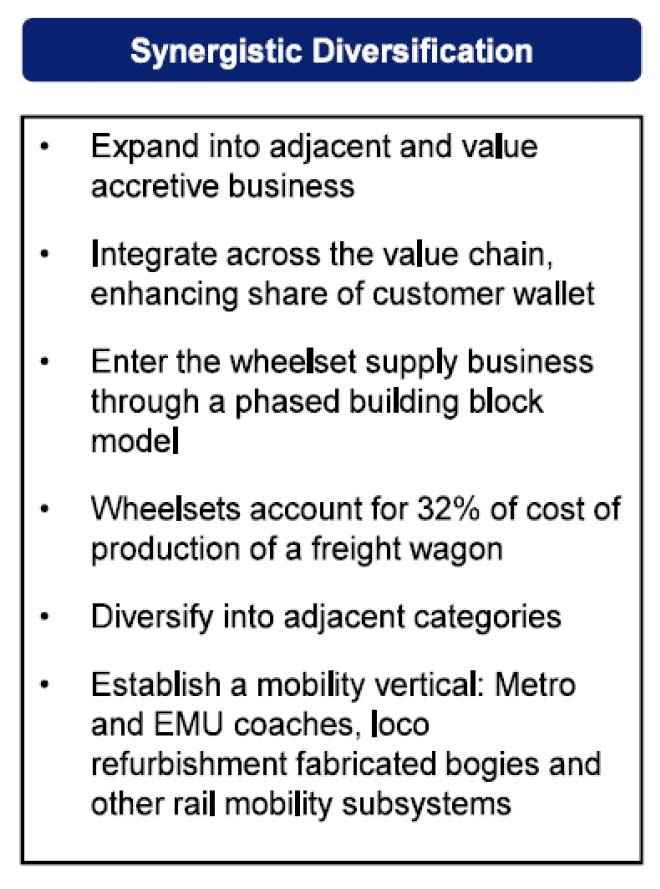
Sharing his optimistic views on the company’s outlook, Mr Mukherjee said, “The focus is on enhancing core capabilities by leveraging technical expertise and expanding into new markets, with an emphasis on special-purpose freight wagons and high-precision engineered components. We are also diversifying into valueaccretive businesses, including a phased entry into the wheelset supply business and development of a mobility vertical, covering metro and EMU coaches, locomotive refurbishment and rail subsystems. Additionally, we also remain focused on strategic partnerships, collaborations, and adherence to global standards to ensure a successful entry into new areas.”
Texmaco holds a 41% stake in Texmaco Defence Systems Pvt Ltd, targeting areas such as armoured vehicles, main battle tanks, ammunition shells, gun manufacturing, etc. The company has technology tie-ups with renowned global OEMs in addition to Indian PSUs since its inception in 2018. Tribhuvan Darbari is its Managing Director and CEO. Not much insight/update is available on this particular division in the public domain.
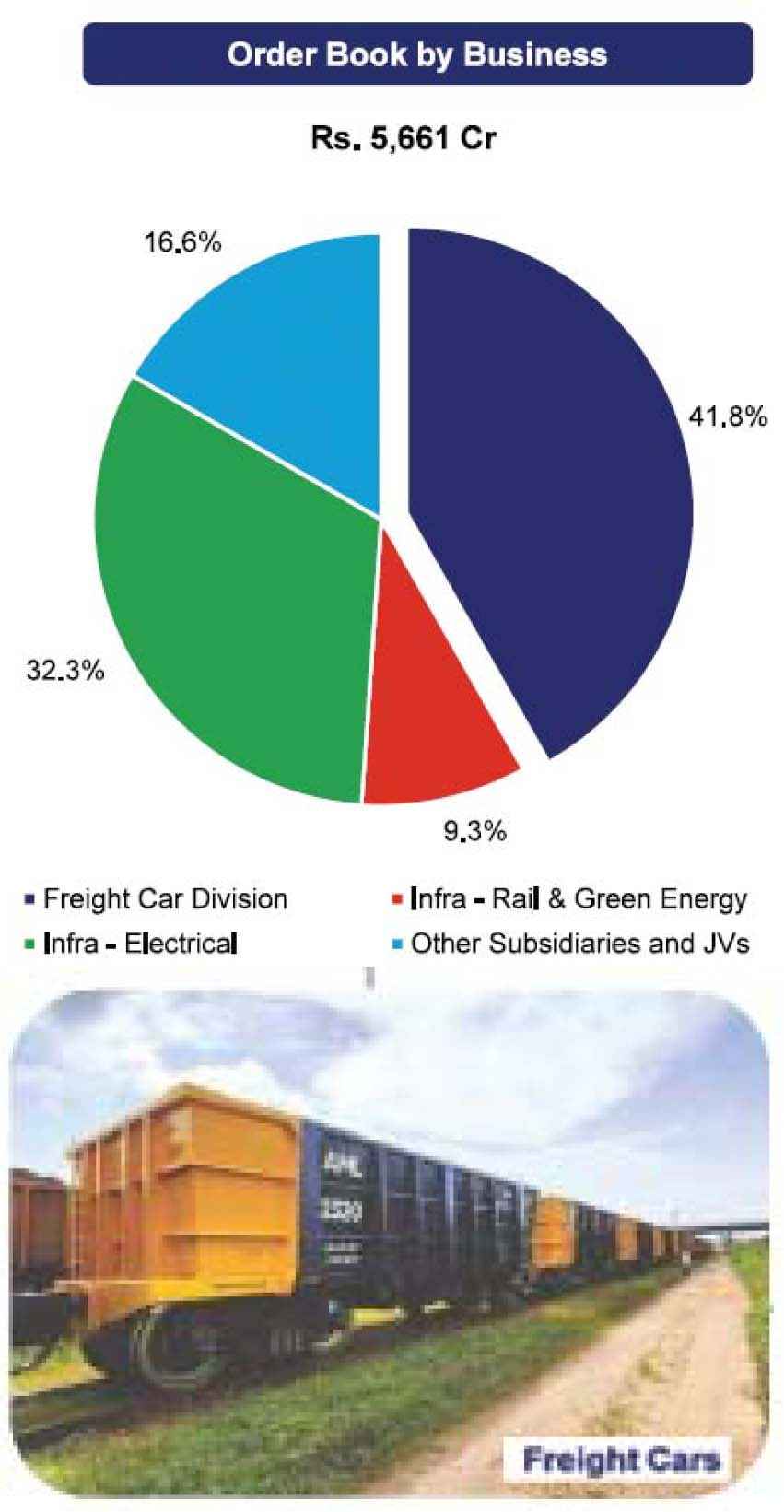
However, it appears that the holding company seriously wants to pursue this vibrant sector which is being considered a new growth engine for private sector players in the field. The current order book of Rs 5,661 crore comprises the freight car division (41.8%), Infra Elec (32.3%) and Infra Rail & Green (9.3%), while the balance 16.6% is by subsidiaries and joint ventures. On similar lines, during the first nine months of the current financial year 2026-27, the revenue contribution of the three major divisions have been 81%, 11% and 8% respectively.
The company’s share price is currently hovering at Rs 106, almost at its yearly low (yearly high Rs 189 on 26-6-2025), translating into a market capitalisation of Rs 4,300 crore. The stock looks quite attractive at the current valuation because the future prospects of its major verticals and the planned diversification are highly promising. More importantly, the company is well-equipped with its own standalone facilities as well as through collaborations and joint ventures, with an admirable and balanced product bouquet. However, the fact remains that the management needs to pay special attention to improve profitability on a sustainable basis, even though its strong order book is certainly ensuring execution visibility.
August 31, 2026 - Second Issue

Industry Review


VOL XVII - 12
August 16-31, 2026
Want to Subscribe?
Read Corporate India and add to your Business Intelligence
Unlock Unlimited Access
Lighter Vein

1 Year *
Subscription
Rs 1800 /-
3 Year *
Subscription
Rs 5000 /-
5 Year *
Subscription
Rs 8000 /-
5
International
Subscription
$ 99.99
Read Corporate India and add to your Business Intelligence
Popular Stories

A modern-day enigma and a ramification of humanity's never-ending advancements, e-waste refers to the scum con- cealed by the outward glow of ever-advancing technology.
Archives


Office Address
Unit No. 405, 4th floor, Madhu Industrial Park, Avadh Narayan Tiwari Marg, Mogra Village Road, Andheri (East), Mumbai – 400069.
Call/Whatsapp
If you are interested in advertising with Corporate India, please don't hesitate to contact us. Our team is here to assist you with the process and answer any questions you may have. We look forward to the opportunity to work with you and help your business reach its full potential.
Fill out the form below to subscribe to our newsletter and never miss an update