


Want to Subscribe?
Read Corporate India and add to your Business Intelligence

 Unlock Unlimited Access

Published: March 31, 2026
Updated: March 31, 2026
A UAV (Unmanned Aerial Vehicle), commonly known as a drone, is an aircraft that flies without a human pilot on board. It is controlled remotely by a person on the ground or can fly completely on its own using pre-programmed software, GPS and sensor. In layman's language, a drone is like a flying robot or a camera in the sky that you can control with a phone app or a remote controller. It functions as an eye in the sky.
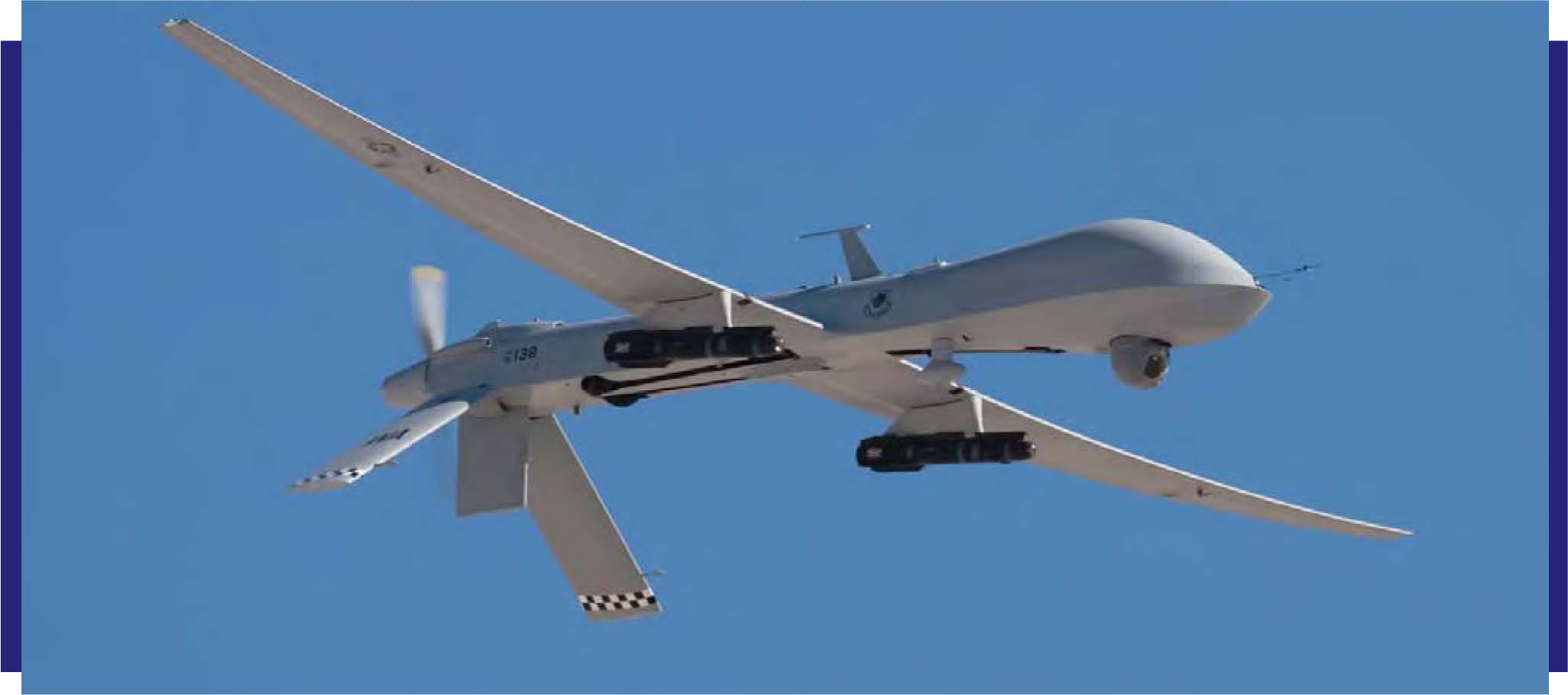
The concept started in 1849, when Austrian forces launched unmanned incendiary balloons to attack Venice. During the era of World Wars I and II, the first modern drones were developed in 1930 as 'aerial targets' to train anti-aircraft gunners. It is believed the term 'drone' was coined because of its buzzing sound. The real credit goes to Israel, which pioneered tactical, camera-equipped drones for real-time surveillance in the 1970s. The 1990s saw the development of advanced systems like the predator drone.
The size of the global drone industry was approximately $30.7 billion in 2024, with projections indicating substantial expansion expected to reach $75 billion by 2033, showcasing a compound annual growth rate (CAGR) of 10.4%. Of course, this growth will depend on how quickly key challenges are addressed, such as advancing technology, diversifying supply chains, policy and regulatory changes, and a shift from hardware-based business models to service-based models built on application-specific full-stack solutions.
The defence and public safety segment continue to dominate industry applications with an estimated size of $16.1 billion in 2024, projected to reach $47.2 billion by 2032 at a 13.15% CAGR, representing 48.8% of all drone applications by value. Military drone procurement has increased over the past few years, driven by the demonstrated effectiveness of unmanned systems in recent conflicts, while public safety drone deployments have increased in urban environments, with applications ranging from traffic management to emergency response.
UAVs have become extremely important in modern warfare. Modern UAVs are far more than flying cameras. Equipped with advanced sensors, they can detect what human eyes cannot — spotting movement in total darkness, identifying heat signatures and tracking hidden targets long before they become visible or audible. From border surveillance to high-risk strike missions, UAVs are reshaping India's military strategy. With rapid technological advancements, India's drone power is becoming smarter, faster and more self-reliant — poised to meet the challenges of tomorrow's battlefield.
The energy and utilities sectors have demonstrated increased adoption of drone technology, with usage in pipeline inspection. In the UAE, drones now monitor 12,000 km of critical infrastructure annually. The integration of specialised sensors and thermal imaging capabilities have particularly benefited in improving monitoring of natural gas infrastructure. The construction and infrastructure sectors in general are also witnessing steady growth. Logistics and delivery applications represent one of the fastest growing segments.
India aims to become a leading global hub for drones by 2030. Aligned with this goal, with over 270 startups, the industry is poised for significant growth, and is projected to reach the Rs 5,000-crore mark by 2026. Though the government's outlay on PLI spending for drones and drone components is increasing, almost all players are facing challenges in scaling the business, mainly due to slow conversion of latent demand, unavailability of upfront funding for R&D, and regulatory bottlenecks to enable widespread use of drones, including BVLOS operations.
A new two-tier manufacturing incentive scheme by the government, proposing Rs 10,000 crore for 5 years, is being introduced to accelerate domestic drone manufacturing. Aiming for 50-60% domestic content could prove a game changer for the industry. These budgetary measures are designed to achieve a $5 billion market for drones by the end of the decade, with a firm focus on 'Made in India' technology.
Under the 'Namo Drone Didi Scheme Expansion' (NDDSE), allocation has been increased seven-fold to Rs 676.85 crore. The scheme provides 15,000 Women's Self Help Groups (SHGs) with drones to promote advanced technology in agriculture. A 100% subsidy (up to Rs 10 lakh) is meant for ICAR institutes, Krishi Vigyan Kendras (KVKs) and state agriculture universities.
Though indigenous content is gradually on the rise through strategic investments and supply chain innovation, the industry will still be dependent on foreign suppliers for components such as lithium-ion batteries, semiconductor chips and high-precision sensors in the near term. This exposes the sector to supply chain disruptions and geopolitical risks.
The latest good news for industry players is the increased pace of UAV purchase by the government under 'emergency procurement'. UAV demand is already picking up in the defence sector due to geopolitical exigencies. Changes in policy and regulatory frameworks are expected to boost drone adoption across civil segment use as well. Likewise, the rise of drone-as-a-service (DaaS) also represents a significant business model innovation, allowing organisations to access drone technology without heavy upfront investment, or the need for specialised operations and costly fleet maintenance.
Overall, the drone industry is poised for significant adoption by 2030 and beyond.
August 31, 2026 - Second Issue

Industry Review


VOL XVII - 12
August 16-31, 2026
Want to Subscribe?
Read Corporate India and add to your Business Intelligence
Unlock Unlimited Access
Lighter Vein

1 Year *
Subscription
Rs 1800 /-
3 Year *
Subscription
Rs 5000 /-
5 Year *
Subscription
Rs 8000 /-
5
International
Subscription
$ 99.99
Read Corporate India and add to your Business Intelligence
Popular Stories

A modern-day enigma and a ramification of humanity's never-ending advancements, e-waste refers to the scum con- cealed by the outward glow of ever-advancing technology.
Archives


Office Address
Unit No. 405, 4th floor, Madhu Industrial Park, Avadh Narayan Tiwari Marg, Mogra Village Road, Andheri (East), Mumbai – 400069.
Call/Whatsapp
If you are interested in advertising with Corporate India, please don't hesitate to contact us. Our team is here to assist you with the process and answer any questions you may have. We look forward to the opportunity to work with you and help your business reach its full potential.
Fill out the form below to subscribe to our newsletter and never miss an update