


Want to Subscribe?
Read Corporate India and add to your Business Intelligence

 Unlock Unlimited Access

Published: March 31, 2026
Updated: March 31, 2026
Corporate India often celebrates long hours, stretched teams and stretch goals. We admire people who are always available, who respond to emails at midnight, who never say 'no'. On the surface, this looks like commitment and performance. But beneath this visible energy lies a silent crisis, one that most organizations are either underestimating or choosing not to see. Employees are tired. Managers are overwhelmed. Leaders are exhausted. And yet, the system keeps producing results just enough to convince us that everything is fine.
It is not. What we are seeing today is the illusion of high performance. Output is being delivered, but at a heavy human cost. Engagement is falling. Burnout is rising. Creativity, trust, and long-term capability are quietly eroding. This is not an emotional argument. It is a business reality. It is a strategic risk — one that shrinks productivity, corrodes culture and quietly increases business risk.
Recent global surveys show engagement is alarmingly low — about one in five employees worldwide feel truly engaged at work, while a majority falls into 'not engaged' or 'actively disengaged'. Gallup's 2024-25 readings place large percentages of workers in the latter categories — numbers that translate into trillions in lost productivity globally.
India's experience is worse on the burnout front. A McKinsey Health Institute survey found a very high share of Indian respondents reporting burnout symptoms far above global averages, pointing to a national-level stress epidemic. Forget the numbers, this disengagement and burnout cost money through lost productivity, higher errors, poor customer experience and avoidable attrition.
Disengagement does not mean people stop working. In fact, disengaged employees often work very hard. They attend meetings. They deliver tasks. They follow instructions. But they stop thinking deeply, challenging ideas, and caring beyond the minimum. They do not bring new ideas. They avoid responsibility beyond their role. They wait for instructions instead of showing ownership.
In many Indian organizations, this goes unnoticed because compliance is mistaken for commitment. An employee may look 'busy' all day, but inside they feel disconnected, unheard and emotionally drained.
Burnout is often misunderstood. It is not about lack of resilience or personal strength. Burnout happens when demand consistently exceeds capacity, with no recovery time. Burnout shows up as:
In India, burnout is especially dangerous because many employees hesitate to speak up. Cultural conditioning teaches people to endure, not complain. Managers often reward silence over honesty. As a result, people break down quietly or resign suddenly.
There are three main reasons this crisis stays hidden:
1) Short-term results hide long-term damage — Teams may still hit targets because people are pushing themselves beyond healthy limits. But this performance is borrowed from the future. Eventually high performers leave, middle managers collapse under pressure, quality drops, and ethical shortcuts increase.
2) Managers themselves are burnt out — Most managers today are stretched between targets, reporting, firefighting and people issues, with very little support. A burnt-out manager cannot energize a team.
3) Wellness as benefit, not design issue — In many organizations, wellness is treated like an extra benefit, not as part of how work is designed. Yoga sessions, mental health apps and wellness emails can help but they cannot fix a badly designed job. Often, these initiatives become check-box activities.
Across industries, some patterns are clear:
Solving disengagement and burnout does not require big budgets, fancy wellness apps or complex programs. It requires better leadership habits and smarter ways of organizing work.
Check the signals, early and regularly — Many organizations measure engagement once a year. By the time the report is discussed, people have already burned out or left. Instead of waiting for attrition numbers, organizations should regularly check. Are people consistently overloaded? Are managers actually speaking to their teams? You don't need a long survey. A short pulse check once every quarter is enough.
Fix managers before fixing policies — People don't experience HR policies every day. They experience their manager. A good manager can reduce stress even in tough situations. A poor manager can destroy morale even in a good company. One simple discipline can change everything: every manager should have one proper one-on-one conversation with each team member every week. Not a status update. Not a form. Just a real conversation about work, pressure and support.
Fix the work, not just the wellness programs — If roles are overloaded, no counseling session or yoga class will compensate. Leaders must step back and ask basic questions. Which work actually creates value? What is being done only because 'it has always been done'? A simple experiment can make a visible difference: identify one high-pressure team and introduce a no-meeting day once a week.
Set boundaries and ensure leaders follow them — Many organizations have policies about work-life balance. Few are believed. The reason is simple — when senior leaders send late-night emails or call people on leave, boundaries collapse, no matter what the policy says. These norms only work if leaders model them visibly and consistently.
Give people clarity on growth and the future — Disengagement often comes from uncertainty, not ambition. People don't always want promotions, they want clarity. They want to know what skills matter, how growth actually happens, and whether efforts and learnings are recognized. Publishing simple role progression paths for key functions does not require perfection. Even basic clarity reduces anxiety and restores motivation.
Disengagement and burnout are not only HR problems, they are leadership challenges too. Leaders must decide: Do we want short-term output or long-term strength? Do we reward exhaustion or effectiveness? Do we listen or only measure?
Employee well-being is not a soft issue. It is fundamentally about how work gets done. When organizations manage people health with the same seriousness as cost, quality and delivery, performance becomes sustainable instead of forced. The goal is not to make work easy. The goal is to make work focused and effective. That is how real performance is built and how it lasts.
The future of Corporate India will not be built by tired people running on empty. It will be built by organizations that respect human limits while unlocking human potential. The crisis is silent but the solution begins with awareness, courage and action.
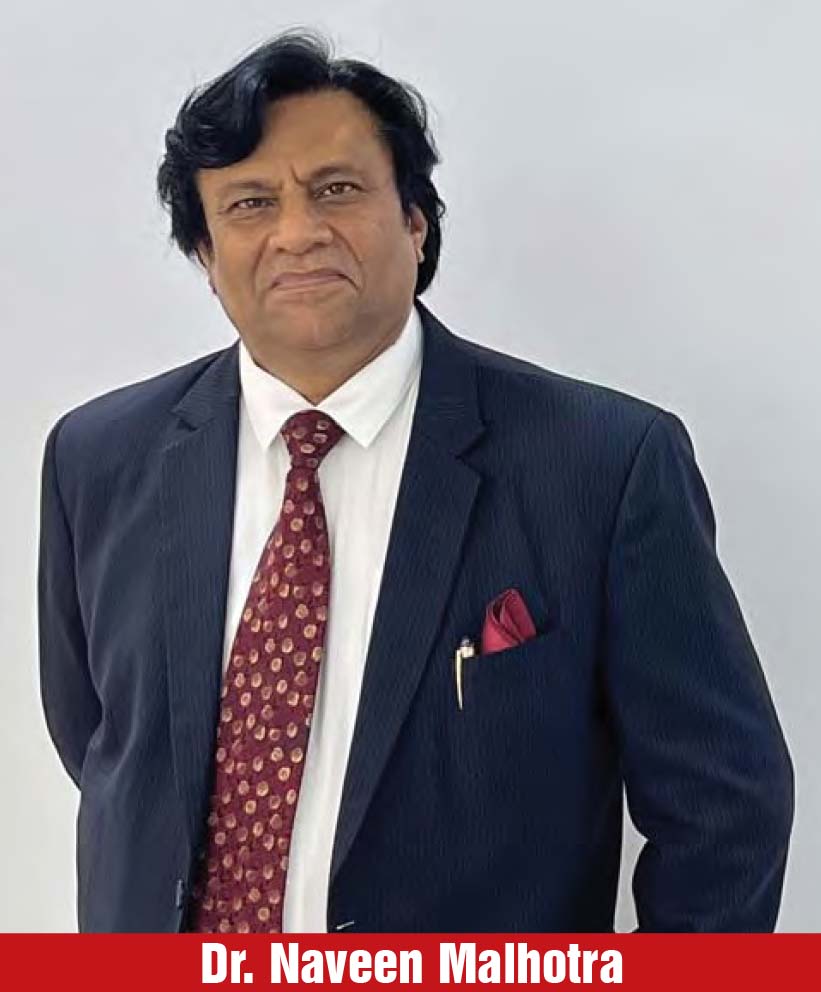
Dr Colonel Naveen Malhotra began his career as an Indian Army officer. He transitioned seamlessly into corporate leadership, earning an MBA and PhD in human resources, and serving as a Chief Human Resources Officer across complex organisations. A published author and story teller, Dr Malhotra blends military discipline, corporate insight and philosophical depth, offering a leadership perspective shaped by service, strategy and human understanding.
August 31, 2026 - Second Issue

Industry Review


VOL XVII - 12
August 16-31, 2026
Want to Subscribe?
Read Corporate India and add to your Business Intelligence
Unlock Unlimited Access
Lighter Vein

1 Year *
Subscription
Rs 1800 /-
3 Year *
Subscription
Rs 5000 /-
5 Year *
Subscription
Rs 8000 /-
5
International
Subscription
$ 99.99
Read Corporate India and add to your Business Intelligence
Popular Stories

A modern-day enigma and a ramification of humanity's never-ending advancements, e-waste refers to the scum con- cealed by the outward glow of ever-advancing technology.
Archives


Office Address
Unit No. 405, 4th floor, Madhu Industrial Park, Avadh Narayan Tiwari Marg, Mogra Village Road, Andheri (East), Mumbai – 400069.
Call/Whatsapp
If you are interested in advertising with Corporate India, please don't hesitate to contact us. Our team is here to assist you with the process and answer any questions you may have. We look forward to the opportunity to work with you and help your business reach its full potential.
Fill out the form below to subscribe to our newsletter and never miss an update