



Want to Subscribe?
Read Corporate India and add to your Business Intelligence

 Unlock Unlimited Access

Published: May 31, 2026
Updated: May 31, 2026
To take a leaf from a popular proverb, the current multi-sector pain is one sector's gain. We are talking of the defence segment, whose leading members are witnessing multi-bagger returns and outperforming the broader stock market indices.
This is part of a continuing bull phase for defence and allied stocks, which have delivered exceptional returns during the last three years, turning into some of the biggest wealth creators in the market.
Topping this list is Zen Technologies, with a staggering 631% return over three years and a ten-fold jump in market capitalisation from Rs 1,540 crore on February 1, 2023 to Rs 15,923.61 crore on June 10, 2026.
The budgetary role of the Centre has been a driving factor. Impelled by prevailing global geopolitical tensions and the necessity for indigenisation, the defence budget has been jacked up to a massive Rs 7.8 lakh crore, ensuring that record-level order books continue to support long-term revenue visibility.
At a time when the Indian stock market is looking down a falling-value valley on account of continuing global geopolitical tensions surrounding the four-year-old Ukraine-Russia war and the four-month-old US-Iran conflict, a single segment — defence — is witnessing the very opposite scenario. Even as the Sensex, the most popular index of the stock market based on 30 pivotal stocks quoted on the BSE, nosedived from the December 1, 2025 all-time high of 86,159 to 73,983, and the Nifty50, the favourite index of analysts, calculated on the prices of 50 leading stocks quoted on the NSE, slid from 26,358 (January 5, 2026) to 23,215, with almost all sectors participating in the downward drift, the defence sector has emerged as the best performer on Dalal Street. Companies such as Hindustan Aeronautics, Ideaforge, Bharat Electronics, Mazagon Docks, Bharat Dynamics, Garden Reach Shipbuilders and Data Patterns have delivered multi-bagger returns, significantly outperforming the broader market indices.
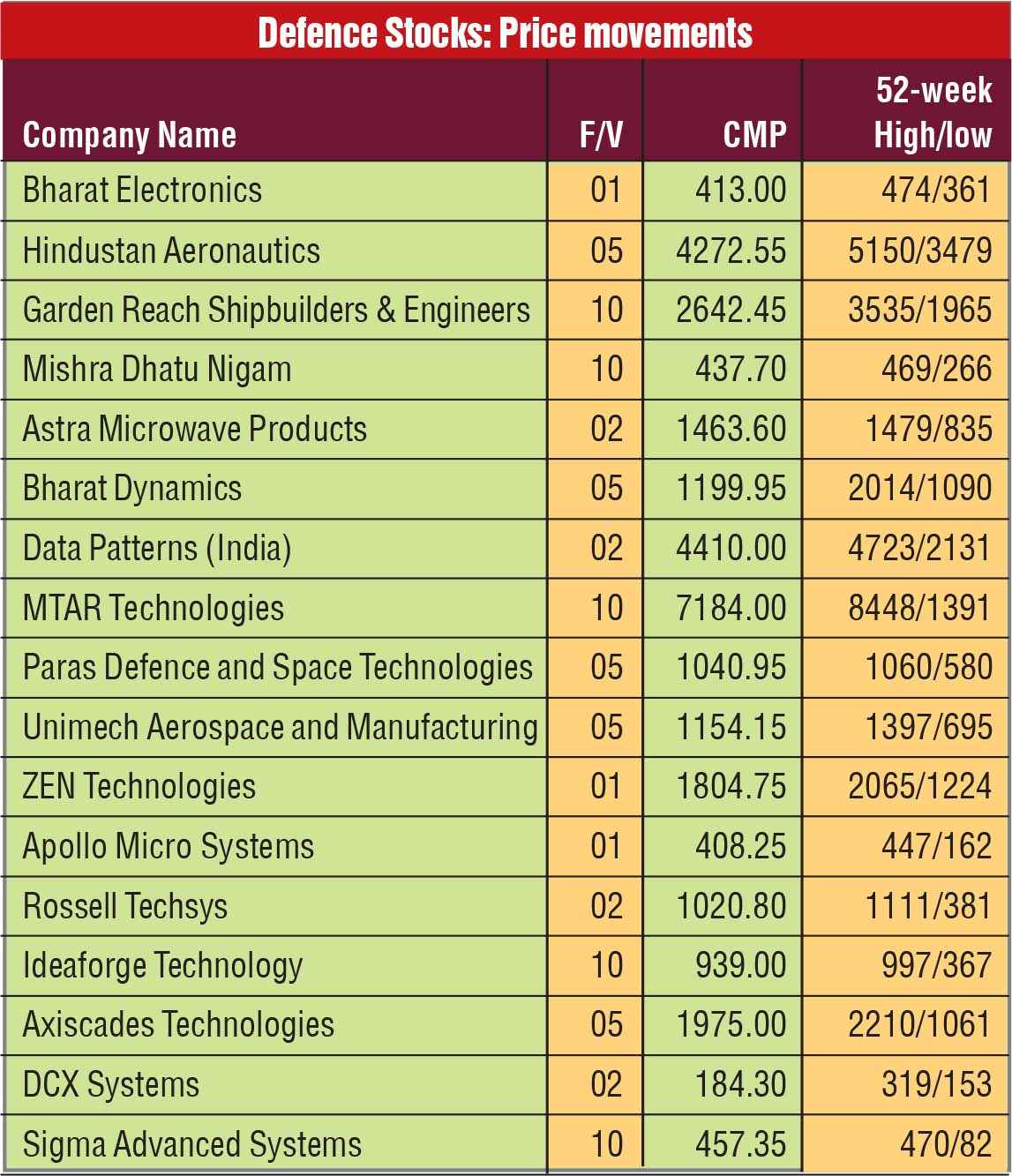
PSU defence stocks, which had no takers a few years ago, are in great demand. The price of Bharat Electronics has during the last 52 weeks shot up from Rs 361 to Rs 474 before settling around Rs 413, Hindustan Aeronautics spurted from Rs 3,479 to Rs 5,150 before settling at around Rs 4,272, Garden Reach Shipbuilders and Engineers went from Rs 1,965 to Rs 3,535 before coming down to Rs 2,642, Data Patterns (India) from Rs 2,131 to Rs 4,723 before settling at Rs 4,410, Ideaforge Technology from Rs 367 to Rs 997 before settling around Rs 939, and Mishra Dhatu Nigam from Rs 266 to Rs 469 before coming down to Rs 438. Among private sector enterprises, Zen Technologies spurted from Rs 1,224 to Rs 2,065 before closing on June 9 at Rs 1,805, Paras Defence and Space Technologies from Rs 580 to Rs 1060 before settling at Rs 1040, Apollo Micro Systems from Rs 162 to Rs 447 before coming down Rs 408, and DCX Systems from Rs 153 to Rs 319 before closing recently at Rs 185.
The remarkable rally in defence stocks is not merely sentiment driven. It is backed by record government spending on defence, which has increased steadily over the last several years, reflecting India's focus on military preparedness and strong indigenisation initiative. The country's defence budget shot up from Rs 5.73 lakh crore in fiscal 2023 to 6.8 lakh crore in FY2026 and further to Rs. 7.85 lakh crore in fiscal year 2027. At the same time, capital expenditure on defence services (like military modernisation) continues to rise as India upgrades aircraft, warships, missiles, drones and surveillance systems, increasing from Rs 1.43 lakh crore to Rs 2.19 lakh crore during the same period and contributing significantly in pushing up Indian defence stocks. There was also higher spending on equipment, platforms, etc. As a result, defence's share in the Union budget has inched up from 13.7% in fiscal 2023 to 4.7% in FY2027.
Reacting to the substantial rise in defence allocation, Varun Gupta, a stock market expert and CEO of Groww Mutual Fund, said the spurt in budgetary allocation has driven defence stocks to new high levels. Pointing out that “the higher allocation to defence underscores the government's twin priorities of strategic preparedness and domestic capacity building,” he added that “beyond immediate security needs, it is a powerful economic multiplier — supporting indigenous manufacturing, technology development and skilled employment. A sustained shift towards domestically sourced capital strengthens India's strategic autonomy while creating durable growth opportunities across the broader industrial ecosystem.”
Besides a record defence allocation in the budget, another factor that has buoyed defence stocks is the government's ‘Make in India’ initiative, a revolutionary step to promote domestic manufacturing. These two developments have reflected in the strong financial performance of defence stocks. Earlier, India used to import nearly 65-70% of its defence equipment, but under the new initiative the government is aggressively promoting indigenous fighter aircraft, missile systems, radar systems, naval warships, defence electronics and drone technology. The government move has encouraged defence companies to push up the pace of production. The 16 defence stocks in the Nifty India Defence index have seen strong growth in both sales and profits over the past three years, with gross sales rising from Rs 76,105 crore in fiscal 2022 to Rs 1.12 lakh crore in FY2025, showing steady expansion in manufacturing and order execution. The profit at net level has risen even faster — almost doubling from Rs 11,343 crore to Rs 21,270 crore during the same period.
In fact, during the last three years, India's defence and allied manufacturing stocks have delivered exceptional returns, turning into some of the biggest wealth creators in the market. A study by Ace Equity reveals that several defence, shipbuilding and engineering companies have seen a sharp gain in both share prices and market capitalisation between February 2023 and January 2026.
Zen Technologies has emerged as the top performer in the three-year period, delivering a staggering 631% return over three years. Its market capitalisation has shot up more than ten times — from Rs 1,540 crore on February 1, 2023 to Rs 15,923.61 crore on June 10, 2026. The stock's remarkable market rally reflects a growing demand for defence training and simulation solutions, alongside rising defence spending.
India's shipbuilding segment is also in the limelight, giving a further boost to defence stocks. Among shipbuilders, Mazagon Dock Shipbuilders, Cochin Shipyard and Garden Reach Shipbuilders have all delivered returns of over 475%. Mazagon Dock's market cap surged from Rs 15,002 crore to over Rs 1.03 lakh crore in three years, highlighting strong execution, export orders and sustained government support for naval manufacturing.
Fighter aircraft:
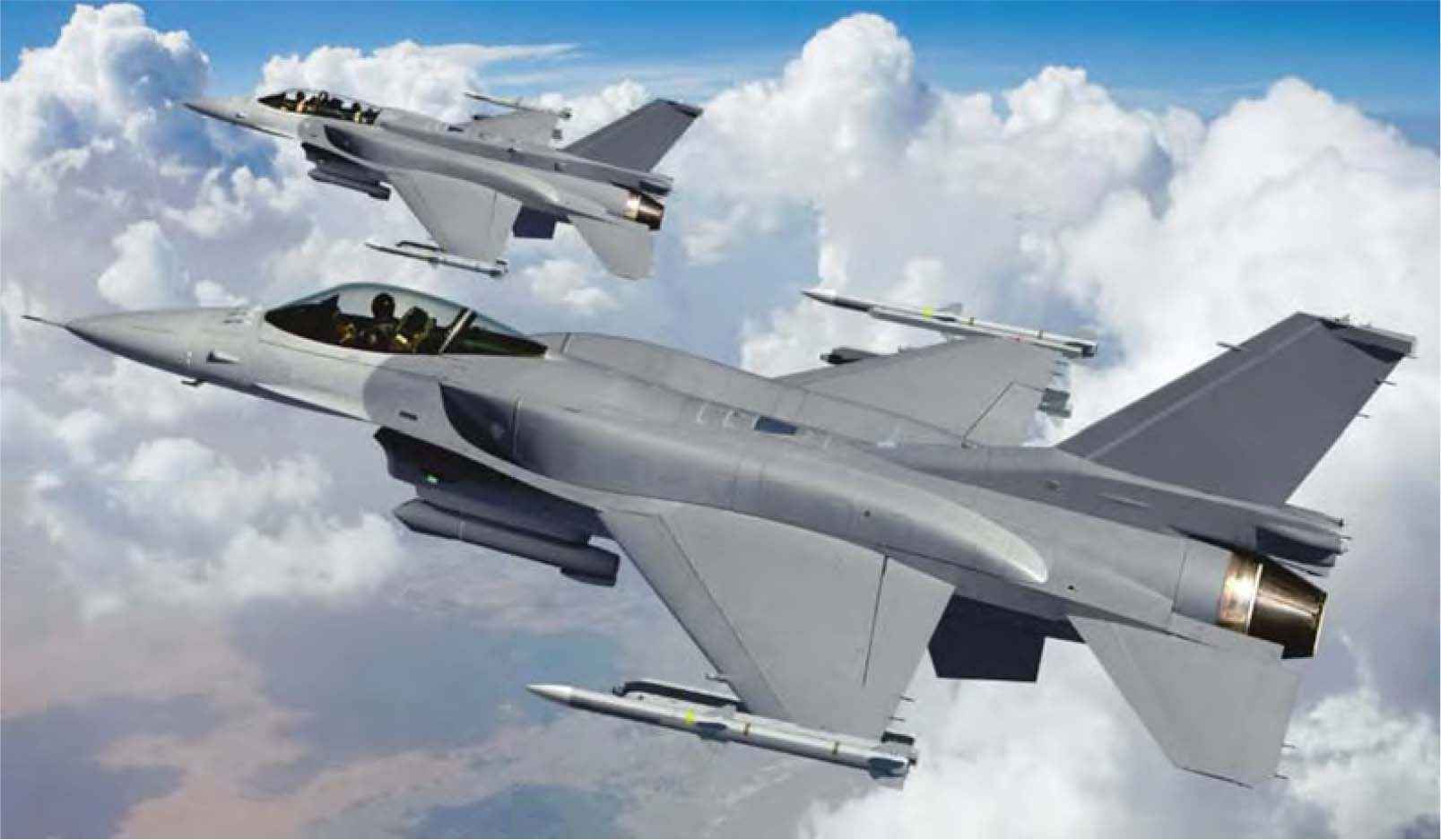
HAL remains India's premier aerospace company. Its growth drivers include: (a) Tejas MK 1A (b) Tejas MK 2 (c) AMCA programme (d) Helicopter orders (e) Engine manufacturing partnerships. HAL continues on the path of strong earnings growth, supported by a growing demand for aircraft.
Defence electronics:
BEL (Bharat Electronics) is perhaps the most diversified defence player. Its products include: (1) Radars (2) Electronic warfare systems (3) Missile electronics (4) Battlefield Management Systems (5) Communication equipment. BEL has reported a fiscal 2026 sales turnover of Rs 26,750 crore and an order book of Rs 75,000 crore.
Naval modernisation:
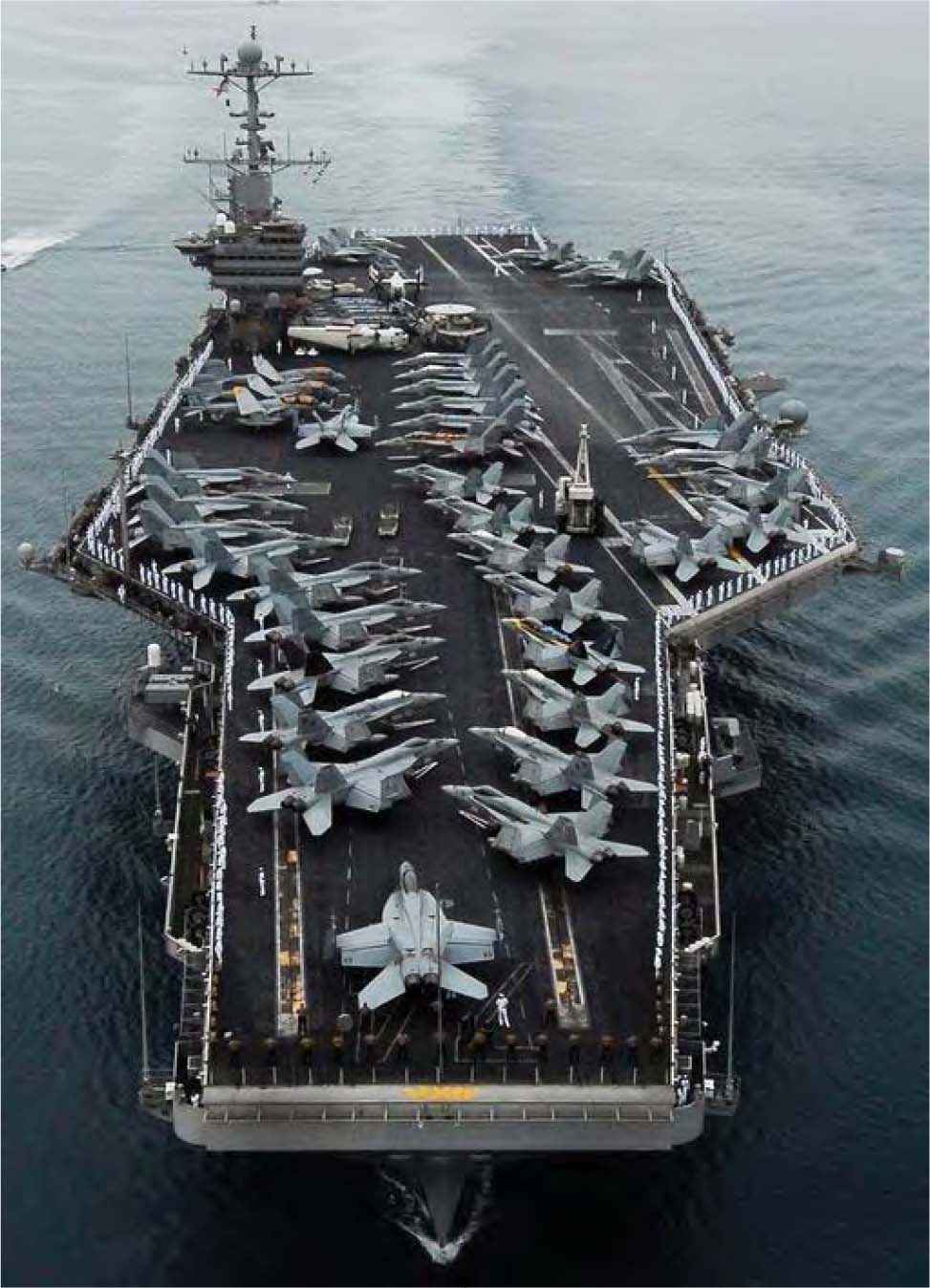
India's naval expansion is creating opportunities for: (a) Mazagon Dock (b) GRSE (c) Cochin Shipyard.
Missile and drones:
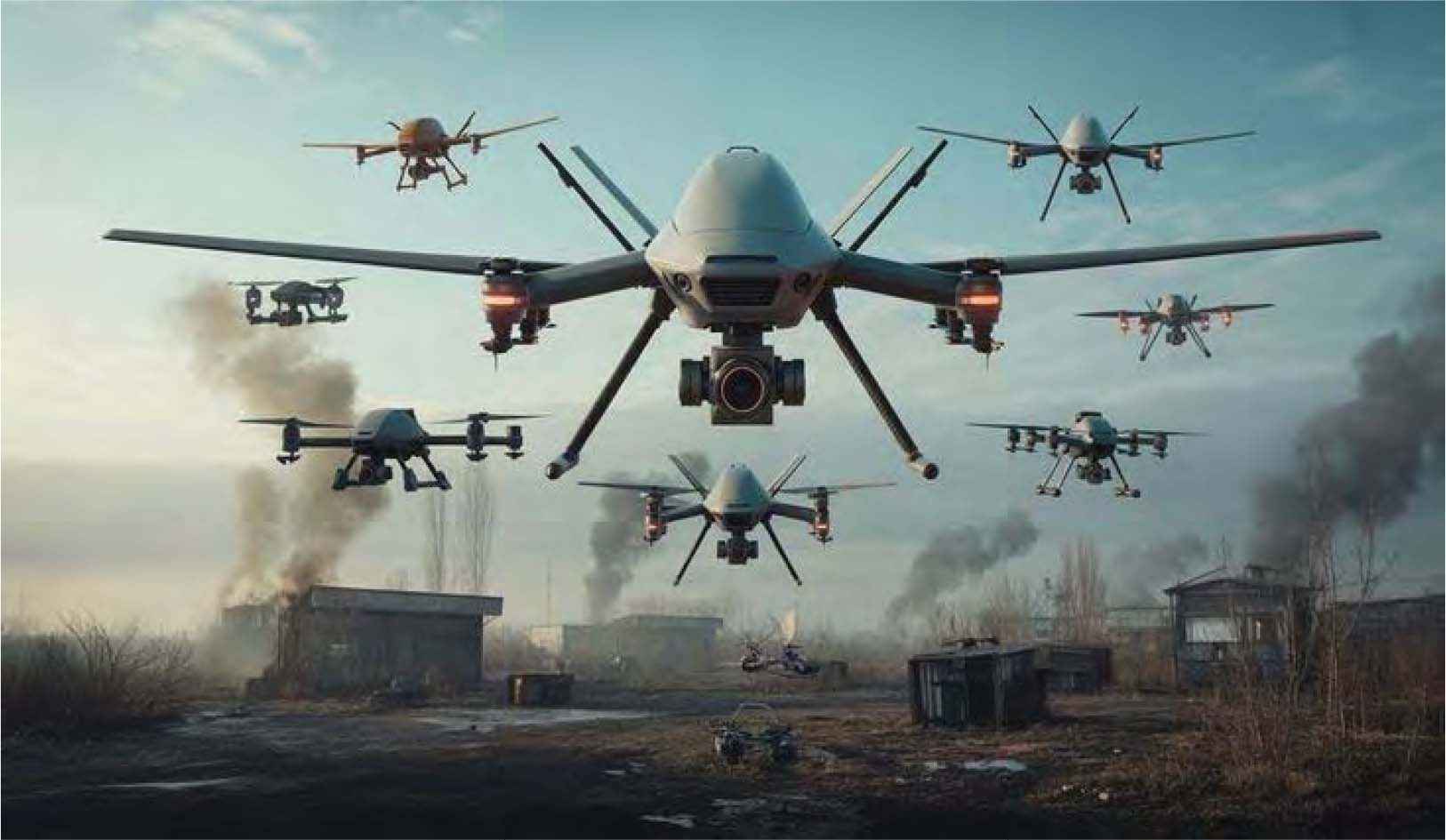
Missiles and drones have led to a revolution in today's defence environment. The major beneficiaries include: (1) Bharat Dynamics (2) Solar Industries (3) Paras Defence (4) Zen Technologies.
Public sector defence majors, which had no takers in the market a few years ago, have today not only delivered strong returns but have also grown into market heavyweights. Bharat Electronics posted a 394% return over three years, with its market capitalisation jumping from Rs 66,446 crore to over Rs 3 lakh crore. Hindustan Aeronautics followed with a 291% return as its market value also crossed the Rs 3 lakh crore mark, supported by aircraft deliveries and long-term defence contracts.
Bharat Dynamics, a key missile manufacturer, delivered a 238% return during the 3-year period, while Mishra Dhatu Nigam, a specialised alloy producer, posted a more modest but steady 84% gain.
If public sector majors stole the limelight, private sector players did not lag behind. Several private-sector defence companies recorded strong growth. Astra Microwave Products and Dynamatic Technologies both delivered returns of 272%, while Paras Defence and Space Technologies gained 170%. Data Patterns, which supplies electronic systems to defence and aerospace programmes, nearly doubled investor wealth with a 96% return. These companies benefited from rising indigenisation, higher order inflows, and a clear policy push to reduce defence imports. Nagpur-headquartered Solar Industries India delivered a solid 242% return, with its market capitalisation rising to nearly Rs 1.22 lakh crore. BEML, a PSU in construction and mining equipment, gained 157%, while MTAR Technologies rose 74% over three years. Bharat Forge, one of India's largest forging companies, delivered a relatively lower but stable 66% return, reflecting its mature scale and diversified global presence.
The biggest reason for the boom in defence stocks, and research analysts remaining bullish on them, is unprecedented order visibility thanks to strong and sustained government support and noticeable export orders. Almost all defence companies have robust order books, with Hindustan Aeronautics' order book standing at Rs 1 lakh crore, Bharat Electronics having orders worth Rs 75,000 crore, that of Mazgaon Dock standing at Rs 21,000 crore, Bharat Dynamics boasting of a strong missile order pipeline, and Data Patterns reporting rapidly growing defence electronics orders.
Driven by prevailing global geopolitical tensions and the necessity for indigenisation, the Indian defence budget has been jacked up to a massive Rs 7.8 lakh crore, ensuring that record-level order books continue to support long-term revenue visibility.
But while India's defence sector is witnessing an unprecedented, history-creating boom with stocks in this sector soaring by as much as 630 per cent in the last three years, market pundits are raising eyebrows, especially at a time when the broader stock market is passing through a bearish phase led by global geopolitical tensions on account of the Russia-Ukraine US-Iran military conflicts. The price spurt in defence stocks is so staggering that market pundits are confused and have started asking whether this is a structural bull market or a bubble waiting to burst.
Most experts believe that this is a genuine boom driven by liberal policy support, extraordinary demand leading to continuously rising concrete orders, and unprecedented export demand unheard of in the past. With order books swelling at a record pace, earning visibility turning as bright as day and the government's unabashed optimism, the stars do seem to be aligning for the defence sector — witness Hindustan Aeronautics' record order book (a massive Rs 1 lakh crore), Bharat Dynamics' steady execution pipeline, and the growing swagger of private players like Data Patterns and Bharat Forge. The market suddenly can't get enough of defence stocks. Pointing this out, a market expert adds, “The government's aggressive push for self-reliance under the ‘Atmanirbhar Bharat’ initiative has only added fuel to the fire. It has ensured that large contracts stay within the country and critical technology knowhow gets built here over time.”
Interestingly, even foreign partners like GE Aviation, Airbus and Dassault are stepping in with joint ventures and tech-transfer deals. Notes the expert, “Most are lured by India's growing manufacturing ambition and sheer scale of demand. Defence corridors, indigenisation lists, everything that could make India a manufacturing hub for the world's defence needs, is being rolled out swiftly.”
According to Manvi Aggarwal, a knowledgeable defence journalist, “As always with any investment opportunity, the evil hides in the details.” According to her, India's defence budget is expanding fast. Over the next decade, total spend is expected to cross $ 200 billion, aided by an economy on course to touch $ 10 trillion. The capital outlay for FY26 alone stands at Rs 1.8 trillion, up 13% from the previous year's revised estimate.
But the government's real ambition lies in reshaping the industry structure itself. Plans are afoot to triple domestic defence production to Rs 3 trillion by FY30, while boosting exports five-fold to Rs 500 billion. These are not empty figures for conference slides — production has already trebled since FY15 and exports have shot up 30 times in the same period. A host of policy reforms is greasing this engine: ‘Make in India’ mandates, liberalised FDI up to 74%, defence corridors in Tamil Nadu and Uttar Pradesh, iDEX funding for start-ups, and the Defence Ministry's Positive Indigenisation List, with 509 items banned from imports through 2032.
And, unlike in the past, the private sector is no longer a bystander. Data Patterns, Bharat Forge and MTAR are aiming for system integration and even full platform production. PSU giants like HAL and BEL, meanwhile, are evolving into sophisticated systems integrators rather than mere assembly outfits.
India's ambition to transform itself from a top arms importer to a credible exporter is real, but the climb is steep. Exports have hit Rs 210 bn (~$2.5 bn), a tenfold jump over a decade. But this is still less than 1% of global arms exports. By comparison, the US and China dominate these flows. India's Tejas jets, BrahMos missiles and artillery systems have sparked interest in Southeast Asia, Africa and the Middle East. But global buyers want more than just platforms, they want certainty. Timely delivery, reliable after-sales support and proven supply chain strength. India's patchy execution record raises questions.
New partnerships offer hope: the HAL-GE F414 engine deal, the Airbus C295 transport aircraft assembly with Tata, and proposed European collaborations could lift India's credibility. But only if India proves it can meet deadlines and quality benchmarks. Without this, the export story risks becoming another unfulfilled promise.
The defence capital outlay, essentially the modernization budget, has grown at 8.9% CAGR over FY17-25. What's more significant is the change in spending pattern: domestic procurement's share has shot up from 49% to 75%. This means nearly Rs 16 trillion worth of defence orders is meant for Indian firms, PSUs, private players and MSMEs alike.
The May 2025 border flare-up made this clear. India's swift punitive strikes on 12 Pakistani airbases, the deployment of BrahMos missiles and the S-400 air defence system showed India's resolve. But the neighbour to the north, China, is arming rapidly and helping Pakistan build capability. India has no choice but to modernise.
The Defence Acquisition Council has cleared orders worth Rs 8.5 trillion between FY23-25, equal to what was approved over the previous decade.
The upcoming opportunity list includes: Six P75I submarines. Three Kalvari-class submarines. Seven P-17B frigates and next-generation corvettes. 180+ LCA Mk-1A jets and Light Combat Helicopters. QRSAM missile systems and electronic warfare combat suites. This could flood the order books of HAL, BEL, Mazagon Dock, Cochin Shipyard and Data Patterns for years. But that's only if everything proceeds to plan. Despite the buzz, old problems remain. Between FY16-25, actual budget allocations averaged 20% lower than the armed forces' demands. Only in the last two years have allocations matched projected needs. Defence also trails other infra-heavy sectors. Roads and railways saw capex grow 90%+ in recent years. Defence capex grew 68%, still decent but slower, thanks to complex multi-ministry clearances and heavy import dependence. Execution risk is the biggest worry. Major programmes like the Tejas Mk-II, the AMCA stealth fighter and submarines are years behind schedule. The reasons are familiar: technology bottlenecks, trial failures, complex manufacturing. ‘Atmanirbharta’ is the government slogan, but jet engines, radars, missile seekers and stealth tech are still sourced abroad. HAL's GE engine deal is progress, but real local capability is years away.
But discerning investors have their own scale to weigh the players. Private players like Data Patterns, MTAR and Bharat Forge enjoy premium valuations because of expected faster growth and 25-40% CAGR driven by agility. Tech-focus public sector giants like HAL, BEL and BDL will likely grow at 16-18% CAGR, weighed down by government processes.
Clearly, the boom in defence stocks is for real, though it is restricted to certain limitations. The sector appears to be in the early stages of a long-term structural growth cycle rather than a short-term speculative theme. Rising defence budgets, liberal incentives for ‘Make in India’, record exports, technological self-reliance and enormous order books — all provide visibility rarely seen in Indian history all these years.
No doubt, the opportunity is large and the government is serious. But delays, tech gaps, lack of budget sustainability and credibility issues for exports are dangerous weak spots. Unarguably, there is a boom in defence stocks — a real boom but a fragile one. Because, even as the fundamental business growth of defence stocks is real, the stock valuations at times show signs of a bubble. This means that though investors can be optimistic about defence stocks, they will have to adopt a cautious approach in selecting such stocks.
The best defence stocks to buy over the next 5 years are among the following:
Tier I growth picks:
(1) Hindustan Aeronautics Ltd, on account of its: (a) Monopoly-like aerospace position (b) Tejas programme (c) Massive (Rs 1 lakh crore) order visibility (d) Strategic importance
(2) Bharat Electronics Ltd, on account of its: (a) Defence electronics leader (b) Strong margins (c) Diversified business (d) Huge order book (Rs. 75,000 crore)
Tier-2 growth picks:
(3) Mazagon Dock Shipbuilders, on account of its: (a) Submarine opportunity (b) Naval expansion story
(4) Garden Reach Shipbuilders, on account of its: (a) Fast-growing naval order book
(5) Data Patterns, on account of its: (a) High-tech defence electronics (b) Strong private sector beneficiary
(6) Paras Defence and Space Technologies, and (7) Zen Technologies, on account of: (a) Both these stocks belong to the high-risk, high-reward category (b) These companies are positioned in drones and electro-optics, anti-drone systems and defence stimulation technologies.
May 31, 2026 - Second Issue

Industry Review


VOL XVII - 09
May 16-31, 2026
Want to Subscribe?
Read Corporate India and add to your Business Intelligence
Unlock Unlimited Access
Lighter Vein

1 Year *
Subscription
Rs 1800 /-
3 Year *
Subscription
Rs 5000 /-
5 Year *
Subscription
Rs 8000 /-
5
International
Subscription
$ 99.99
Read Corporate India and add to your Business Intelligence
Popular Stories

A modern-day enigma and a ramification of humanity's never-ending advancements, e-waste refers to the scum con- cealed by the outward glow of ever-advancing technology.
Archives


Office Address
Unit No. 405, 4th floor, Madhu Industrial Park, Avadh Narayan Tiwari Marg, Mogra Village Road, Andheri (East), Mumbai – 400069.
Call/Whatsapp
If you are interested in advertising with Corporate India, please don't hesitate to contact us. Our team is here to assist you with the process and answer any questions you may have. We look forward to the opportunity to work with you and help your business reach its full potential.
Fill out the form below to subscribe to our newsletter and never miss an update