


Want to Subscribe?
Read Corporate India and add to your Business Intelligence
 Unlock Unlimited Access

Published: October 31, 2026
Updated: October 31, 2026
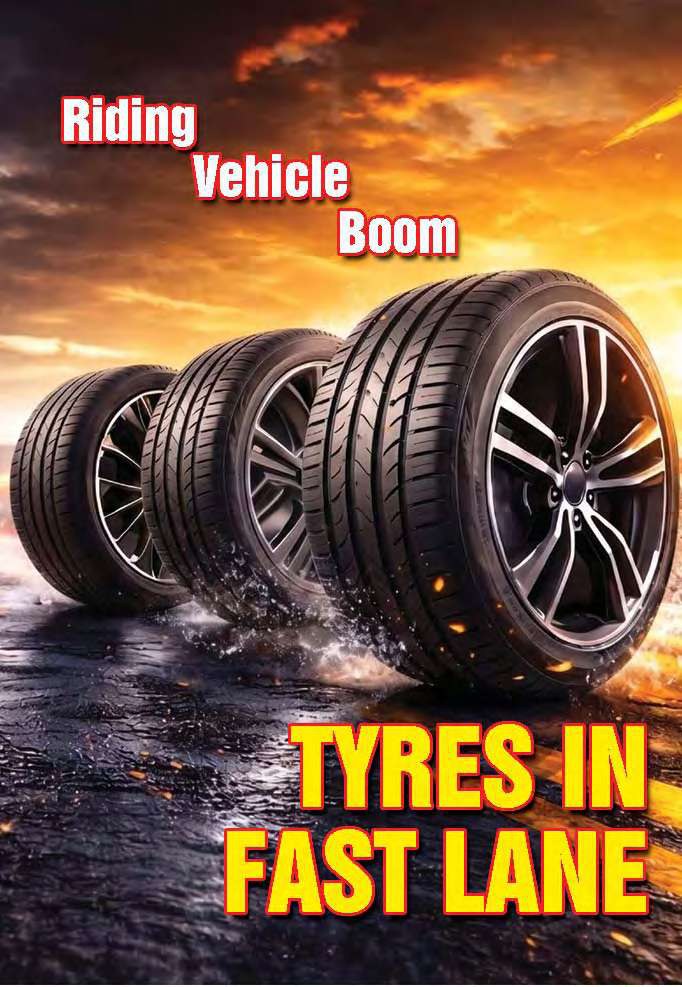
The $ 3.25 billion Indian tyre industry is witnessing a boom on the back of the rapid growth of its auto ‘parent’ as the country witnesses rising vehicle sales, rapid growth of roads and highways, an expansion of commercial transport, premiumisation of passenger cars, an EV boom, and expanding exports.
Notably, the tyre sector boom comes in the face of rising raw material prices, intense competition, stricter green laws and the need to keep pace with new tyre tech. In fact, tyre makers face the same pressure as their auto counterparts to keep pace with new tech in terms of radialisation, premiumisation, fuel efficiency, product innovation, and sustainable manufacturing.
The two main markets of the tyre industry are OEMs and the replacement tyre market. If anything, the latter has perhaps more growth potential, since a growing vehicle population creates a continuing need for replacement tyres even when sales of new vehicles slow down.
The $ 3.25 billion Indian tyre industry is entering a significant phase of transformation as the domestic automotive industry shifts into a higher gear, supported by rising vehicle ownership, rapid growth of road infrastructure including highways, remarkable growth in commercial transportation, increasing premiumisation of passenger cars, an e-vehicle boom and expanding exports.
This, at a time when tyre makers face volatile raw material prices, intense competition, environmental regulations and the challenge of investing in new technologies. The industry is no longer simply about producing more tyres. It is increasingly about radialisation, premiumisation, fuel efficiency, product innovation, exports and sustainable manufacturing.
The major driving force behind the steady growth of the tyre industry is the fortunes of the domestic automobile industry. The third largest passenger vehicle market on the globe, the Indian auto sector is valued at approximately $ 147.58 billion currently, and is projected to reach $ 213.74 billion by 2031.
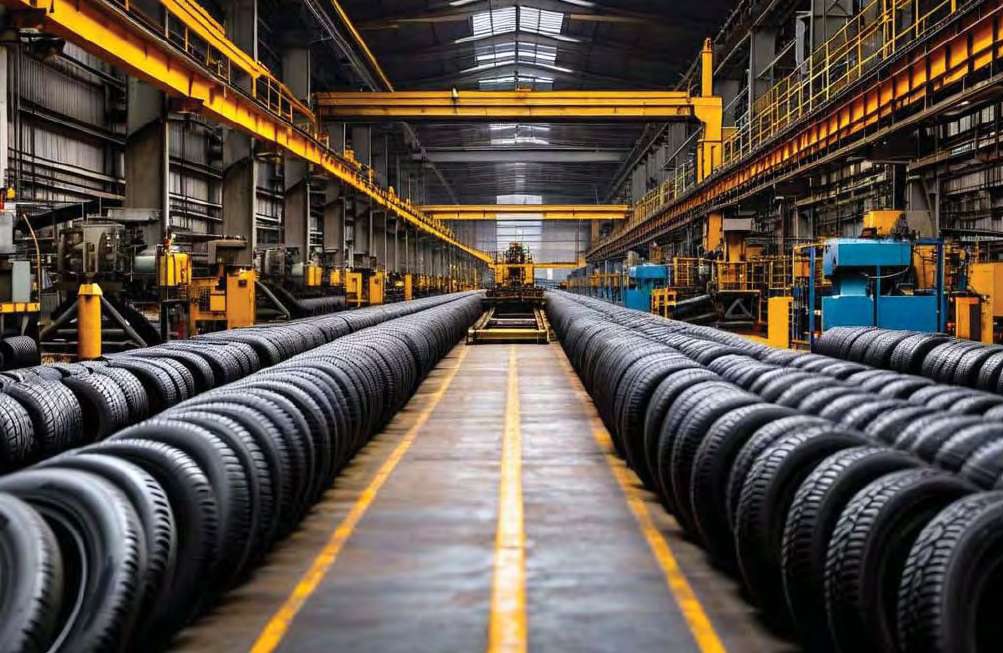
One needs to first assess the role of the ‘mother’ industry in the country’s economy. The Indian auto sector has long been a reliable barometer of economic performance, given its critical role in both macro-economic expansion and technological advancement. Within the sector, the two-wheeler segment dominates by volume, driven by a growing middle class, a predominantly young population, and rising demand from rural markets. Demand for commercial vehicles has also strengthened, supported by the expansion of logistics and passenger transportation services. Market growth is expected to be shaped by emerging trends such as vehicle electrification, particularly in three-wheelers and small passenger cars.
India has also established itself as a prominent auto exporter, with strong growth prospects in the near future. Automobile exports rose 24% in FY26 to over 6.7 million units, led by robust demand for passenger vehicles, two-wheelers and commercial vehicles. Complementing this momentum, government initiatives such as the Automotive Mission Plan 2026, the scrappage policy, and the production-linked incentive (PLI) scheme are expected to position India as a global leader in both the two- and four-wheeler markets.
In the heavy vehicle segment, India is the largest tractor producer, the second largest bus manufacturer and the third largest heavy truck manufacturer globally. The total production of passenger vehicles, including 3-wheelers, 2-wheelers and quadricycles, was approximately 34.71 million units in FY 26. Two-wheelers and passenger vehicles dominate the domestic Indian auto market. In FY26, two-wheelers and passenger cars accounted for 76.79% and 16.43% of marketshare respectively. Passenger car sales are dominated by small and midsized cars.
The electric vehicle (EV) market in India is emerging as a significant growth driver. In FY26, India’s EV sales grew 30% to 2.66 million units, up from 2.05 million in FY25, achieving 8.62% penetration of total automotive sales, with two- and three-wheelers accounting for nearly 87% of EV volumes and penetration rising across major vehicle segments.
The Indian EV market, valued at Rs 0.31 lakh crore ($ 3.71 billion) in 2025, is projected to reach Rs 16.15 lakh crore ($ 191.04 billion) by 2034, growing at a CAGR of 54.94% during 2026-34. Between 2020 and 2025, the sector attracted approximately Rs 2.23 lakh crore ($ 25.6 billion) in investments, while EV financing is projected to reach Rs 4,00,000 crore ($ 47.03 billion) by 2030, supporting significant industry expansion and job creation.
As tyres are an essential auto component, the increasing pace of growth of the automotive industry also applies to the tyre industry. With the auto industry growing by leaps and bounds on the back of a robust economy, better road infrastructure and growing consumer demand, it goes without saying that tyres are also seeing their day in the sun.
The tyre industry serves two main markets:
OEMs: Tyres supplied to new cars, motorcycles, trucks, buses and tractors.
Replacements: Tyres purchased when existing tyres wear out or are damaged.
The replacement market is particularly important because it generates recurring demand throughout the life of a vehicle. OEM sales, on the other hand, are closely linked to vehicle production and new-vehicle demand.
Tyres are an essential link between automobile manufacturing, transportation, agriculture, mining, construction and logistics. A growing vehicle population creates a continuing need for replacement tyres even when sales of new vehicles temporarily slow. The industry’s fortunes are therefore connected not only to automobile sales, but also to freight volumes, road conditions, agricultural activity, consumer purchasing power and the pace of infrastructure development.
Besides the rapid growth of the auto industry, another important driver for the growth of the tyre industry is the focus on road infrastructure development. The government has been investing heavily in building highways and other roads for better transportation and connectivity, which has led to an increase in vehicle sales and has in turn boosted demand for tyres. Besides, the growing demand for luxury cars has led to a market for premium tyres. The latest kid on the block is OTR (off the road) tyres which deliver optimal performance for heavy vehicles engaged in infrastructure work, mining and agriculture.
And the growing yen for tyres is not just domestic. Indian tyres are today in great demand globally, with the US alone accounting for nearly 25% of Indian tyre exports. According to a research report, the Indian tyre industry is currently worth $ 13.11 billion and is projected to reach a whopping $ 25.50 billion by 2031.
The Indian tyre industry has already shifted into high gear. The industry, which has on average been turning out over 200 million tyres every year, has started growing at a CAGR of 8.71%.

“Growth in tyre exports during the first quarter represents a strong start to the new financial year and reflects the growing acceptance of India-made tyres in global markets”
— Arun Mammen
Chairman, Automotive Tyre Manufacturers Association (ATMA)
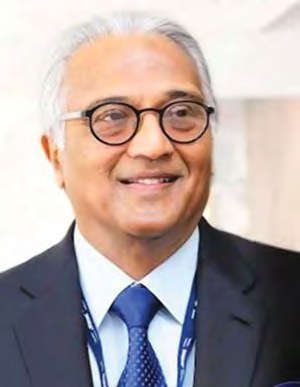
“MRF crossed Rs 30,000 crore sales milestone supported by EV transitions and commercial tyre demand, while maintaining disciplined cost management against record input cost pressures”
— K M Mammen
Chairman & MD, MRF Ltd.

“CEAT lined up major capex for FY 27, including a Nagpur two-wheeler tyre capacity expansion as plants reach high utilisation”
— Arnab Banerjee
Managing Director & CEO, CEAT Ltd.
Exports of tyres are also on the rise. At present, Indian tyres find their way into as many as 170 countries. Export demand is steadily growing. According to the Automotive Tyre Manufacturers’ Association (ATMA), exports of Indian tyres rose from Rs 23,073 crore in fiscal 2024 to Rs 25,057 crore in fiscal 2025, and further to Rs 27,312 crore in fiscal 2026, suggesting an increase of around 18.4%. Interestingly, Indian tyres are well-received in global markets, including the US, Germany, Italy, France, Brazil and the UAE.
According to Anshuman Singhania, Managing Director of JK Tyres, “If the trends in the export demand for India tyres at present are any indication, I am confident that our exports will double to around Rs 50,000 crore by the end of the decade; i.e., 2030.”
Tyre companies: Vital statistics (Rs. in crore)
| Company | (FV) | Equity | PH | Sales | N_P | Div | EPS | B_V |
|---|---|---|---|---|---|---|---|---|
| Apollo Tyres (C) | (1) | 63.51 | 37.0 | 28470.60 | 2342.70 | 600.0 | 36.90 | 263.10 |
| Balkrishna Inds (C) | (2) | 38.66 | 58.0 | 10823.10 | 1243.10 | 400.0 | 64.30 | 566.70 |
| Ceat (C) | (10) | 40.45 | 47.0 | 15678.00 | 748.62 | 350.0 | 185.10 | 1247.50 |
| Goodyear India | (10) | 23.07 | 74.0 | 2475.88 | 77.60 | 265.0 | 33.60 | 261.60 |
| J K Tyre & Industries (C) | (2) | 57.66 | 51.0 | 16326.70 | 921.70 | 200.0 | 32.00 | 210.20 |
| MRF (C) | (10) | 4.24 | 28.0 | 31149.00 | 2489.30 | 2350.0 | 5869.50 | 49455.00 |
| Tolins Tyres (C) | (5) | 19.75 | 69.0 | 327.12 | 35.69 | – | 9.00 | 91.40 |
| TVS Srichakra (C) | (10) | 7.66 | 46.0 | 3643.35 | 69.86 | 378.0 | 91.20 | 1553.80 |
India manufactures various types of tyres, which include (a) passenger vehicle tyres, used in cars, SUVs and multi-utility vehicles (MUVs). Growth in SUV sales, premium vehicles and replacement demand is encouraging manufacturers to develop large, wide and higher-performance tyres; (b) Truck and bus tyres – a strategically important segment driven by freight movement, infrastructure, construction, logistics and replacement cycles; (c) Two-wheeler tyres supported by India’s large motorcycle and scooter market. Rural demand and commuting, premium motorcycles, and replacement sales influence growth, and (d) Agricultural, industrial, and speciality tyres for tractors, farm equipment, construction machinery, mining, aircraft and other specialist applications.
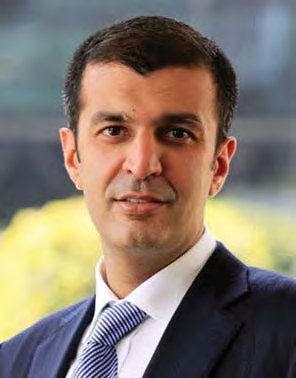
“Apollo Tyres advanced Rs 3500 crore expansion roadmap for FY 27, focusing heavily on growth and passenger car radial capacities in India and Europe.”
— Neeraj Kanwar
Vice Chairman & MD, Apollo Tyres Ltd
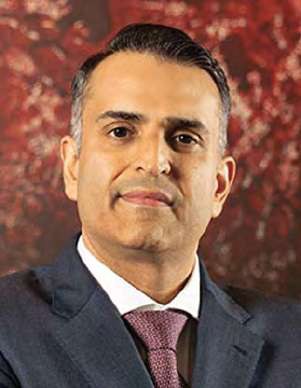
“Total investment programme of Rs 6110 crore comprises Rs 1130 crore in on-going expansion and Rs 4980 crore in additional projects over a period of three to four years”
— Anshuman Singhania
Managing Director, J K Tyre Industries Ltd

“BKT targets Rs 23,000 crore revenue by FY 30 with on-highway tyres contributing 20% (apprx.) or Rs 4600 crore”
— Rajiv Poddar
Joint Managing Director, Balkrishna Industries Ltd
Of late, premium tyres have started gaining ground. During the last quarter, premium tyre sales have risen by 10% in the replacement market and 20% in supplies to auto makers (OEMs) during the September 2026 quarter, supported by demand for 16-inch and 18-inch fitments.
JK Tyres is betting Rs 6,110 crore on a transformation driven by premium tyres, embedded sensor technology, and electric mobility.
For the last three years, the country has witnessed not only a marked increase in demand for passenger vehicles and their tyres but, of late, also an increased demand for OTR (off-the-road) tyres. The main drivers for the spurt in demand for OTR tyres include: (1) Significant infrastructure development in the country, including the construction of roads, highways and airports. These projects require heavy machinery and vehicles that rely on OTR tyres for optimal performance in challenging terrains; (2) Substantial growth in the mining and construction sectors. OTR tyres are essential for heavy duty vehicles used in mining operations, earthmoving equipment and construction projects; (3) The agriculture sector, which heavily relies on tractors and other agriculture machinery. The expansion of mechanised farming practices and the need for increased productivity have driven the demand for reliable and durable OTR tyres.
Overall, the increase in infrastructure development growth in the mining and construction sectors, and the mechanisation of agriculture, have all fuelled the demand for OTR tyres in the Indian tyre market. Manufacturers have responded by expanding their OTR tyre offerings in order to meet this demand. For example, BKT Tyres is creating India-centric products, whether it is Mine Force for the mining sector, the Commander series for the agriculture sector, or the soon-to-be launched addition to the Earthmover series.
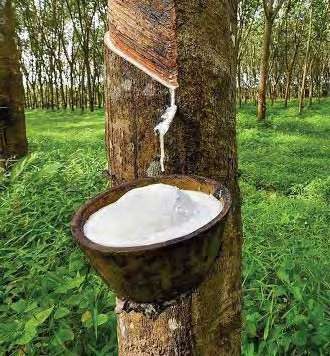
Natural rubber (NR) prices in the domestic market are ruling above international levels, recently touching a historic high of Rs 290 per kg for RSS-IV grade, driven by strong demand from consuming industries and tight supplies.
India consumes 13-14 lakh tonnes of NR annually, while domestic production hovers at around 9.05 lakh tonnes, forcing the country to import roughly 35%-40% of its requirements. Moreover, there is a steep import duty of 25% on NR, in addition to which the West Asia conflict has resulted in volatile international logistics costs.
Global NR production capacity has entered a long-term contraction cycle. The Association of NR Producing Countries (ANRPC) projects a supply gap of approximately 3.17 lakh-4 lakh tonnes, with demand hitting 15.36 million tonnes against production of 15.04 million tonnes. Production fell 5.5% yoy, driven by steep declines in dominant Southeast Asian hubs. Thailand’s output dropped 9.7% and Indonesia’s plunged 14.3% due to erratic rainfall, leaf disease and farmers shifting land to oil palm and durian. The supply deficit is also expected to widen over the medium term due to structurally aging rubber trees and persistent regional labour shortages in Southeast Asia.
The market is undergoing a structural supply crunch which has pushed prices to multi-year highs. This deficit is squeezing the profit margins of Indian tyre manufacturers, forcing strategic changes in sourcing and material substitution. As such, NR constitutes roughly 22%-25% of the total cost in Indian tyre manufacturing.
Interestingly, in order to mitigate global supply risks, a consortium of Indian tyre giants has collectively invested over Rs 1,000 crore to develop massive rubber plantations across Northeast India. However, these crops require a gestation period of several years before yielding commercial output. In fact, due to supply constraint of NR, reclaimed rubber consumption surged to over 1,46,800 tonnes to offset a portion of high-priced virgin NR.
At home, NR growers are hopeful of improved yields in the coming months, as the North-East monsoon brings rain to major rubber-growing regions, which is expected to support production and improve market availability. Though prices are likely to stay firm at the current level of Rs 275-290 per kg in the near future, there is also a possibility of rising seasonal supply and weak demand outside Asia limiting further gains.
Commenting on the price outlook recently, Rubber Board Chairman N Hari stated that the surge in domestic NR prices, which crossed Rs 300 per kg in Kerala’s Kottayam market, is “the result of persistent efforts.” He foresaw a bullish price outlook, assuring stakeholders that “rubber prices will reach Rs 350 per kg.”
In recent years, the Indian tyre market has witnessed a shift towards a greener approach in tyre manufacturing. Several key players in the industry are actively adopting sustainable practices to reduce their environmental footprint. This includes the development and production of eco-friendly tyres that promote fuel efficiency and reduce carbon emissions.
Manufacturers are increasingly focusing on incorporating sustainable materials, such as bio-based and recycled materials, in tyre production. They are also investing in R&D to improve tyre design and tread patterns, resulting in reduced rolling resistance and improved fuel efficiency.
Furthermore, tyre manufacturers are implementing energy-efficient manufacturing processes and adopting measures to reduce waste generation and enhance recycling and disposal.
Government initiatives promoting sustainability and environmental conservation are also driving this green approach in the Indian tyre market.
With increasing consumer awareness and demand for eco-friendly products, tyre manufacturers are embracing sustainable practices to meet the evolving market needs and contribute to greener future. For instance, Ceat Tyres, a leading tyre company belonging to Harsh Goenka, introduced the Ceat ‘Fuel Smart’ range of tyres a couple of years ago, designed to promote fuel efficiency and reduce carbon emissions. The ‘Fuel Smart’ range utilises innovative tread compounds and advanced tread patterns to minimise rolling resistance, resulting in improved mileage and lower fuel consumption.
Recently, Prime Minister Narendra Modi urged the industry to work with farmers and reduce the import of rubber. According to Arnab Banerjee, chairman of the Automotive Tyre Manufacturers’ Association (ATMA), the industry consumes around 13 lakh tonnes of natural rubber, while India produces only 8 lakh tonnes. Four major tyre makers represented by ATMA have committed Rs 1,100 crore for rubber plantations on a total of 2 lakh hectares in the North Eastern states so as to increase domestic production.
The primary drivers are rising demand for vehicles and a sharp focus on — and continuous government investments in — infrastructure. Additionally, a large and growing population of vehicles will continue to support tyre demand in the replacement market.
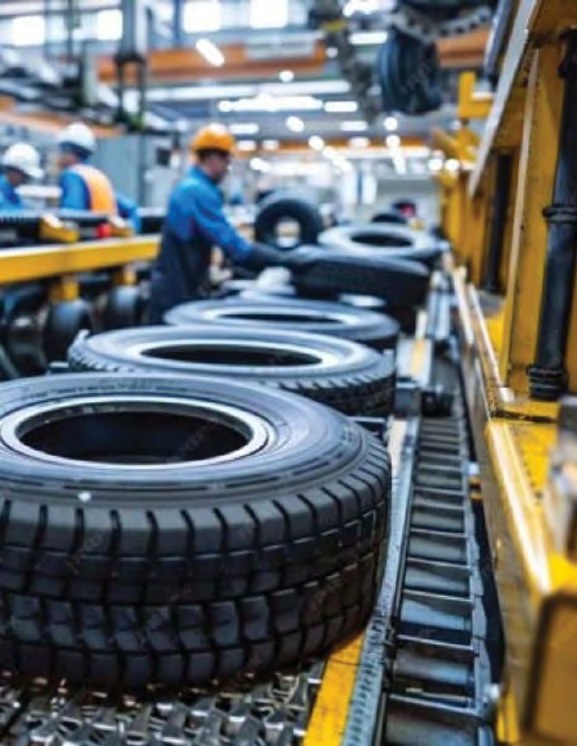
India is among the leading tyre manufacturers globally. Apart from conventional radial and ‘bias’ tyres, the industry offers advanced, smart, noise-reduction, puncture-proof and electric vehicle versions. It is also expanding its presence in the premium and luxury tyre segments, which are dominated by imports.
The study estimates that the industry’s turnover will increase a solid 100 basis points to 3.4% of India’s manufacturing gross domestic product (GDP) by fiscal 2032, compared with 2.2% in fiscal 2022. Further, its contribution to Goods and Services Tax (GST) will rise to $ 4.1 billion from $ 2 billion, the number of jobs supported to 3.7 million from 1.9 million, and its share in global trade to 4.5% from 3.1%.
The research and development (R&D) expenditure of the industry is forecast to more than double to $ 151 million from $ 64 million, after growing threefold in the past five fiscals.
Says Mr Banerjee, “The Indian tyre industry has the potential to lead domestic manufacturing on the global stage. This could be India’s moment if we are able to seize the opportunity offered by the ‘China + 1’ policy by promoting sectors such as tyre manufacturing, which has proven its credentials. Today, India has some of the finest radial tyre manufacturing facilities in the world and the products are world-class, as is evident from the rising demand for them worldwide. India-manufactured tyres are being exported to more than 170 countries, with the US and Europe buying the most. It is time the industry is empowered in terms of raw material security and by pulling down barriers affecting exports.”
No doubt, demand for tyres is on the rise in India but the Indian industry has not only sufficient tyre manufacturing capacity to take care of domestic as well as export demand but it is also planning to expand its capacity to take care of future demand.
There are over 40 tyre companies in the country. But we will mention here five leading companies of them.
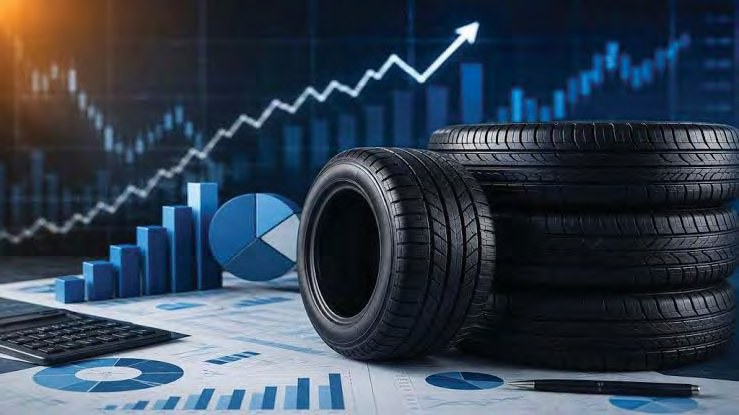
MRF Ltd, the costliest stock on the Indian stock exchanges, is a dominant player in the Indian tyre manufacturing industry. Formerly known as Madras Rubber Factory, the company is renowned for its exceptional financial performance, strong market presence and robust brand equity.
Headquartered in Chennai, the company’s product segment is divided into tyres, sports goods, funskool, paints & coats, and pretreads.
In the tyre segment, MRF offers tyres for a wide range of categories, such as heavy-duty trucks and buses, light trucks, multi-utility vehicles (MUVs), recreational vehicles (RCVs) and passenger cars. Additionally, it provides tyres for motorsports, agricultural or farm use, military applications, forklifts, two-wheelers, three-wheelers, and off-road vehicles or earthmovers.
The company provides tyres for different models of various renowned vehicle brands like Toyota, Volvo, Nissan, Ford, Audi, Hyundai, BMW, Volkswagen, Mahindra and Maruti. Moreover, MRF Limited provides services like tyre changing, tyre repair, tyre maintenance, wheel balancing, robotic wheel alignment, nitrogen filling and automatic car wash.
An undisputed global leader in the off-highway tyre industry for over three decades, Balkrishna Industries Limited, popularly known as BKT, leads in designing and manufacturing safe, innovative and high-performing tyres for various industries like construction, agriculture, mining, earthmoving and ports.
The company also manufactures tubes and carbon black. Its main products include off-the-road tyres, agricultural tyres and industrial tyres. The company’s agricultural tyres are used for various applications, including tractors, harvesters, agro trucks and telehandlers. Its industrial tyres serve applications such as forklifts, excavators, container handlers, compactors and mobile cranes.
Additionally, BKT’s off-the-road tyres are used for rigid dump trucks, articulated dump trucks, scrapers, underground mining vehicles, etc. Moreover, BKT serves both original equipment manufacturers (OEMs) and the replacement market.
With 4 manufacturing plants located in Maharashtra, Rajasthan and Gujarat, BKT distributes its products through third-party distributors and exports them worldwide. BKT also has distribution partners in over 160 countries across 5 continents, allowing it to serve a truly global customer base.
The company has entered into an agreement with Pirelli of Italy for production in India of 800,000 Pirelli branded premier car tyres by 2030.
Driven by innovation, Gurgaon-based Apollo Tyres Ltd is an international tyre manufacturer and the leading tyre brand in India. It is built around the core principles of creating stakeholder value through reliability in its products and dependability in its relationships. The company has a total of six manufacturing units — 4 in India and 1 each in the Netherlands and Hungary. India’s fifth and 7th globally, its plant is coming up in Andhra Pradesh.
Besides the organic route, the company has also grown through the inorganic route. In November 2015, Apollo Tyres acquired Reifencom GmbH, one of the largest tyre distributors in Germany, with both an online and offline presence. In May 2009, the company acquired Apollo Vredestein BV (originally Vredestein Banden BV) in the Netherlands, producer of niche high-end passenger car and speciality tyres, which has an extensive distribution network across Europe.
The company markets its products under its two global brands — Apollo and Vredestein — and its products are available in over 100 countries through a vast network of branded, exclusive and multi-product outlets. The product portfolio of the company includes the entire range of passenger car, SUV, MUV, light truck, truck-bus, two-wheeler, agriculture, industrial, speciality, bicycle and off-the-road tyres, and retreading material and tyres.
JK Tyre & Industries Limited, a leading tyre manufacturer belonging to the Singhania group, offers comprehensive solutions for various vehicle segments. The company provides passenger car tyres, commercial tyres, farm tyres, two-wheeler tyres, three-wheeler tyres and off-the-road tyres.
The company also provides puncture guards to prevent punctures. JK Tyre introduced India’s first-ever ‘Smart Tyre’ technology, featuring Tyre Pressure Monitoring Systems (TPMS) with TREEL sensors that monitor crucial tyre statistics like pressure and temperature.
The company and its subsidiaries develop, manufacture, market and distribute automotive tyres, tubes, flaps, and retreads. JK Tyre primarily operates in multiple segments, including India and Mexico, with a notable presence in 105 countries through over 180 global distributors.
With a network of over 4,000 dealers and more than 500 brand shops named Xpress Wheels, Truck Wheels and Steel Wheels, JK Tyre operates approximately 12 manufacturing facilities, 9 in India and 3 in Mexico.
Established in 1958, CEAT stands as one of India’s top tyre brands under the flagship company of the RPG group (Harsh Goenka faction). It provides a wide range of tyres, tubes and flaps for a wide range of vehicles, including cars, scooters, bikes, passenger vehicles (PVs), light commercial vehicles (LCVs), buses, trucks, tractors, two-wheelers and three-wheelers.
The company caters to popular models such as Maruti Alto, Wagon R, Honda Shine, Swift, Dzire, Hero Splendor, Passion, Activa, Suzuki Access and TVS Jupiter.
Through its e-commerce website, customers can opt for doorstep tyre delivery, fitment at home or pick-up from an authorised store. CEAT runs factories in Nashik, Mumbai, Halol and Ambernath, along with other cities across India. Furthermore, it exports its products to the US, Bangladesh, Sri Lanka and the Netherlands.
Top 10 Countries for Indian Tyre Exports (FY 2025–26)
| Rank | Country | Export Value / Share (FY 2025–26) | YoY Trend / Notes |
|---|---|---|---|
| 1 | United States | ~$462M (Rs 4,082 crore) | Down ~10% (impacted ~15% share) by US tariff shifts: raised to 50% in Aug 2025, lowered to 18% in Feb 2026 |
| 2 | Germany | ~$220M (~7% share) | Up ~31% (strong European demand growth) |
| 3 | Italy | ~$148M (~5% share) | Up ~34% |
| 4 | Brazil | ~$144M (~5% share) | Up ~7% |
| 5 | France | ~$112M (~4% share) | Down ~4% |
| 6 | United Arab Emirates (UAE) | ~$111M (~4% share) | Down ~10% |
| 7 | Philippines | ~$109M | Up ~5% |
| 8 | United Kingdom (UK) | ~$99M | Up ~14% |
| 9 | Netherlands | ~$90M | Up ~16% |
| 10 | Bangladesh | ~$90M | Up ~6% |
Based on data from the Automotive Tyre Manufacturers’ Association (ATMA) and the Ministry of Commerce & Industry, the top 10 destination markets account for roughly 51% of India’s total tyre export value.
October 31, 2026 - Combined Issue
Industry Review


VOL XVII - 14
October 16-31, 2026
Want to Subscribe?
Read Corporate India and add to your Business Intelligence
Unlock Unlimited Access
Lighter Vein

1 Year *
Subscription
Rs 1800 /-
3 Year *
Subscription
Rs 5000 /-
5 Year *
Subscription
Rs 8000 /-
5
International
Subscription
$ 99.99
Read Corporate India and add to your Business Intelligence
Popular Stories

A modern-day enigma and a ramification of humanity's never-ending advancements, e-waste refers to the scum con- cealed by the outward glow of ever-advancing technology.
Archives


Office Address
Unit No. 405, 4th floor, Madhu Industrial Park, Avadh Narayan Tiwari Marg, Mogra Village Road, Andheri (East), Mumbai – 400069.
Call/Whatsapp
If you are interested in advertising with Corporate India, please don't hesitate to contact us. Our team is here to assist you with the process and answer any questions you may have. We look forward to the opportunity to work with you and help your business reach its full potential.
Fill out the form below to subscribe to our newsletter and never miss an update