



Want to Subscribe?
Read Corporate India and add to your Business Intelligence

 Unlock Unlimited Access

Editorial
Many eyebrows were raised recently when the government announced that the Indian economy had registered a GDP growth of 8.2 per cent for Q2FY26. Several experts, including leading economists, are not ready to believe this figure. In fact, this has become a subject of intense debate among economists, with opinions split between those who see it as a sign of strong economic momentum and those who point to significant data reliability issues and disconnect from ground realities.
Interestingly, even as the government has released this GDP growth data, the International Monetary Fund (IMF) has assigned India’s national accounts a ‘C’ grade due to methodological weaknesses. This rating – the second lowest – highlights concerns about outdated base years, price deflators and data granularity.
However, sources close to the government stress robust performance in key sectors – services growing at 9.2 per cent and manufacturing at 9.1 per cent have shown strong momentum with healthy credit activity and increased loan demand. Domestic demand is on the rise. According to these sources, growth is significantly driven by strong private consumption, suggesting solid underlying domestic demand despite a reduction in government spending. Again, India is currently the fastest growing major economy globally.
Regardless, there is a lot of scepticism about these inflated growth figures. The primary reason for this scepticism is the unusually low GDP deflector (around 0.5-0.7 per cent) — the measure used to adjust nominal GDP for inflation to get the real GDP. Many economists argue that a more realistic inflation rate (aligned with actual consumer or wholesale prices) would reduce the real GDP growth to a lower range – potentially 4-4.5 per cent.
As far as data quality is concerned, the IMF has given India’s national accounts a grade ‘C’ – the second lowest rating. This flags concerns about the outdated 2011-12 base year for calculation, difficulties in accurately capturing the large informal sector, and sizeable discrepancies between the production and expenditure methods of calculating GDP. Several real-world indicators appear inconsistent with such high growth.
What is more, industrial production in India is also not showing any robust growth. In September 2025, IIP declined to 4 per cent from 4.3 per cent in August 2025. And in October 2025, it slumped to 0.4 per cent — the smallest monthly growth since August 2024. What is more, electricity production slumped 6.9 per cent.
Despite official claims of high economic growth, there are widespread concerns about growing unemployment in the country and a large percentage of workers remaining in the low-wage informal sector. Moreover, formal sector wage growth has been flat in real terms and household debt has risen, suggesting saturated consumers and weak demand in lower bracket segments, and jobless growth, especially for educated young people stuck in informal jobs.
If the GDP is growing at 8.2%, the stock market – particularly mid caps and small caps — should perform bullishly, but at present they are performing poorly. The pendulum of the stock market is directly linked to the performance of the corporate sector. However, during Q2FY26, when GDP is claimed to have shot up beyond 8 per cent, the corporate sector has put up a dismal show. How should one reconcile this conflicting picture?
In essence, while the official figure of 8.2 per cent is a strong headline number, a significant body of expert opinion suggests that it may not fully reflect the complexities and underlying structural issues of the broader Indian economy.
The RBI's Annual Report (2024-25) recognises that the economy has performed well, but it also quietly lays out the structural issues that still drag down India's credibility. Countries with discretionary exercises in projecting the good alone in numbers have two narratives: the one they tell the world and the one they whisper under their own breath. India's 8.2% is the story its government wants tell the world. The IMF's C is the whisper.
Cover story

Even as the Damoclean sword of punitive US tariffs hangs over Indian exports and has sent the Indian rupee tumbling below the 90/$ mark, Mexico has followed suit with its own sky-high tariffs on Indian.
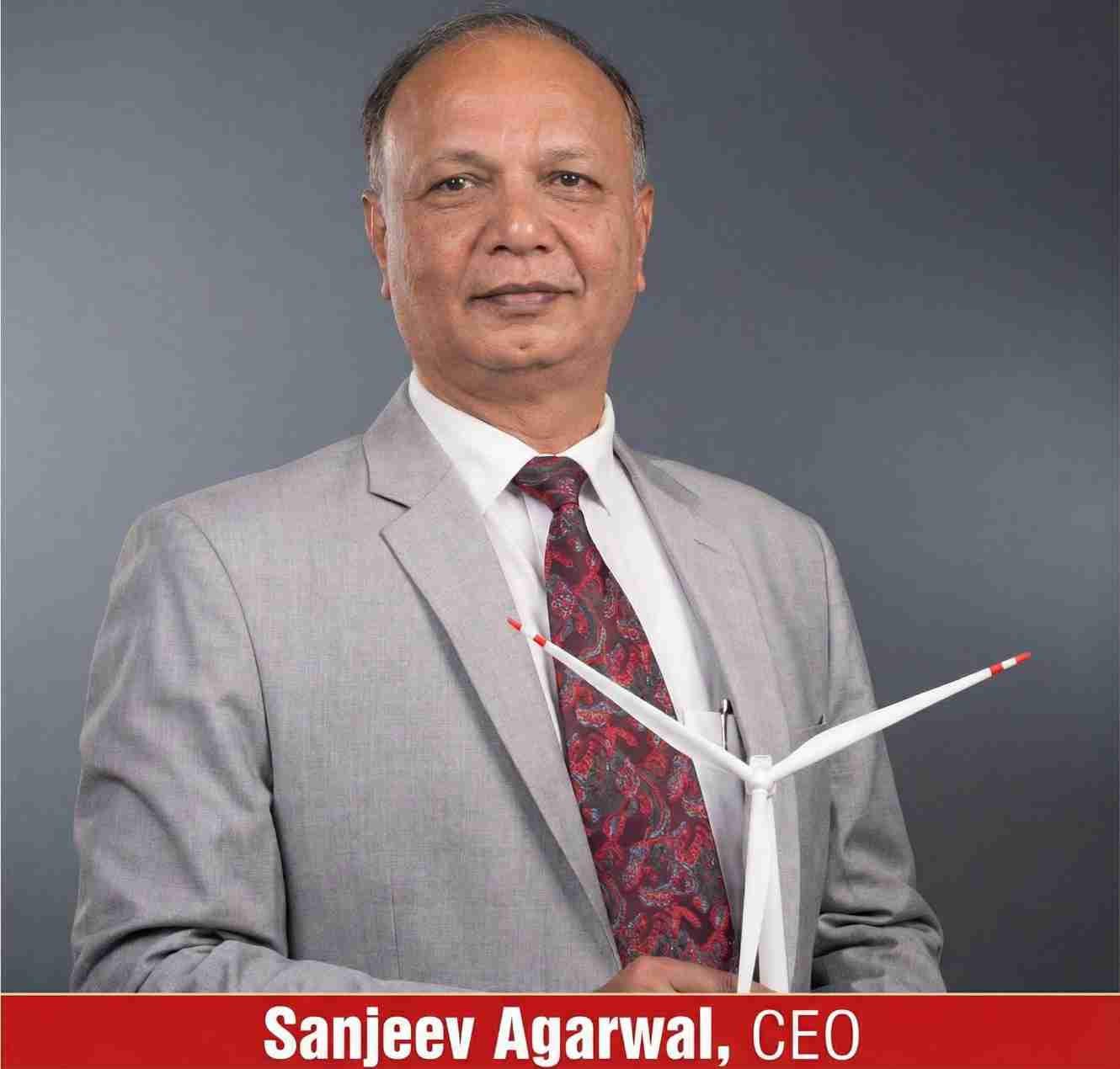
Inox Wind (IWL), India’s leading wind energy solution provider and a part of the INOXGFL group focusing on chemicals and renewable energy (RE), has reported a strong Q2 performance wherein revenue is up by 56% yoy on a consolidated basis.

Based in Bangalore and listed on both NSE and BSE, TruAlt Bioenergy (TruAlt), one of India’s largest and among the fastest-growing biofuels producers, recently announced the signing of an MoU with the Andhra Pradesh Economic Development Board (APEDB).

Blue Cloud Softech Solutions Ltd. (BSE: 539607), an emerging leader in AI and Cybersecurity with robust capabilities in cloud computing, digital infrastructure, enterprise solutions, and state-of-the-art 5G technologies.
Book Review
Why do we people, as a rule, love to read/hear/watch thrilling and motivational stories? And that too, real ones. While there could be many reasons for the same, the most important one is their inspirational nature. Both youngsters and grown-ups alike derive a lot of benefit from going through/ watching them.
Fortune Scrip
Coimbatore-headquartered Craftsman Automation, incorporated in 1986, is a diversified engineering company with vertically integrated manufacturing capacities. It is engaged in the business of manufacturing engineering components.
September 30, 2026 - Combined Issue

Industry Review


VOL XVII - 13
September 16-30, 2026
Want to Subscribe?
Read Corporate India and add to your Business Intelligence
Unlock Unlimited Access
Lighter Vein

1 Year *
Subscription
Rs 1800 /-
3 Year *
Subscription
Rs 5000 /-
5 Year *
Subscription
Rs 8000 /-
5
International
Subscription
$ 99.99
Read Corporate India and add to your Business Intelligence
Popular Stories

A modern-day enigma and a ramification of humanity's never-ending advancements, e-waste refers to the scum con- cealed by the outward glow of ever-advancing technology.
Archives


Office Address
Unit No. 405, 4th floor, Madhu Industrial Park, Avadh Narayan Tiwari Marg, Mogra Village Road, Andheri (East), Mumbai – 400069.
Call/Whatsapp
If you are interested in advertising with Corporate India, please don't hesitate to contact us. Our team is here to assist you with the process and answer any questions you may have. We look forward to the opportunity to work with you and help your business reach its full potential.
Fill out the form below to subscribe to our newsletter and never miss an update